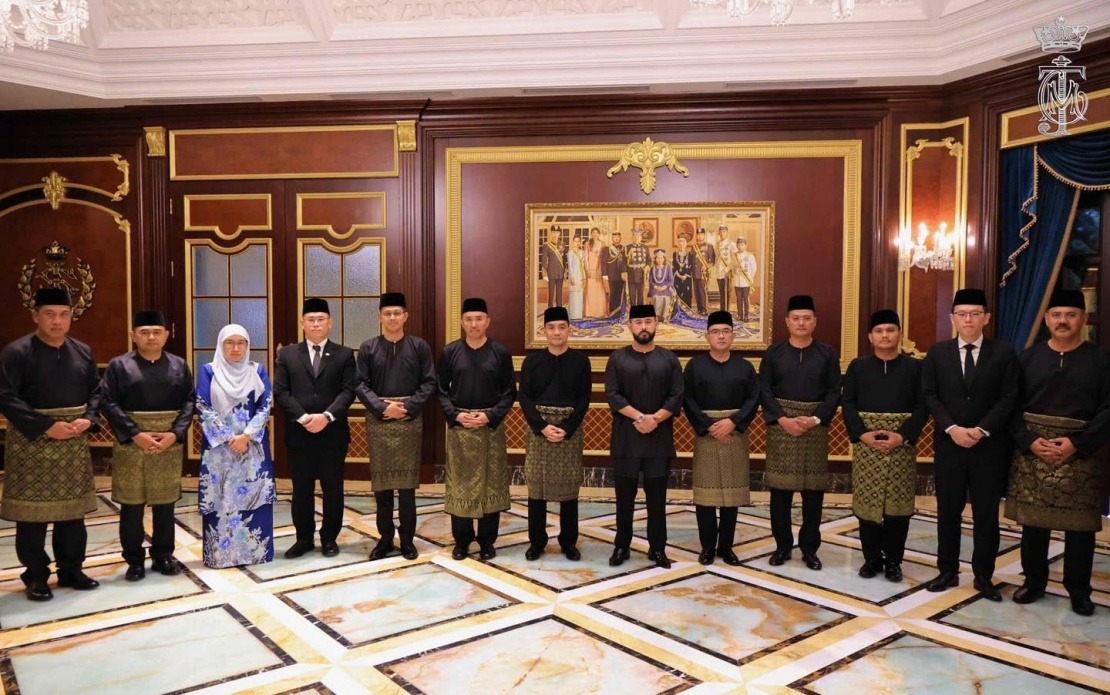
Ten newly appointed members of the Johor State Executive Council took their oaths of office on July 18 before Tunku Mahkota Ismail, the Regent of Johor, in a formal ceremony held at Istana Bukit Serene. The swearing-in ceremony marked the final step in assembling the state cabinet following Barisan Nasional's decisive victory in the 16th Johor state election, which delivered a clear popular mandate for the coalition to govern the oil-rich southern state for the next five years.
The newly constituted Exco features a blend of experienced politicians and fresh faces entering the state cabinet for the first time. Six returning members were confirmed in their roles: Mohd Hairi Mad Shah, who represents Larkin; Datuk Mohd Jafni Md Shukor of Bukit Permai; Mohd Fared Mohd Khalid from Semerah; Ling Tian Soon, the Yong Peng assemblyman; Lee Ting Han of Paloh; and Mohamad Fazli Mohamad Salleh, representing Bukit Pasir. These veterans bring accumulated experience in state governance and portfolio management as Barisan Nasional charts its course through a new legislative term.
Four debut Exco members also took their oaths, signalling a generational shift within Johor's ruling coalition. The newcomers are Md Israk Abdullah from Kukup, P. Pannir Selvam of Perling, Hasrunizah Hassan representing Pulai Sebatang, and Muhammad Naqib Md Ghazali from Panti. Their elevation reflects the coalition's strategy to inject new energy and perspectives into the state cabinet whilst maintaining continuity through retained senior figures.
The ceremony was attended by Menteri Besar Datuk Onn Hafiz Ghazi, who leads the state government as its chief executive. Also present were Royal Court Council Yang Dipertua Datuk Dr Abdul Rahim Ramli and State Secretary Datuk Mohammed Ridha Abd Kadir, underscoring the formal and constitutional significance of the occasion. The presence of these senior figures highlighted the gravity with which the state administration views the cabinet formation process and its commitment to established protocols.
Onn Hafiz's own swearing-in as Menteri Besar had occurred the previous Sunday, confirming his reappointment for a consecutive second term at the helm of Johor's government. His leadership of Barisan Nasional proved instrumental in the coalition's electoral triumph, and his continuation in office provides governance continuity during a critical period for the state. The Machap assemblyman's decisive personal performance in his own constituency underscored his political standing within both the state and national Barisan framework.
Barisan Nasional's electoral performance delivered a commanding parliamentary supermajority. The coalition secured 48 of the 56 available state assembly seats, a margin that substantially exceeds the 29 seats theoretically required for a working majority. This outcome grants the Menteri Besar considerable legislative flexibility and reduces the likelihood of defections or internal challenges to the government's stability during the five-year term. For Malaysian observers, such strong mandates provide governments with the political capital necessary to implement potentially contentious policy reforms.
Onn Hafiz's personal victory margin in Machap exemplified Barisan's strong grassroots performance across urban and rural constituencies. He triumphed with a commanding majority of 15,375 votes, demonstrating substantial personal appeal and suggesting effective ground mobilisation by the coalition's machinery in the crucial southern region. His constituency's result mirrored the broader swing towards Barisan across Johor, where the coalition recaptured ground lost in previous electoral cycles.
The cabinet formation process in Johor carries implications extending beyond the state's boundaries. As Malaysia's southern economic gateway and a region of strategic importance for the federation, Johor's governance sets precedents and priorities that influence broader national policy conversations. The cabinet's composition and early priorities will signal how Barisan Nasional intends to balance development, fiscal management, and social services across the state during an economically uncertain period for Malaysia and the Southeast Asian region.
The swearing-in ceremony formalised the transition from the electoral campaign phase to active government operations. The new Exco members now inherit responsibility for critical portfolios encompassing economic development, infrastructure, social services, and environmental management. These assemblymen must translate their constituencies' electoral confidence into tangible governance outcomes, managing both popular expectations and the constraints of state budgetary resources within Malaysia's fiscal federalism framework.

