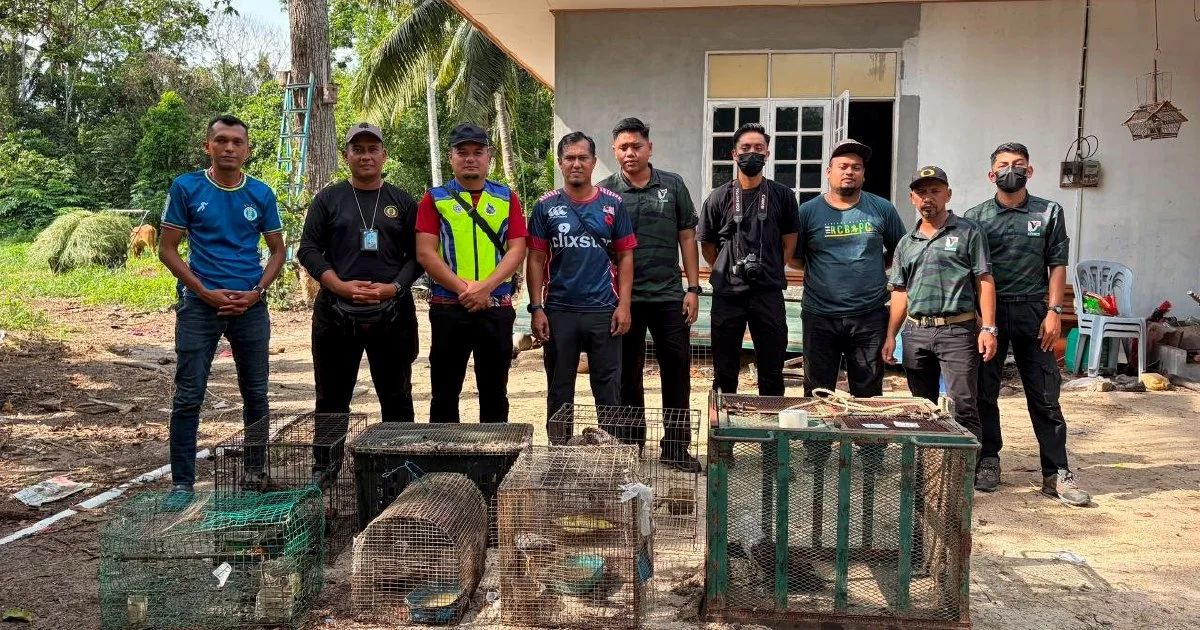
Enforcement authorities in Kelantan have arrested an 18-year-old following the discovery of four protected animal species worth RM48,500 during a raid conducted in Tumpat. The operation underscores persistent enforcement efforts aimed at curbing illegal wildlife possession and trafficking, a problem that continues to challenge environmental protection agencies across Malaysia despite increased penalties and public awareness campaigns.
The arrest marks another instance of wildlife contraband being intercepted before reaching wider criminal networks or international trafficking routes. The confiscation of animals valued at such a substantial amount suggests the teenager may have been engaged in commercial-scale activity rather than simple possession, though investigations remain ongoing to establish connections to broader smuggling operations. The four species seized represent different market segments within the illegal wildlife trade, indicating sophisticated knowledge of protected fauna among even young perpetrators.
Wildlife trafficking represents a persistent transnational challenge affecting not only Malaysia but the entire Southeast Asian region. The involvement of a teenager in this trade highlights how young individuals are increasingly being recruited into illegal operations, whether as street-level operators or unwitting participants. Intelligence agencies have previously warned that criminal syndicates deliberately target vulnerable youth, offering quick money while insulating higher-ranking members from direct law enforcement contact.
The RM48,500 valuation demonstrates the financial incentives driving such offences. In Southeast Asia's illegal wildlife markets, protected species command premium prices, often exceeding legal market rates for similar legitimate commodities by several multiples. Local markets in Malaysia and neighbouring countries continue operating despite enforcement efforts, with certain species proving particularly sought-after for traditional medicine, pet trade, and food consumption purposes.
Tumpat, located in Kelantan's northeastern coastal region, has featured in previous wildlife enforcement operations, suggesting established trafficking networks or supply chains may operate within the locality. The town's proximity to forested areas and its position within wildlife trafficking routes make it a strategic location for investigators monitoring illegal movement of protected fauna. Understanding these geographic patterns helps authorities anticipate where enforcement resources should concentrate.
Malaysia's wildlife protection framework carries significant penalties for such offences under the Wildlife Conservation Ordinance and other relevant legislation. Conviction can result in substantial fines and imprisonment, particularly where multiple species or large quantities are involved. However, enforcement agencies acknowledge that penalties alone prove insufficient deterrents when economic pressures and criminal incentives remain powerful.
The four species involved in this case likely represent different conservation statuses under domestic law and international agreements. Malaysia remains a signatory to the Convention on International Trade in Endangered Species of Wild Fauna and Flora, obligating authorities to prevent illegal trafficking in listed species. The Cites framework connects Malaysian enforcement with regional and global initiatives, though implementation challenges persist across Southeast Asia due to varying capacities and enforcement priorities among neighbouring nations.
Investigations following such arrests typically explore supply chain dimensions, identifying sources where animals were captured or obtained, intermediaries facilitating movement, and potential buyers or end-markets. Understanding these networks proves crucial for developing targeted prevention strategies. Authorities increasingly recognise that addressing demand—particularly in consumer markets where protected species are purchased for consumption or as pets—represents an essential complement to supply-side enforcement.
Youth involvement in wildlife trafficking often correlates with economic desperation, peer influence, and organised crime recruitment strategies. Social service and employment agencies have proposed interventions addressing root causes, though coordination between law enforcement and development sectors remains inconsistent. Malaysia's experience suggests that sustainable solutions require investment in alternative livelihoods for vulnerable populations in regions where wildlife trafficking flourishes.
The regional context shapes enforcement approaches taken by Malaysian authorities. Within Southeast Asia, wildlife trafficking volumes exceed those across most other global regions, driven by demand from rapidly expanding consumer markets in China and Vietnam. This reality places Malaysian enforcement agencies at the forefront of a challenge exceeding purely domestic dimensions, requiring enhanced international cooperation and resource allocation.
This particular seizure contributes to documented trends showing sustained trafficking pressure on Malaysia's wildlife resources. Authorities have intensified enforcement operations across entry points, markets, and suspected holding facilities. However, the persistent appearance of protected species in raids suggests that education and demand reduction must accompany stricter enforcement if wildlife populations are to receive meaningful protection.
Moving forward, the case exemplifies why comprehensive approaches—combining enforcement, prosecution, education, and community engagement—are essential for addressing wildlife trafficking. The arrest provides an opportunity for investigators to gather intelligence regarding broader networks potentially involving the detained teenager's associates, suppliers, and clients. Such investigations frequently yield insights improving future enforcement effectiveness across jurisdictions sharing trafficking challenges.

