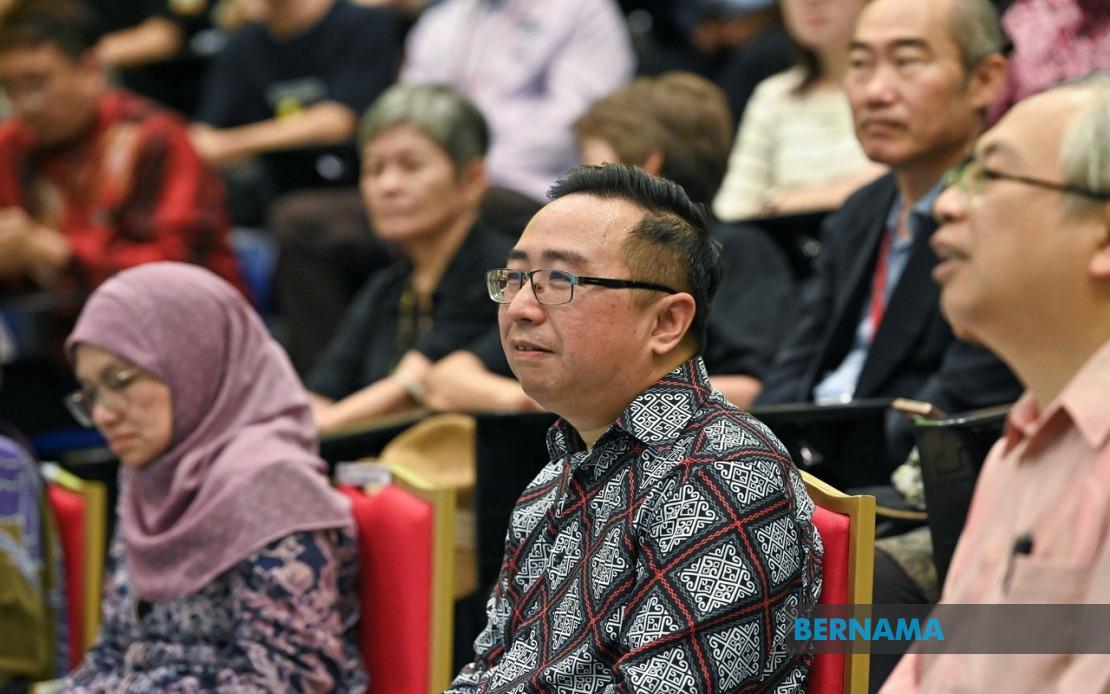
The growing appetite among multinational technology companies and semiconductor manufacturers for skilled Malaysian talent represents a significant shift in the country's economic landscape, according to Science, Technology and Innovation Minister Datuk Chang Lih Kang. Speaking at Universiti Tunku Abdul Rahman's Kampar Campus during the 20th Malaysia Festival of the Minds, the minister emphasised that graduates pursuing STEM disciplines face genuinely robust employment prospects rather than merely favourable circumstances. The underlying dynamic reflects Malaysia's strategic positioning as an advanced manufacturing hub within Southeast Asia's technology ecosystem, where international investors are increasingly establishing facilities that require sophisticated technical expertise.
The minister's remarks address a persistent anxiety among Malaysian students and their families regarding the perceived competition between human workers and artificial intelligence. Rather than dismissing these concerns, Datuk Chang Lih Kang articulated a deliberate government strategy to engage directly with potential scholars through educational outreach programmes. This approach signals recognition that reassurance must be substantive and delivered through dialogue rather than announcement, particularly when addressing generational anxieties about technological displacement. The government views the Malaysia Festival of the Minds not merely as a recruitment showcase but as a platform for shaping informed perspectives on technology's trajectory and Malaysia's role within it.
Critically, the employment dynamics reflect a genuine supply-demand mismatch favouring graduates. Current vacancies in science and technology positions substantially exceed the number of qualified workers available to fill them, creating what economists recognise as a seller's market for talent. This imbalance presents an immediate advantage for graduates entering the sector, as employers compete aggressively for skilled personnel. For Malaysia's economic development strategy, however, this shortage represents both opportunity and vulnerability. The nation risks missing transformative investment if it cannot rapidly expand its pipeline of qualified professionals, while investors may relocate facilities to countries with larger pools of available talent.
The government's collaborative framework with universities and industry stakeholders reflects pragmatic recognition that talent development cannot operate within institutional silos. Universities provide foundational training and research capabilities, while industry partners offer practical experience and employment pathways. This tripartite engagement—government, academia, and private sector—creates feedback mechanisms through which workforce demand directly informs curriculum development. Malaysian institutions are increasingly designing programmes aligned with emerging industry needs rather than traditional academic disciplines, though tensions between theoretical rigour and immediate employability persist across the higher education sector.
A particularly significant announcement emerged regarding advanced packaging technology development, where the government is committing RM92 million from the Malaysia Science Endowment whilst five industry partners contribute RM93 million, totalling RM185 million over the next two years. This matching-fund approach represents deliberate policy architecture intended to distribute development costs and risk across sectors. By requiring industry co-investment, the government ensures that technology initiatives remain aligned with genuine market demand rather than pursuing speculative capabilities. The parity of government and private sector contributions—RM92 million versus RM93 million—demonstrates genuine partnership rather than merely symbolic collaboration.
Advanced packaging technology constitutes a critical juncture within the semiconductor value chain, representing the process through which raw silicon is transformed into functional integrated circuits ready for market. Malaysia's semiconductor industry, historically concentrated in labour-intensive assembly operations, has progressively advanced into higher-value segments. Packaging technology capabilities position Malaysian manufacturers as essential participants in global electronics supply chains rather than peripheral contributors. The 2028 target for capability enhancement aligns with broader regional trends toward technology upgrading and reduced dependence on commodity-level manufacturing.
The investment initiative explicitly acknowledges structural challenges that complicate technology development within developing economies. Funding constraints and the technical complexity of advanced manufacturing create genuine barriers beyond simple resource allocation. Two years represents an ambitious timeline for establishing capabilities that require sustained research, equipment procurement, workforce training, and iterative refinement. Yet the government's confidence in meeting these targets suggests either substantial preliminary progress or deliberate optimism intended to project investor confidence. For Malaysian stakeholders, the credibility of these projections will ultimately depend on demonstrable progress within the specified timeframe.
The policy framework revealed by Datuk Chang Lih Kang's statements reflects systematic thinking about Malaysia's positioning within global technology hierarchies. Rather than positioning the nation as a passive recipient of foreign investment, the approach emphasises active development of domestic capabilities, talent pipelines, and technological infrastructure. This distinction carries profound implications for long-term economic resilience, as countries that merely assemble foreign components remain vulnerable to supply chain restructuring and cost competition. Malaysia's investment in advanced packaging capabilities represents an effort to establish defensible competitive advantages based on technical expertise and infrastructure rather than labour cost differentials.
For Malaysian students and parents evaluating educational pathways, the minister's assurances carry genuine substantive weight rather than merely rhetorical encouragement. Graduates entering STEM fields encounter measurably stronger employment markets than counterparts in saturated disciplines. However, genuine opportunity requires more than demand; it requires continuous skill development, adaptation to evolving technological landscapes, and willingness to engage with emerging specialisations. The abundance of entry-level positions masks competitive pressures within career progression, where differentiation between merely competent and exceptional professionals determines advancement trajectories.
The Malaysia Festival of the Minds serves as both recruitment mechanism and policy communication platform, allowing government and industry to articulate a consistent narrative regarding technology's economic centrality. For participants from secondary schools and lower-level tertiary institutions, the festival provides exposure to industry professionals, research opportunities, and tangible demonstrations of technology applications. These experiences shape educational aspirations more effectively than statistical employment projections alone, as direct interaction with practitioners conveys authenticity that abstract data cannot.
Looking forward, Malaysia's success in expanding its STEM workforce pipeline depends on sustaining the collaborative framework across economic cycles and political transitions. Government commitments require institutional continuity and predictable policy implementation; university partnerships require adequate research funding and infrastructure investment; industry engagement requires confidence in talent availability and capability. These interlocking dependencies create both reinforcing feedback loops and vulnerability to disruption if any component falters.

