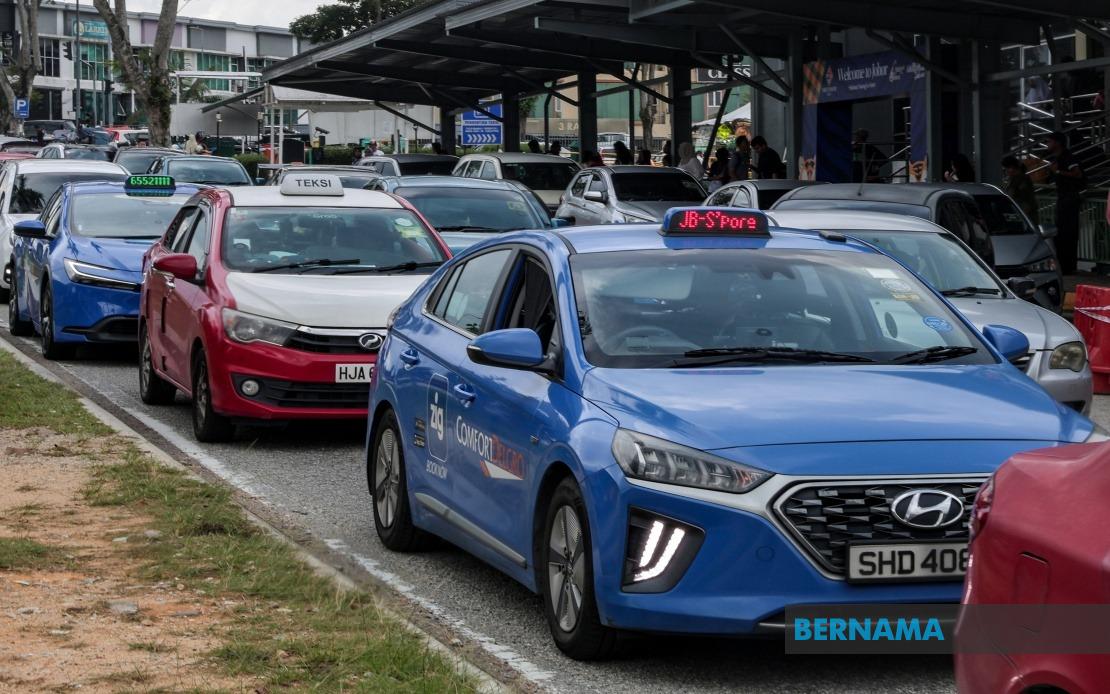
The Land Public Transport Agency (APAD) has introduced greater flexibility into the National MADANI Taxi Renewal Programme (Teksi MADANI), permitting taxi drivers to license or replace vehicles with models beyond the designated Proton S70, a significant adjustment that addresses practical challenges faced by industry participants. This policy shift, announced on August 7, opens an alternative pathway for applicants who either possess existing vehicles or encountered difficulties securing hire-purchase financing through the official programme framework.
The concession represents a pragmatic response to implementation realities, even though the Transport Ministry's original April 23 announcement had emphasised that new applications and taxi replacements would be voluntary yet concentrated on the Proton S70 taxi package. APAD's statement acknowledges that while the agency continues encouraging drivers to transition to Teksi MADANI to access available incentives, the programme must accommodate diverse circumstances within Malaysia's taxi industry. This calibration reflects growing recognition that a one-size-fits-all approach may exclude legitimate participants unable to navigate the financing or vehicle selection components of the scheme.
For Malaysian taxi drivers, the policy adjustment holds substantial implications. Many operators maintain vehicles purchased or financed through existing arrangements and lack the capital or credit profile to qualify for hire-purchase schemes tied to the Proton S70. By permitting alternative vehicle models, APAD removes a significant barrier that might otherwise have forced drivers to abandon the Teksi MADANI initiative entirely. The flexibility also acknowledges that some drivers may have superior financing terms, warranty arrangements, or maintenance relationships with other vehicle manufacturers, considerations that merit practical accommodation within a transformation programme.
The Teksi MADANI programme itself represents a fundamental structural reform launched by Prime Minister Datuk Seri Anwar Ibrahim on July 3. Historically, Malaysia's taxi industry operated through leasing arrangements where drivers lacked ownership stakes in their vehicles. Teksi MADANI disrupts this model by enabling drivers to become legal vehicle proprietors, fundamentally altering the economic relationship between operators and the transport sector. This ownership transition carries profound implications for driver income stability, asset accumulation, and long-term sectoral sustainability.
The Proton S70 sedan was selected as the official Teksi MADANI vehicle, representing a strategic choice to modernise the Malaysian taxi fleet's appearance and functionality. The distinctive vehicles feature a contemporary design without the traditional rooftop identification signs, instead utilising a special registration series beginning with letters "GET" that immediately identifies participating taxis. This rebranding component serves multiple purposes: it projects an upgraded professional image competitive with ride-sharing platforms, potentially attracting customers who perceive traditional taxis as dated, whilst simultaneously creating clear visual differentiation for regulatory and operational purposes.
Government commitment to the programme's financial sustainability became evident through additional resource allocation. An extra RM10 million was allocated to the Old Vehicle Replacement Matching Grant Programme specifically benefiting taxi drivers, supplementing the RM10 million provided under Budget 2026 for Teksi MADANI implementation. This RM20 million total investment demonstrates substantial state backing for the taxi sector's modernisation, particularly important given the industry's vulnerability to platform-based ride-sharing competition that has reshaped transportation demand patterns across Southeast Asia in recent years.
The policy's flexibility regarding vehicle replacement timelines also merits consideration. APAD confirmed that existing taxis not transitioned through the Teksi MADANI programme retain operating permission until specified age limits expire. This provision prevents the programme from creating sudden redundancy for drivers unable or unwilling to participate, preserving income continuity and allowing gradualist adoption rather than forced transition. The approach reflects pragmatic governance that recognises taxi driving represents livelihoods for substantial populations across Malaysian cities, warranting policy implementation methods that minimise immediate economic disruption.
For regional perspectives, Malaysia's Teksi MADANI initiative carries instructive value. Southeast Asia's urban transport sectors face persistent challenges balancing traditional taxi services with emerging ride-sharing technologies, regulatory demands, and driver economic security. Programmes that enable vehicle ownership whilst modernising fleet standards represent potential models applicable across the region, provided they accommodate operational realities and diverse participant circumstances. The revised flexibility demonstrates that wholesale sector transformation benefits from periodic recalibration as implementation progresses and actual constraints become apparent.
The interaction between APAD's revised policy and the original April 23 framework announcement reveals important aspects of Malaysian policy implementation. Rather than rigidly enforcing predetermined specifications, the agency demonstrated responsiveness to stakeholder feedback and demonstrable implementation difficulties. This adaptive approach, whilst sometimes creating perception of inconsistency, frequently produces superior outcomes by preventing wholesale programme abandonment among participants encountering unexpected barriers. For taxi drivers specifically, it signals that the government recognises their industry's complexity and remains willing to adjust mechanisms rather than demand inflexible compliance.
Looking forward, the Teksi MADANI programme's success hinges substantially on driver participation rates and perceived value delivery. By permitting vehicle flexibility, APAD removes a significant deterrent that might otherwise have limited uptake among experienced drivers with established financing relationships or vehicle preferences. The programme's dual objectives of sectoral modernisation and driver asset accumulation become more achievable when implementation mechanisms accommodate genuine diversity in applicant circumstances. Malaysian taxi drivers considering participation now face reduced financial and logistical barriers to programme entry, potentially accelerating the transition toward a modernised, driver-owned transportation fleet.
The underlying economic transformation embedded within Teksi MADANI extends beyond vehicle specifications to encompass fundamental industry structure. By shifting drivers from lessee to owner status, the programme addresses long-standing sectoral vulnerabilities including income volatility, limited asset accumulation, and absence of meaningful equity stakes. Whilst the programme's specific implementation details merit ongoing refinement, as APAD's August 7 adjustment demonstrates, the core vision of elevated driver economic participation represents a significant evolution in Malaysian transport policy thinking.

