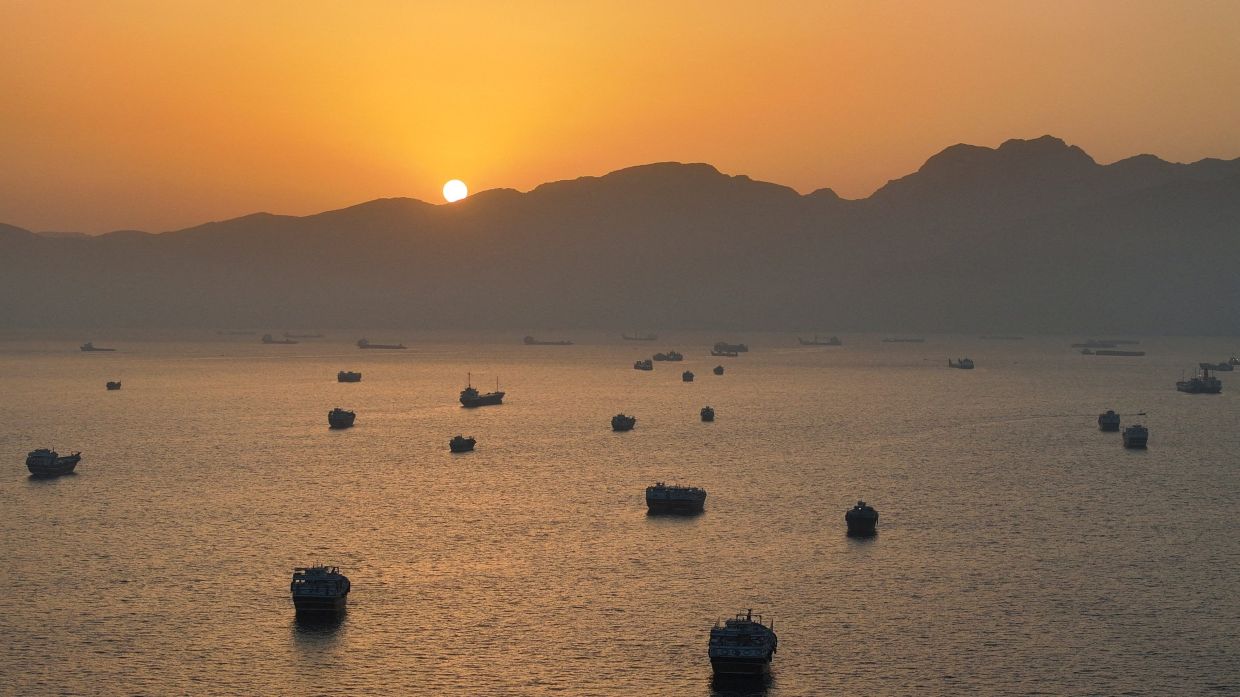
A significant thaw in Middle East tensions is materialising through the Strait of Hormuz as three heavily laden crude tankers successfully departed the region on Wednesday, marking another step in the release of oil supplies that have been stranded for months. The movement comes in the wake of an interim agreement between Iran and the United States, which has begun to untangle the logistical paralysis that gripped the Gulf following the eruption of regional conflict. The three vessels are collectively transporting 5 million barrels of crude, according to shipping data tracked by LSEG and Kpler, with destinations scattered across Asia and Oman as global markets absorb the implications of renewed supply flowing outward.
The South Korean-flagged VL Breeze, classified as a Very Large Crude Carrier with a capacity of approximately 2 million barrels, has become one of the first major vessels to successfully transit the strait in recent weeks. The supertanker carries a blend of Qatari condensate and crude from Abu Dhabi, and is being chartered by Hyundai Oilbank, one of South Korea's largest petroleum refiners. Its destination is the port of Daesan in South Korea, where substantial refining capacity awaits the incoming supply. This movement carries particular significance for Seoul's energy security, as South Korean refiners have long depended on Gulf crude to feed their export-oriented operations.
Two additional vessels are simultaneously making their passage through the strategic waterway, diversifying the geographical spread of relief across the region and beyond. The Plata Carrier, a VLCC operating under the Liberian flag and chartered by India's state-owned Oil Corporation, is transiting with 2 million barrels of Saudi Arabian crude as its cargo. Meanwhile, the Suezmax tanker Prudent Warrior, carrying 1 million barrels of Iraqi Basrah crude and similarly flagged under Liberia's registry, is steering toward the port of Sohar in Oman. These parallel movements underscore how the easing of tensions is creating multiple pathways for stranded oil to reach markets across Asia, the Middle East, and beyond.
The scale of the bottleneck that these vessels are helping to resolve has been staggering. Analysts at Kpler and Vortexa jointly assessed that approximately 90 million barrels of crude remained trapped within the Gulf as recently as last week, representing an enormous inventory of petroleum that could not find its way to global refineries. This figure encapsulates the severity of the disruption that regional conflict imposed on one of the world's most critical energy chokepoints. Every barrel that now successfully transits represents a fractional reduction in this massive backlog, though clearing 90 million barrels will require sustained passage of vessels over the coming weeks and months.
South Korea's maritime ministry confirmed that four vessels operated by South Korean shipping companies had departed the strait and were sailing toward their assigned destinations, with one bound for South Korean ports and the remainder heading to third countries. However, the broader picture remains one of partial resolution rather than complete clearance. Of the twenty-six vessels that have been stranded since hostilities began in the Middle East, eighteen still remain trapped within the Gulf. This persistence suggests that while diplomatic progress is creating temporary relief, fundamental risks and uncertainties still deter broader commercial movement through the region.
The mechanics of safe passage through the strait have been partially addressed through measures coordinated by Oman and the International Maritime Organisation. These bodies established temporary maritime corridors, with Oman designating two alternative shipping routes positioned north and south of the conventional shipping lane to create safer passage for departing vessels. Oman has publicly committed to keeping the Strait of Hormuz open to international commerce without imposing toll charges, a significant statement of intent amid regional tensions. However, confirmation that the three departing tankers specifically utilised these designated corridors remains unclear, leaving some ambiguity about the precise safety mechanisms enabling their transit.
The resumption of liquefied natural gas shipments offers a complementary indicator of improving conditions within the Gulf. Two empty LNG carriers, the Shandong Redwood and Milaha Qatar, have been identified heading westward through the strait en route to load cargoes from Qatar. This movement brings the total number of empty LNG vessels transiting toward Qatari loading facilities to nine, the highest count recorded since the conflict's outbreak. Such restoration of LNG commerce carries implications beyond energy markets, as it signals returning confidence among shipping operators and cargo interests that the region offers sufficient stability for capital-intensive operations.
Qatar's energy outlook provides further evidence of normalisation. The Gulf state's Prime Minister, Sheikh Mohammed bin Abdulrahman al-Thani, indicated to international media that Qatar expects to restore normal liquefied natural gas production capacity within a matter of weeks. This timeline suggests that Qatari energy infrastructure has weathered the period of uncertainty reasonably intact, and that market conditions are gradually shifting to permit resumed operations at full capacity. For Asian importers of Qatari LNG, particularly Japan, South Korea, and China, such restoration promises a return to reliable supply channels that have been partially constrained.
The broader implications for global crude pricing are increasingly tangible as these vessels complete their transits. The progressive unlocking of stranded supplies should exert downward pressure on international benchmark prices, which had factored in the risk premium associated with supply interruption. Malaysian and Southeast Asian economies, as energy-importing regions with manufacturing sectors sensitive to input costs, stand to benefit from any moderation in crude values. Refiners across the region, including those in Singapore and Thailand, have maintained elevated margins precisely because constrained supply created processing opportunities; normalisation of flows may compress these margins while reducing their overall feedstock costs.
Looking forward, the trajectory of these tanker movements and the interim Iran-US arrangement will likely determine whether this exodus represents a temporary relief or the beginning of sustained normalisation. The persistence of eighteen stranded vessels suggests that commercial actors remain cautious about committing additional tonnage to the region. Any deterioration in diplomatic progress could quickly reverse the modest improvements now visible, restocking the Gulf with idle vessels and again constraining global crude availability. For Southeast Asian stakeholders, whether refiners, shipping companies, or energy-dependent manufacturers, the coming weeks will be critical in assessing whether this window of easing tensions can be widened into a durable new equilibrium.