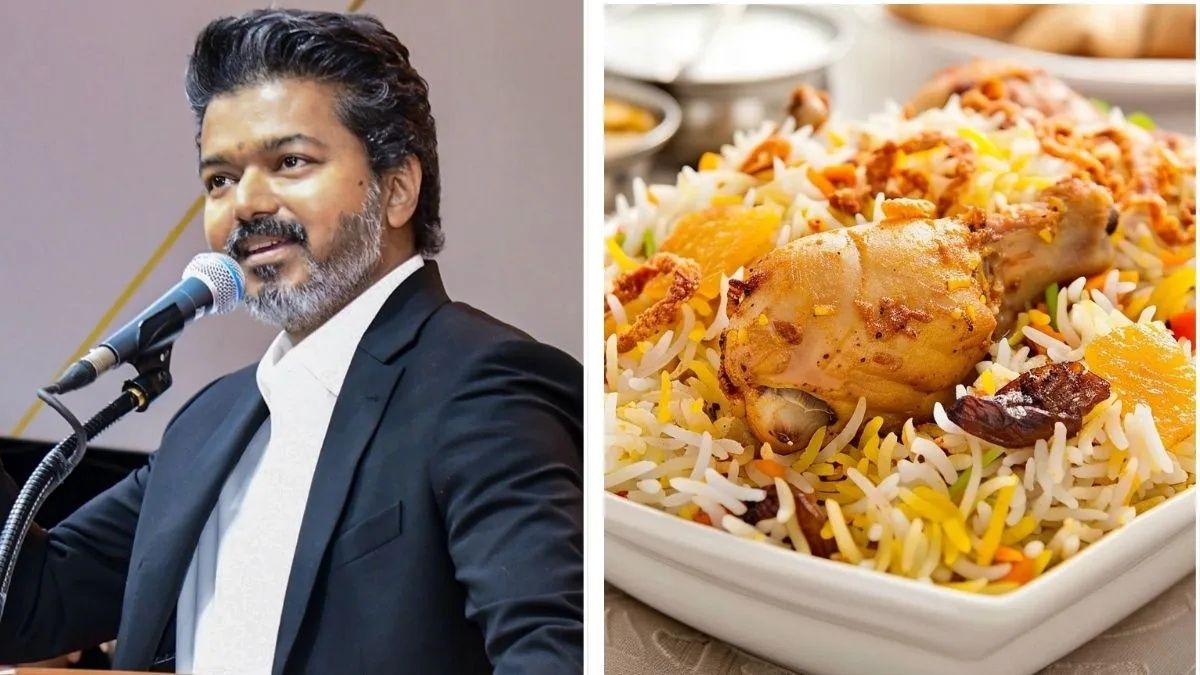
Government school students across Tamil Nadu may soon enjoy chicken biryani as part of their weekly lunch menu if state authorities greenlight a proposal currently under review. School Education Minister A. Rajmohan has confirmed that the initiative, which aims to elevate the nutritional appeal and variety of meals served under the midday scheme, has been forwarded to the Chief Minister's office for consideration. The proposal emerged from consultations held with representatives from more than 80 teacher associations, signalling growing momentum behind efforts to improve meal quality in government educational institutions across the state.
The timing of the initiative reflects broader pre-budget discussions taking place in Tamil Nadu, with the state's budget presentation scheduled for August 5. Teacher groups leveraged the consultation meeting held on July 28 to articulate a range of institutional priorities extending well beyond menu diversification. Beyond introducing chicken biryani, associations emphasised the need for improved rice quality in the existing midday meal scheme, recognising that even modest enhancements to ingredient standards could meaningfully affect student nutrition and satisfaction. These requests underscore ongoing concerns that current meal provisions, while reaching millions of children daily, have not adequately evolved to meet evolving nutritional and palatability expectations.
Implementing the biryani proposal will require coordination across multiple government departments, complicating what might initially appear a straightforward menu change. The Social Welfare and Women Empowerment Department, which administers the noon meal scheme, must collaborate with education authorities before any final decision can be formalised. Senior departmental officials have signalled openness to the concept, suggesting the government views the proposal favourably, though bureaucratic procedures and budget allocations remain pending. This multi-departmental approach, while potentially time-consuming, reflects the integrated nature of welfare schemes in India's federal governance structure.
Teacher associations pressed for expansion of both major meal programmes significantly beyond their current reach. The Chief Minister's Breakfast Scheme currently benefits students in Classes 1 through 8, reaching approximately 32 lakh children following recent expansion efforts. The midday meal scheme extends only to Class 10, serving nearly 40 lakh students. Representatives urged the government to extend breakfast provision and midday meals to Class 12 students, arguing this would benefit an additional eight lakh students and address a long-pending demand requiring immediate action. Such expansion would substantially increase fiscal commitments but proponents argue the investment in adolescent nutrition yields measurable educational and health outcomes.
A significant portion of the consultation focused on the special Teacher Eligibility Test, a contentious procedure that became mandatory following a Supreme Court directive affecting eligible teaching appointments. Teacher associations requested government intervention to modify the examination's parameters in ways they believe would better reflect classroom experience and teaching capability. Specifically, they sought weightage for teaching experience, reduced qualifying marks, and uniform pass standards across all communities. A. Mayavan, founder-president of the Tamil Nadu High and Higher Secondary School Graduate Teachers' Association, characterised the special TET as a continuation mechanism rather than a recruitment tool, arguing that legal grounds existed for awarding marks for prior classroom experience and adjusting qualifying thresholds accordingly.
The consultation meeting surfaced persistent structural inequities affecting Tamil Nadu's education workforce that extend beyond examination policy. Teacher associations reiterated long-standing demands for equal pay addressing secondary grade teacher compensation disparities and increased maintenance grants for government school infrastructure. These recurring requests reflect accumulated grievances spanning multiple budget cycles, suggesting that previous governments have not adequately prioritised teacher welfare and school resource allocation. Such institutional neglect, if unaddressed, risks compromising educational quality as experienced educators migrate to better-remunerated positions or private institutions.
Minister A. Rajmohan's response indicated institutional commitment to systematic processing of stakeholder demands, announcing plans to digitise every representation and categorise submissions to accelerate resolution timelines. This administrative approach mirrors broader governance modernisation efforts across Indian states, leveraging technology to manage the volume of stakeholder input in large-scale government systems. Rajmohan assured participants that the government would prioritise demands and endeavour to address as many concerns as feasible, though he avoided specific commitments on timeline or resource availability. Such assurances, while politically prudent, remain contingent on budget allocation decisions scheduled for early August.
For Malaysian observers, Tamil Nadu's approach to school nutrition and teacher welfare offers instructive parallels and contrasts with Southeast Asian practices. While Malaysia has developed sophisticated school feeding programmes and teacher compensation frameworks, Tamil Nadu's scale—operating meal schemes serving tens of millions of students—presents distinct logistical and fiscal challenges. The emphasis on stakeholder consultation and multi-departmental coordination reflects broader democratic governance patterns in India that differ from Malaysia's more streamlined policy implementation frameworks. Tamil Nadu's willingness to consider menu diversification, though modest, signals recognition that student engagement with nutrition programmes requires palatability alongside nutritional adequacy.
The biryani proposal, while seemingly symbolic, carries substantive implications for how governments conceptualise school meal provision in South Asia. Moving beyond monotonous grain-based diets toward more diverse, culturally resonant meals acknowledges that student participation in nutrition programmes depends partly on meal appeal. However, introducing protein-rich dishes like chicken biryani at scale requires reliable supply chains, cost management, and religious dietary sensitivity in demographically diverse Tamil Nadu. The proposal's success will likely hinge on whether government procurement systems can maintain consistent quality and affordability while respecting community preferences around meat consumption.
The consultation's attention to programme expansion reflects demographic realities in Tamil Nadu, where secondary schooling enrolment continues increasing despite high completion rates. Extending breakfast and midday meal schemes to Class 12 recognises that adolescent nutrition remains critical for academic performance and development, yet remains under-resourced compared to primary provision. Such expansion, if implemented, would position Tamil Nadu alongside global best practice regarding school meal coverage, though funding mechanisms remain unspecified. The August 5 budget will clarify whether political support for these initiatives translates into concrete fiscal allocation.

