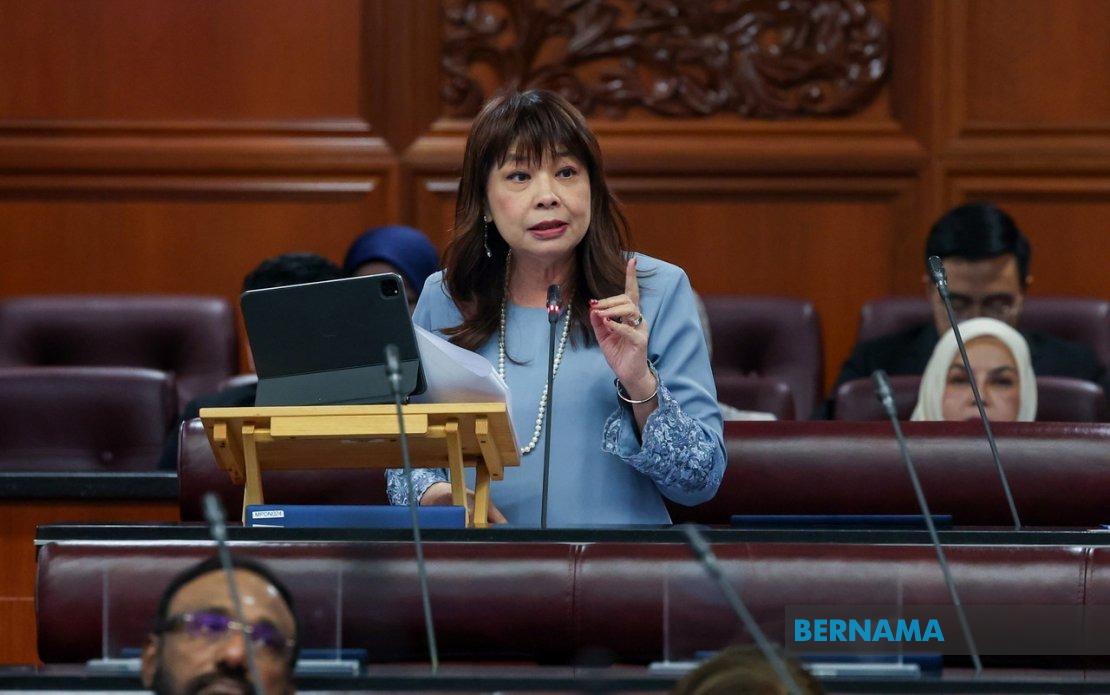
Malaysia's Talian Kasih 15999 helpline has processed 9,327 calls concerning domestic violence between 2022 and May 2025, according to Deputy Minister of Women, Family and Community Development Lim Hui Ying. These figures emerged during a parliamentary question-and-answer session in which Datuk Muslimin Yahaya raised concerns about the effectiveness of the national social welfare hotline and the extent to which reported cases receive proper follow-up attention. The disclosure sheds light on the scale of domestic conflict affecting Malaysian households and the ministry's response mechanisms.
Within the broader context of welfare services, the domestic violence calls represent a significant portion of activity on the Talian Kasih line. The hotline received a total of 127,000 calls spanning various social and welfare matters throughout the same period, indicating that family violence constitutes approximately seven percent of all inquiries. This proportion underscores the persistence of domestic disputes as a pressing social concern requiring sustained government intervention and public awareness campaigns.
The ministry's case resolution record presents a generally positive picture. All domestic violence complaints logged from 2022 through 2025 have been either fully resolved or remain under active investigation. During the first five months of 2025 alone, the hotline received 470 calls, of which 406 cases had been resolved by the time of Lim's parliamentary statement. The remaining 64 cases were still being processed, suggesting a resolution rate exceeding 85 percent for the year-to-date period. Such figures indicate functional systems for addressing complaints, though the persistence of ongoing cases raises questions about the complexity of some interventions.
The follow-up measures undertaken by the ministry extend beyond acknowledgment of complaints to concrete protective action. Victims of domestic abuse assisted through Talian Kasih have access to Emergency Protection Orders, legal documents that provide immediate court-ordered safeguards against further violence. Beyond this, the ministry facilitates Interim Protection Orders, longer-term legal protections valid until final court proceedings conclude. Additionally, the government operates safe house networks where victims can relocate with their dependents away from abusive environments, providing temporary refuge while legal and social support processes unfold.
A notable shift in the demographic pattern of domestic violence calls warrants particular attention. While historically domestic abuse has been primarily characterised as a phenomenon affecting women, the data increasingly reflects male victims coming forward to report violence perpetrated by their partners. Although the absolute number of male victims remains smaller than female cases, the trend of rising reports from men indicates either improved willingness to report abuse or genuine increases in violence directed at male household members. This broadening recognition challenges conventional narratives about family violence and demands gender-neutral policy frameworks.
The ministry's stated commitment to protecting all genders and races without discrimination represents an evolution in how government agencies conceptualise domestic violence prevention. By explicitly acknowledging that both men and women can be victims, the ministry signals institutional acceptance that family violence transcends traditional gender boundaries. This perspective aligns with contemporary social research demonstrating that intimate partner abuse, whilst disproportionately affecting women globally, affects substantial numbers of men who often remain silent due to stigma and cultural expectations about masculinity. The Malaysian approach of extending protections across all demographics strengthens the overall effectiveness of interventions.
From a Malaysian and Southeast Asian perspective, the Talian Kasih statistics reflect broader regional challenges around family violence. Countries across the region grapple with similar issues, though reporting and response mechanisms vary considerably. Malaysia's centralised hotline system provides a single point of contact for those experiencing abuse, reducing barriers to seeking help compared to systems requiring navigation of multiple agencies. The integration of legal remedies like protection orders with social support through safe housing demonstrates a comprehensive approach addressing both immediate safety and longer-term recovery.
The resolution of cases involves complex social dynamics that extend beyond simple legal action. Domestic violence frequently involves economic interdependence, childcare arrangements, cultural or religious considerations, and entrenched family structures. The fact that 406 of 470 cases in early 2025 reached resolution, rather than simply being closed when complaints were filed, suggests the ministry undertakes substantive casework. This may include mediation, counselling referrals, job placement assistance to support victim independence, or coordination with religious authorities where applicable, particularly in Muslim-majority Malaysia where religious courts handle certain family law matters.
The volume of calls processed by Talian Kasih also points to the effectiveness of public awareness about the hotline's existence and accessibility. When such helplines receive high call volumes, it typically indicates community knowledge of the service and trust in its responsiveness. However, the existence of 9,327 calls also reflects the troubling reality that nearly ten thousand individuals felt compelled to contact authorities about violence within their homes over a three-year span. This number likely represents a fraction of actual domestic violence incidents, as many victims never report their experiences due to shame, fear of deportation among migrant workers, economic vulnerability, or cultural normalisation of family conflict.
The parliamentary questioning that prompted this disclosure reflects increasing legislative scrutiny of women's and family welfare services. As Malaysia develops economically and politically, civil society and elected representatives increasingly expect transparency about social service effectiveness. The deputy minister's provision of detailed case numbers and resolution statistics demonstrates responsiveness to accountability demands. However, critics might note that total case numbers alone do not reveal qualitative outcomes, such as whether resolved cases resulted in cessation of violence, successful victim reintegration, perpetrator rehabilitation, or other meaningful endpoints.
Moving forward, sustaining and expanding Talian Kasih's capacity remains essential as awareness campaigns likely drive increased call volumes. The ministry must balance accessibility with resource constraints, ensuring that rising demand for services does not dilute the quality of individual case attention. Training standards for hotline staff, protocols for assessing victim safety risks, and coordination mechanisms with law enforcement and shelter providers all require ongoing investment. The explicit recognition that domestic violence affects men as well as women also necessitates culturally sensitive messaging and support frameworks that address the particular barriers men face in reporting abuse.
The statistics presented to Parliament ultimately reveal both progress and persisting challenges in Malaysia's approach to domestic violence. The existence of a dedicated national hotline with trained staff providing protective interventions represents institutional commitment to victims' safety. Yet the steady stream of calls indicates that family violence remains embedded within Malaysian society. Public health approaches complementing legal and social services—such as education programmes addressing relationship dynamics, toxic masculinity, and conflict resolution in schools—may further reduce demand for crisis services by preventing violence upstream rather than merely responding to it once abuse occurs.

