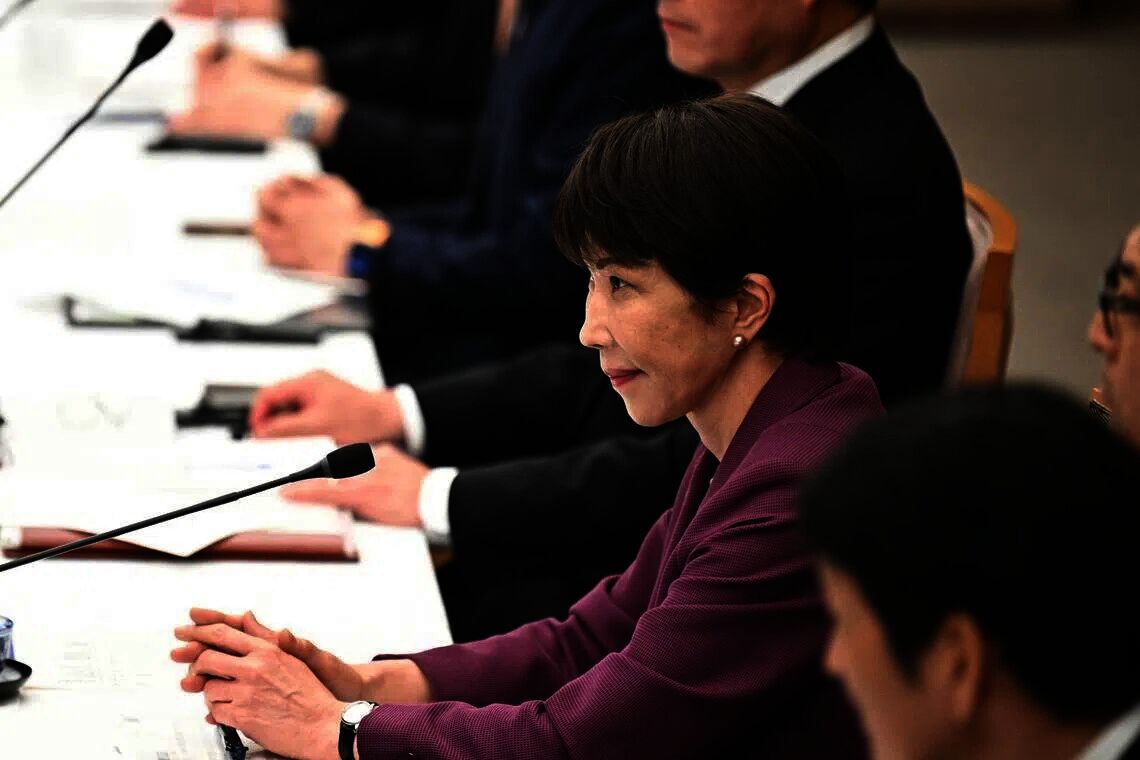
Japanese Prime Minister Sanae Takaichi has come under intense scrutiny following the emergence of a two-decade-old video clip in which she defended Japan's wartime actions through a markedly revisionist lens. The footage, which surfaced recently on social media platforms, captures Takaichi during a live 2002 television debate on TV Asahi when she was still a lawmaker, articulating positions on World War II that have reignited longstanding debates about historical accountability and political leadership in Japan. Her remarks have triggered widespread condemnation among both Japanese citizens and political figures, raising fresh questions about the appropriateness of holding such views whilst occupying the nation's highest office.
In the debate moderated by prominent political journalist Soichiro Tahara, Takaichi characterised Japan's campaign of military expansion across China during the 1930s as an act of self-defence rather than aggression. She further contended that imperial expansion into China represented standard international practice for the era. Tahara responded directly and harshly to these claims, publicly denouncing her historical interpretation as fundamentally flawed and demonstrating a concerning lack of understanding. His dismissal of her fitness to serve in parliament at that time underscores how controversial these perspectives have long been among informed observers of Japanese history and politics.
The resurfaced material has galvanised considerable online discussion, with Japanese social media users expressing alarm at the substance and implications of Takaichi's statements. Widely-shared comments describe her historical understanding as profoundly deficient and her claims as indefensible. The intensity and reach of this digital criticism reflects deeper anxieties within Japanese society regarding how the nation's wartime past is understood and represented by its current leadership. For regional observers, particularly in Southeast Asia where Japanese military actions caused significant suffering, such rhetoric carries particular sensitivity and diplomatic weight.
Yusuke Yamashita, a corporate social responsibility specialist at Sakushin Gakuin University, highlighted a critical analytical weakness in Takaichi's position. Writing on social media, Yamashita argued that her invocation of self-defence lacks any coherent logical or theoretical foundation, suggesting instead that her arguments rest entirely on emotional attachment rather than defensible historical reasoning. This observation proves significant because it identifies the gap between assertion and substantiation that characterises revisionist historical claims generally. The inability to construct a rational argument around one's core political position raises legitimate questions about decision-making capability at the executive level.
Prominent Japanese politician Ichiro Ozawa, who served in the House of Representatives across several decades, issued a particularly forceful statement calling for Takaichi's resignation. Ozawa framed her historical revisionism not merely as an intellectual failing but as a genuine threat to national wellbeing. His warning that her continued leadership could trigger unforeseen catastrophe and impose tremendous sacrifice on the Japanese people reflects the gravity with which established political figures regard her worldview. Such statements from respected senior politicians amplify concerns beyond academia and civil society into the highest echelons of Japanese political discourse.
Takaichi's current controversies represent the continuation of a consistent political trajectory rather than an isolated incident or youthful indiscretion. Since entering parliament in 1993, she has maintained prominent membership within the Liberal Democratic Party's conservative-nationalist faction, consistently advocating for constitutional amendments that would expand Japan's military apparatus. Her proposals include rebranding the Self-Defence Forces, a shift that carries symbolic weight suggesting a more assertive military identity. This long-standing commitment to nationalist policies indicates that her historical revisionism forms an integral component of a broader political philosophy rather than a peripheral opinion.
Takaichi's approach to wartime history aligns with broader patterns among certain Japanese political factions that minimise, reframe, or outright deny documented atrocities perpetrated against China and other Asian nations during Japanese imperial expansion. Such revisionist narratives effectively whitewash acknowledged historical aggression and attempt to rehabilitate militarist ideological frameworks that dominated the pre-1945 period. For neighbouring countries across East and Southeast Asia, including Malaysia's trading partners and regional security partners, such political positions generate concern about Japan's long-term strategic orientation and commitment to international norms regarding historical reconciliation.
The timing of this controversy coincides with a broader erosion of public confidence in Takaichi's administration. Opinion surveys conducted in July already demonstrated declining approval ratings, with disapproval exceeding approval in certain polls for the first time. The resurfacing of her historical revisionism compounds existing dissatisfaction rooted in the government's perceived inability to address everyday economic pressures and livelihood concerns facing ordinary Japanese citizens. When citizens feel economically insecure and simultaneously perceive their leadership as intellectually compromised on fundamental historical matters, support mechanisms weaken considerably.
For Malaysia and other Southeast Asian nations, Takaichi's prominence as Japan's prime minister carries regional implications. Japan maintains significant economic ties, security partnerships, and diplomatic influence throughout the region. A leadership approach that embraces historical revisionism potentially complicates cooperative regional frameworks and raises questions about Japan's commitment to historical reconciliation that has underpinned post-war regional stability. The contrast between Japan's technological sophistication and economic integration in regional supply chains and its political leadership's apparent rejection of scholarly historical consensus creates an uncomfortable dynamic for neighbouring governments navigating relationships with Tokyo.
The broader debate surrounding Takaichi reflects ongoing tensions in Japan between nationalist political movements and a more internationally-oriented consensus committed to acknowledging historical responsibility. This internal Japanese political struggle carries external consequences because Japan's strategic choices, military posture, and diplomatic positioning directly influence regional security architecture. As public criticism mounts and approval ratings decline, the sustainability of Takaichi's administration faces genuine challenges. Whether domestic political pressure translates into meaningful policy shifts or leadership changes remains an open question with potential ramifications extending well beyond Japan's borders into the broader Indo-Pacific region.

