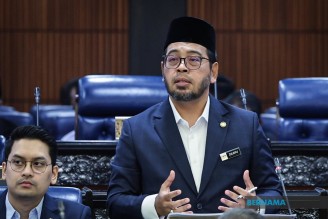
Tabung Haji's involvement in Putrajaya Perdana has exposed a troubling chapter in the pilgrimage fund's financial history, with the institution absorbing a RM145.3 million loss through an investment that became inextricably linked to 1Malaysia Development Bhd's controversial dealings. Minister in the Prime Minister's Department (Religious Affairs) Dr Zulkifli Hasan laid bare these connections during a parliamentary briefing on the comprehensive Royal Commission of Inquiry report into TH's operations, revealing how poor governance and conflicted interests compromised the institution's stewardship of Muslim savings.
The Putrajaya Perdana investment represented merely one thread in a much larger tapestry of problematic allocations. The RCI identified 14 investments across TH's portfolio that generated combined losses spanning billions of ringgit, suggesting systematic weaknesses in investment appraisal and risk management that persisted throughout the 2014 to 2020 period. This period coincided with significant governance challenges at Malaysia's national level, during which several major institutions experienced compromised decision-making processes. The inclusion of a TH chairman serving simultaneously as Putrajaya Perdana's chairman created obvious potential for conflicts of interest, raising fundamental questions about whether transactions genuinely served TH's beneficiaries or instead facilitated the financial objectives of connected parties.
Particularly striking was TH's acquisition of land from 1MDB at the Tun Razak Exchange site during the height of the fund's international notoriety. This purchase occurred when 1MDB's financial irregularities were well-documented and subject to intense scrutiny, yet TH proceeded with what amounted to purchasing assets from a financially troubled entity. The simultaneous positioning of TH's chief executive officer on 1MDB's board of directors created additional layers of concern about whose interests were being prioritised in these transactions. Dr Zulkifli articulated the central governance question: whether these investments genuinely served TH's mission of facilitating Islamic pilgrimage, or whether the institution became an unwitting instrument for resolving another entity's financial challenges.
Beyond the Putrajaya Perdana losses, TH's FGV Holdings investment illustrates how poor portfolio management compounded institutional damage. The original FGV offering was celebrated as Malaysia's success story, with the initial public offering raising over RM10 billion and initially hailed as a landmark achievement. However, subsequent share price deterioration triggered losses exceeding RM1 billion for TH, reflecting either flawed due diligence at entry or inadequate portfolio monitoring thereafter. Rather than acknowledging and addressing these mounting losses transparently, TH management reportedly modified impairment accounting policies, effectively obscuring the true extent of financial damage from stakeholders and beneficiaries. This approach—hiding rather than confronting deteriorating asset valuations—represents a fundamental abdication of stewardship responsibility.
The institutional response to these accumulated losses has at least partially reversed some damage, though at considerable cost to TH's financial position. The TRX land transaction exemplifies both the problem and the partial remedy: TH sold this asset in 2018 for RM400 million, but has now repurchased it at RM270 million based on current market assessments, crystallising a RM130 million loss on the property. Similarly, the UJ Estates oil palm plantation that TH previously divested for RM800 million has been reacquired at a current valuation of RM695 million, representing another RM105 million loss when accounting for cash components. These reversals suggest TH's current leadership recognises the necessity of correcting earlier misjudgements, though doing so requires deploying capital that might otherwise strengthen the institution's financial resilience.
The 211-page RCI report, released publicly on July 29 following its August 2022 presentation to the King, documented systemic weaknesses across TH's management architecture during the critical six-year period. The inquiry's 25 recommendations for operational and governance improvements provided a roadmap for institutional rehabilitation, with approximately 75 per cent implementation achieved within weeks of the report's public release. This rapid uptake suggests genuine commitment from TH's current stewardship to address identified deficiencies, though it also highlights how fundamental many of these governance reforms should have been from the outset.
For Malaysian Muslim beneficiaries who contribute to TH anticipating secure accumulation of pilgrimage savings, these revelations carry profound implications. The institution manages funds entrusted by millions for one of Islam's most sacred obligations, yet governance lapses allowed substantial capital dissipation through questionable investments, overlapping board positions, and accounting practices that masked deteriorating asset values. The convergence of poor investment decisions with the broader 1MDB scandal, one of the most significant corruption episodes in Malaysian history, raises questions about institutional independence and decision-making autonomy during a specific period of national governance challenges.
The geographic and strategic context amplifies these concerns for regional observers. As Malaysia positions itself as a leading Islamic financial centre and Shariah-compliant investment hub within Southeast Asia, institutional governance lapses at bodies like TH undermine confidence in Malaysia's financial stewardship. International investors and participants in Islamic finance increasingly scrutinise the integrity of major institutional actors, and episodes of compromised governance can influence broader perceptions of Malaysian financial markets and Islamic banking infrastructure. The rehabilitation process outlined in the RCI recommendations thus carries significance extending beyond TH's internal operations to Malaysia's broader reputation as a trustworthy manager of Islamic financial instruments.
Looking forward, TH's recovery depends not merely on implementing governance recommendations but on establishing demonstrably independent investment processes, transparent asset valuations, and board structures free from conflicts of interest. The institution's current financial stabilisation, which has enabled selective asset reacquisitions and the completion of large-scale reform implementation, provides opportunity to embed stronger practices. However, the scale of losses incurred—billions across the identified 14 problematic investments—represents capital that could have substantially expanded TH's capacity to facilitate pilgrimage access for hundreds of thousands of additional Malaysian Muslims. That opportunity cost, alongside the governance lessons embedded in the RCI findings, will likely influence TH's operational philosophy and risk appetite for years to come.

