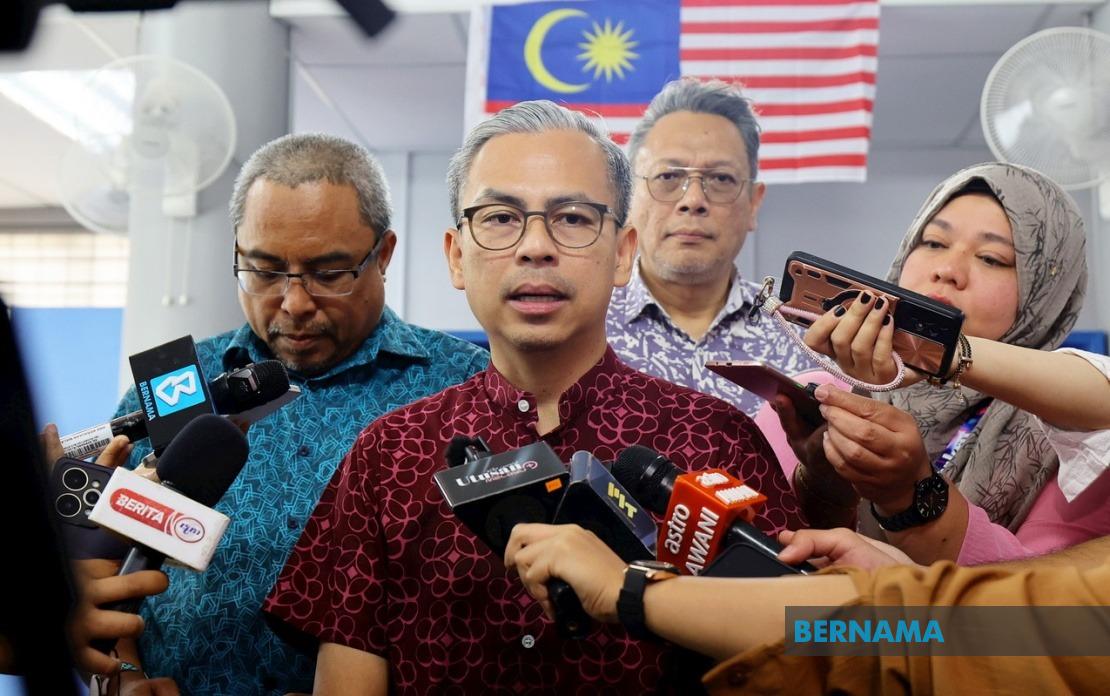
The release of the 211-page Royal Commission of Inquiry report into Lembaga Tabung Haji's operations between 2014 and 2020 has triggered questions about its timing relative to the upcoming Negeri Sembilan state election. However, Communications Minister Datuk Seri Fahmi Fadzil moved to dispel suggestions of political calculation, insisting that the Department of Islamic Development Malaysia made the publication decision only after the Cabinet had thoroughly examined and unanimously endorsed it.
Fahmi's remarks, delivered at a community gathering in Jempol after attending a safe internet campaign event, underscore the government's commitment to following established protocols in handling sensitive institutional matters. The minister emphasised that the decision transcended mere publication for public consumption; it was designed to enable parliamentary scrutiny through debate in the Dewan Rakyat and to establish a foundation for enforcement agencies to pursue investigations and remedial action grounded in the RCI's substantive findings.
The decision to release the report now, rather than immediately upon its completion, reflects a strategic calculation about institutional rehabilitation. Tan Sri Abdul Rashid Hussain, the TH chairman who also participated in the RCI, had reportedly requested that publication be deferred following his appointment in 2023. This delay was intended to provide space for the institution to implement the commission's recommendations and thereby restore depositor confidence before the public airing of potentially damaging revelations.
According to Fahmi, approximately 75 per cent of the RCI's recommendations have already been operationalised within TH's structures. Nonetheless, several critical recommendations remain outstanding, particularly those requiring legal intervention and coordinated action by enforcement bodies. The minister indicated that police investigations, Malaysian Anti-Corruption Commission inquiries, and Bank Negara Malaysia assessments would all proceed based on the report's conclusions, alongside enforcement under the Anti-Money Laundering and Anti-Terrorism Financing legislation.
The report's findings paint a troubling picture of financial irregularities spanning the entire 2014 to 2020 period under examination. Of particular concern are allegations of what the RCI termed "creative accounting" practices, whereby documented losses of RM1.4 billion in 2017 were reportedly reclassified through accounting adjustments to present the institution as having achieved a RM3.4 billion profit. Such practices, if substantiated through investigation, would represent systematic misrepresentation of TH's financial health to depositors and stakeholders.
Fahmi addressed criticism that the RCI report failed to employ colloquial language such as "sakau" (embezzlement) when describing alleged misconduct. He contended that an official RCI report appropriately uses legally precise terminology—corruption, mismanagement, and breach of fiduciary duty—rather than vernacular expressions. This linguistic choice reflects the report's intention as a formal institutional document suitable for legal proceedings and parliamentary consideration, not popular commentary.
The scope of alleged irregularities extends well beyond the 2017 anomalies. Fahmi acknowledged that the evidence examined by the RCI suggests problematic practices had originated as early as 2014, establishing a pattern of institutional dysfunction spanning multiple leadership tenures. This chronology complicates any narrative attributing misconduct to a single administrator or discrete period, instead suggesting systemic governance failures that persisted across years of oversight and internal audit.
The government's handling of the report reflects careful management of competing objectives: maintaining public confidence in a major Islamic financial institution serving millions of Malaysian depositors while simultaneously ensuring accountability for apparent breaches of trust. The delay in publication allowed TH management to implement corrective measures and strengthen operational safeguards before confronting the reputational challenge that revelations of such scale would inevitably provoke among depositors.
For Malaysian depositors and the broader Muslim community served by TH, the report's release alongside confirmation of enforcement action represents a commitment to institutional accountability. The involvement of multiple agencies—police, MACC, Bank Negara Malaysia—signals that alleged wrongdoing will be thoroughly investigated through appropriate legal channels rather than managed through internal processes alone.
The timing question, while politically sensitive given the Negeri Sembilan election context, appears less significant than the substance of the RCI's work and the government's commitment to implementation. By emphasising Cabinet unanimity and the engagement of established institutional processes, Fahmi sought to frame the report's release as a natural progression in governance, rooted in proper procedure rather than electoral calculation. Whether this framing succeeds in insulating the decision from political interpretation will likely depend on subsequent enforcement actions and their perceived rigour and impartiality.

