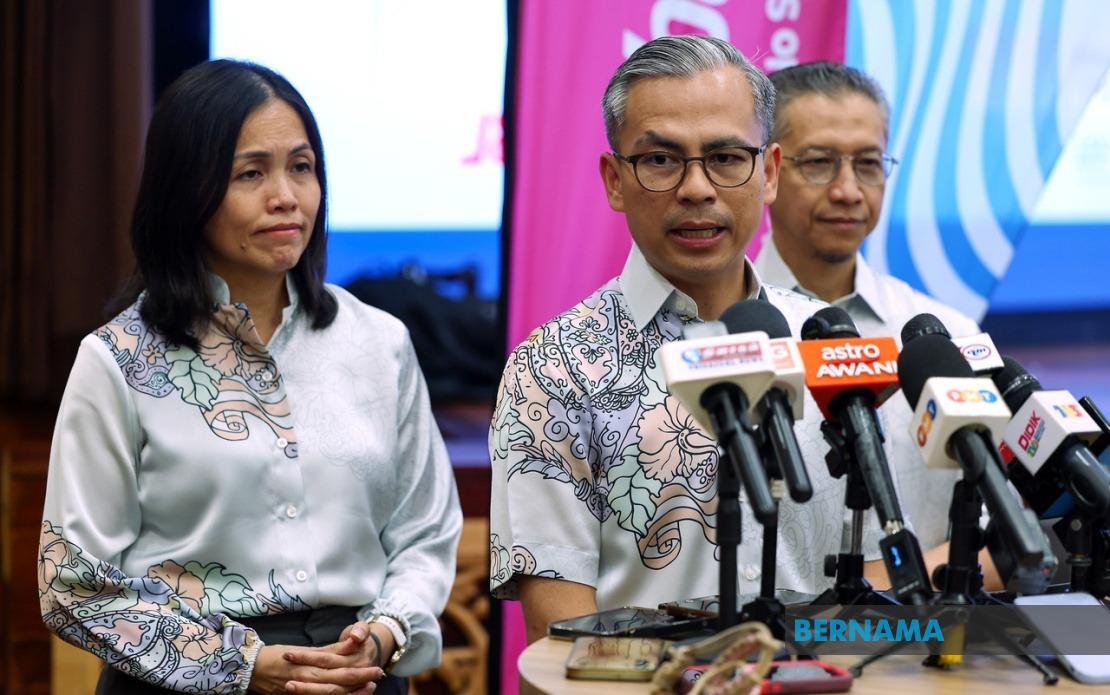
The findings of the Royal Commission of Inquiry into Lembaga Tabung Haji have officially crossed the threshold from public disclosure into the enforcement and investigative phase. Communications Minister Datuk Seri Fahmi Fadzil confirmed in Putrajaya on August 12 that the government has submitted the comprehensive RCI report to a constellation of enforcement bodies tasked with pursuing potential wrongdoing uncovered during the inquiry's examination of the hajj fund's operations.
The institutional machinery now charged with examining the RCI's conclusions encompasses a deliberately broad range of authorities, reflecting the multifaceted nature of governance failures identified in the report. The Royal Malaysia Police will conduct criminal investigations, while the Malaysian Anti-Corruption Commission will examine potential corruption and misconduct. Simultaneously, regulatory bodies including Bank Negara Malaysia and the Inland Revenue Board will investigate their respective remits, with specialized anti-money laundering authorities also engaged. This comprehensive referral represents the government's intention to leave no potential violation unexamined, though critics have questioned whether the machinery was adequately mobilized earlier when the report was first released on July 29.
The RCI itself documented substantial deficiencies in Tabung Haji's stewardship during the 2014 to 2020 period, a critical span encompassing multiple administrations and spanning the critical post-Goods and Services Tax transition years when the fund faced mounting pressures. The inquiry produced 25 recommendations for systemic improvement, though by the time of the public submission, Tabung Haji management claimed to have implemented approximately three-quarters of these suggestions. The fact that 75 percent compliance had already been achieved by July 30 raises complex questions about the adequacy of remedial measures undertaken without formal investigation into culpability for the original failures.
The government's decision to lodge the report with authorities follows parliamentary discussion that exposed significant political fractures. A special sitting of the Dewan Rakyat on August 11 saw 39 MPs debate the RCI findings after Minister in the Prime Minister's Department (Religious Affairs) Dr Zulkifli Hasan presented the government's briefing. However, opposition lawmakers representing Perikatan Nasional staged a walkout, boycotting both the ministerial presentation and subsequent debate. Their exit was precipitated by Speaker Tan Sri Johari Abdul's ruling to proceed without Prime Minister Datuk Seri Anwar Ibrahim's physical presence, a procedural decision that became the focal point of opposition objections rather than substantive engagement with the RCI's actual conclusions.
Fahmi's characterization of Parti Pribumi Bersatu Malaysia's attendance at the debate as "wise and appropriate" carried unmistakable political messaging, contrasting Bersatu's participation with the boycott staged by other Perikatan Nasional components. His observation that PAS members and then-Leader of the Opposition Hamzah Zainudin held Cabinet positions when the RCI was initially established in 2021 appeared designed to underscore the cross-party responsibility for enabling the conditions under which governance weaknesses persisted. The implication seemed to be that opposition parties now boycotting the debate bore responsibility for the very failures they were refusing to discuss, a rhetorical strategy aimed at reframing parliamentary paralysis as opposition evasion of accountability.
Regarding broader institutional reform, Fahmi acknowledged that proposals from both Barisan Nasional and Pakatan Harapan lawmakers for a second RCI examining Tabung Haji's 2021 to 2025 operations would require Cabinet approval and, critically, royal consent through the Yang di-Pertuan Agong. This constitutional requirement for dual authorization effectively places the decision beyond purely executive discretion, introducing both a deliberative hurdle and a potential avenue for the monarchy to scrutinize whether a second inquiry remains justified. The government's apparent openness to the proposition appears cautious rather than committed, suggesting that decision-making authority may be deliberately diffused across institutions.
For Malaysian stakeholders in the hajj system, the submission of the RCI report to investigative authorities represents a potential inflection point where institutional documentation transforms into legal accountability. Tabung Haji manages billions of ringgit in pilgrims' funds and retirement savings, making governance failures consequential for hundreds of thousands of families preparing for or recovering from the hajj journey. The identification of weaknesses spanning 2014 to 2020 encompasses multiple shifts in political control and economic conditions, yet accountability mechanisms have historically moved slowly in Malaysia's administrative framework.
The referral to multiple authorities simultaneously may prove either comprehensively effective or administratively cumbersome. When investigations span institutions with varying priorities and jurisdictional boundaries, coordination becomes essential yet often elusive. Bank Negara Malaysia's examination of financial management practices may reveal different conclusions than the MACC's investigation of individual conduct, and both may proceed on parallel tracks without mechanism for harmonization. Malaysian experience with multi-agency investigations suggests that sequential rather than simultaneous action often characterizes implementation, potentially delaying comprehensive accountability.
The political dimension of the RCI report extends beyond the immediate parliamentary theater. Tabung Haji's governance failures occurred during periods of both United Malays National Organisation dominance and early Pakatan Harapan governance, suggesting that institutional dysfunction transcended electoral cycles and partisan management. Whether investigators will pursue accountability proportionate to findings regardless of the political affiliation of officials involved during the 2014-2020 period remains a significant test of institutional independence. Public confidence in any investigative outcome will substantially depend on perceptions of fairness and thoroughness regardless of which era or political actors receive scrutiny.
Moving forward, the government's submission of the RCI report to enforcement authorities represents a formal but not necessarily conclusive step toward accountability. Malaysian administrative practice has historically demonstrated that referrals to investigative bodies often proceed without corresponding public disclosure of findings or prosecutorial outcomes. The public may learn more from parliamentary inquiries, media investigation, or eventual court proceedings than from the formal investigative machinery now mobilized. Whether this particular referral results in prosecutions, sanctions, or institutional reforms remains contingent on investigative capacity, political will, and the threshold of evidence authorities ultimately deem sufficiently grave to warrant formal action.

