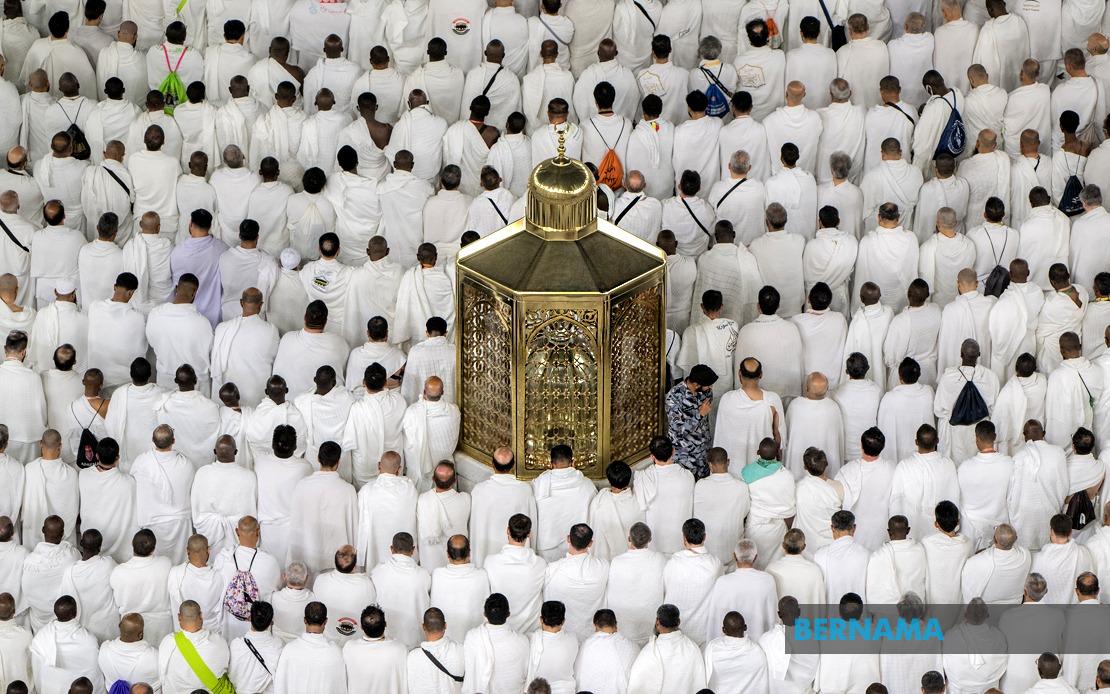
Tabung Haji has reaffirmed its commitment to maintaining the "first-registered, first-served" allocation system for Haj offers, rejecting proposals to introduce preferential categories that could undermine the established queue structure. The decision was confirmed during parliamentary proceedings by Marhamah Rosli, Deputy Minister in the Prime Minister's Department (Religious Affairs), who emphasized that the current mechanism ensures all depositors receive equitable opportunities aligned with Saudi Arabia's annual pilgrimage quota.
The clarification emerged in response to a parliamentary query from Abdul Latiff Abdul Rahman, who sought to explore whether compulsory retirees receiving gratuity payments might receive expedited access to Haj placements, given their improved financial standing and traditionally lengthy waiting periods. The proposal reflected broader concerns about accommodating specific demographic groups facing extended delays, yet the government's position prioritizes systemic consistency over targeted interventions.
Marhamah articulated the rationale for maintaining the existing framework, noting that introducing special offer categories would inevitably disrupt the sequential queue system that governs placements. Such changes, she argued, would disadvantage depositors who have already invested considerable time in the waiting list, creating arbitrary inequities that contradict the foundational principles Tabung Haji has historically championed. The approach reflects a broader institutional philosophy that emphasizes procedural integrity over accommodating individual circumstances, no matter how compelling.
Every depositor enrolled with Tabung Haji receives advance notification of their anticipated Haj year, allowing substantial lead time for comprehensive preparation spanning financial accumulation, health screening, and religious education. This transparency regarding timelines aims to mitigate surprise and disappointment, though critics argue that advance notice cannot adequately address the psychological and logistical strain of multi-year waiting periods. The system essentially transforms the pilgrimage into a long-term savings objective rather than a spontaneous religious aspiration.
Effective from the current Haj season, Tabung Haji has implemented a heightened financial prerequisite requiring prospective pilgrims to maintain a minimum savings balance of RM15,000 before receiving offer letters. This threshold represents approximately 45 percent of the actual pilgrimage cost, estimated at RM33,300, establishing a meaningful financial commitment while still requiring substantial additional resources. The requirement serves dual purposes: demonstrating serious intent and ensuring depositors possess basic liquidity to handle unexpected Haj-related expenses beyond the standard package.
Depositors facing extended waiting periods retain the option to submit formal appeals, though these are evaluated individually against established criteria and priority considerations. This mechanism provides limited flexibility within an otherwise rigid sequential system, acknowledging that extraordinary circumstances occasionally warrant discretionary review. However, the appeals process operates within narrow parameters, and successful outcomes remain exceptional rather than routine.
Malaysia's allocation for the current Haj season stands at 31,600 pilgrims, a figure determined entirely by Saudi Arabian authorities based on global demand and domestic capacity considerations. This quota represents the upper boundary of Malaysian participation regardless of accumulated waiting lists or internal demand pressures. The government has confirmed that securing additional slots falls exclusively within Saudi Arabia's discretionary authority, though Tabung Haji commits to annual applications requesting supplementary quotas to address the persistent gap between demand and availability.
The persistent mismatch between Haj demand among Malaysian Muslims and the constrained quota represents a structural challenge that administrative reforms cannot fully resolve. Malaysia's Muslim population continues expanding, while Haj capacity expansion occurs slowly if at all. This demographic-logistical imbalance will likely perpetuate extended waiting periods for decades, making the fairness of the allocation mechanism increasingly crucial to public acceptance of inevitable delays.
A notable achievement involves the complete absence of reported Haj package fraud cases during the 1447 Hijrah season, attributed to strengthened enforcement mechanisms and the effectiveness of the "No Visa, No Haj" awareness initiative. This campaign supports Saudi Arabia's "No Haj Without Permit" policy, discouraging unauthorized pilgrimage attempts that endanger individual safety and compromise the regulatory framework. Enhanced coordination between Tabung Haji, Royal Malaysia Police, and the Ministry of Tourism, Arts and Culture has created an effective task force addressing fraud vulnerabilities that previously undermined system integrity.
For Malaysian pilgrims navigating the Haj system, the policy stance confirms that patience and sequential waiting constitute the path forward, regardless of personal financial improvements or professional transitions. The governance approach privileges institutional transparency and procedural consistency over accommodating specific constituency requests, reflecting a philosophy that equal treatment under established rules supersedes attempts to address individual hardships through exceptions. While reasonable arguments exist for exploring alternative allocation mechanisms, the government has signaled that foundational reform remains unlikely in the near term.

