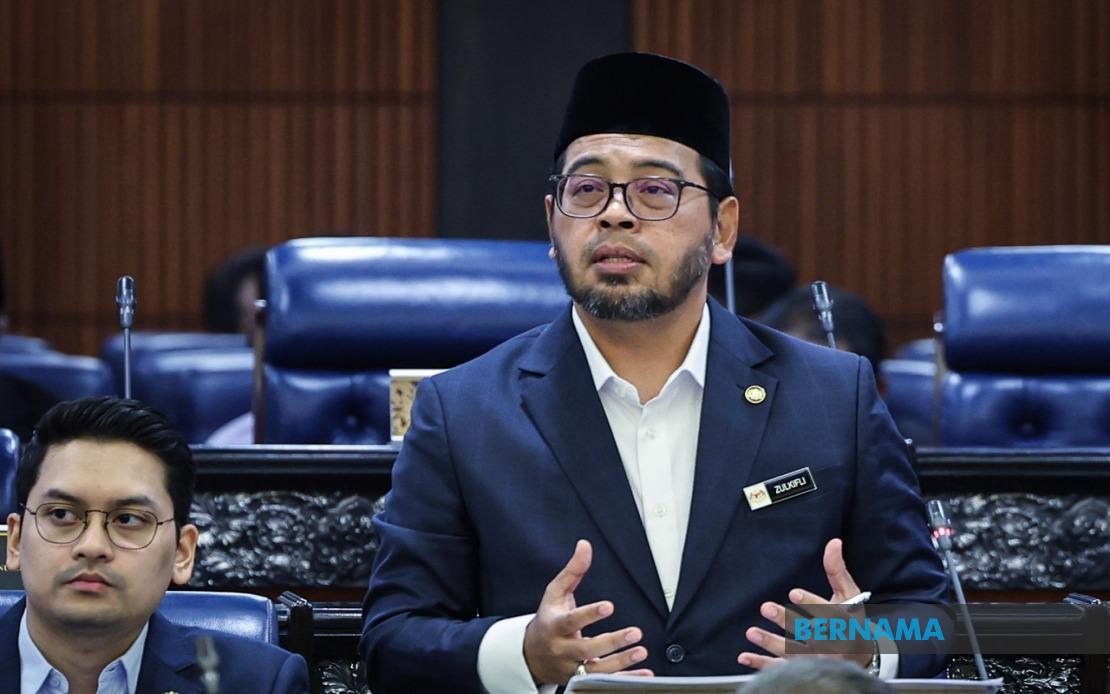
The financial implosion of Tabung Haji (TH) need not have happened, according to Minister in the Prime Minister's Department (Religious Affairs) Dr. Zulkifli Hasan, who pointed to a cascade of ignored regulatory warnings from Bank Negara Malaysia as the crucial inflection point where early intervention could have stemmed the damage. Speaking during parliamentary debate on the Royal Commission of Inquiry report into the pilgrim fund's collapse, Zulkifli disclosed that BNM issued five separate warning letters between August 2014 and September 2016 specifically addressing deficiencies in TH's financial position, reserve adequacy, and liquidity management practices.
The significance of this timeline cannot be overstated for Malaysian depositors and policymakers alike. Had TH's leadership responded appropriately to BNM's 2014 warnings—the earliest of which preceded the institution's eventual RM10 billion asset-liability deficit by four years—the government's need to deploy substantial public funds for a bailout could potentially have been circumvented entirely. Instead, institutional inertia permitted the fund's financial condition to deteriorate progressively, with the deficit eventually reaching catastrophic proportions by end-2018. This narrative raises uncomfortable questions about corporate accountability at a quasi-governmental institution holding savings for approximately 9 million Malaysian pilgrims and their families.
The minister's characterisation of TH's response is particularly damning: despite claiming to have taken steps addressing BNM's concerns, the institution's actual conduct demonstrated that these regulatory reminders "were not given serious attention at all." This disconnect between stated compliance and demonstrable action speaks to deeper governance failures within the organisation. For Malaysian voters and taxpayers, the implication is clear—warning systems exist within the financial regulatory architecture, yet the institutions subject to oversight can apparently disregard them with relative impunity until catastrophe forces intervention.
Central to TH's malfeasance was the declaration of dividend payments when the institution's liabilities exceeded its assets, a practice that violates Section 22 of the Tabung Haji Act. Additionally, TH distributed hibah (grants) to depositors in ways untethered to actual financial realities, perpetuating this unsustainable practice through 2017. These actions constitute not mere administrative oversights but deliberate distributions from a deteriorating asset base, effectively borrowing against future earnings to maintain the appearance of performance. Such conduct would trigger regulatory action swiftly in the commercial banking sector; that it persisted for years at a religious endowment raises questions about the effectiveness of oversight mechanisms for non-bank financial institutions.
The Royal Commission of Inquiry's finding that TH should not have received clean audit certificates adds another layer of institutional failure. Rather than issuing unqualified opinions, auditors should have flagged these matters as non-compliance, signalling to stakeholders and regulators alike that something was fundamentally amiss. The issuance of clean certifications despite mounting structural problems suggests either inadequate audit rigour or a culture of deference to institutional authority that compromised professional independence. For Malaysian investors and depositors across the financial system, such revelations underscore the importance of demanding truly independent audit functions.
Zulkifli's acknowledgment that governance improvements are now underway offers some reassurance, yet the historical pattern demands scrutiny. The minister announced that amendments to the Tabung Haji Act 1995 will be implemented promptly to strengthen governance frameworks. Forensic auditing has already been conducted on investments flagged in the RCI report, and the government has endorsed the establishment of a Multi-Agency Task Force to investigate high-risk investments. These initiatives—focused on investigation, enforcement action, asset recovery, and legal strengthening—represent the orthodox response to corporate malfeasance. However, their necessity is itself an indictment of earlier lapses.
The establishment of such mechanisms raises a broader question about whether Malaysia's regulatory and governance architecture can prevent similar institutional deterioration elsewhere. TH was hardly an obscure entity operating beyond regulatory sight; BNM was actively engaged, issuing explicit warnings. Yet five letters over two years were insufficient to prompt corrective action. This suggests that even when regulators identify problems and communicate them formally, the absence of teeth in enforcement—or the deference shown to established institutions—can render such warnings toothless. For Bank Negara Malaysia itself, the episode raises questions about what escalation protocols exist when initial warnings fail to produce results.
For the broader Malaysian financial ecosystem and Southeast Asian observers, the TH case illustrates the vulnerabilities of quasi-governmental institutions that occupy ambiguous spaces between commercial discipline and public service missions. Unlike purely commercial banks, TH operates with implicit government backing and manages savings with religious significance; these characteristics may create false confidence among stakeholders and complacency within management. When governance lapses occur at such institutions, the fallout extends beyond commercial loss to public trust in the financial system itself. Malaysia's nearly nine million TH depositors have learned through bitter experience that religious trust and government association do not guarantee institutional soundness.
The parliamentary debate itself—stretching beyond ten hours with 39 Members of Parliament participating—underscores the political salience and public concern surrounding TH's collapse. Speaker Tan Sri Johari Abdul noted that a third parliamentary session would occur in October, permitting continued scrutiny. This extended engagement is appropriate given the stakes, yet it also highlights how reactive rather than proactive the system proved to be. Early attention to BNM's 2014 warnings might have precluded the need for such drawn-out reckoning. Malaysian legislators and citizens face a choice about whether to treat the TH crisis as a singular institutional failure or as a signal of broader systemic weaknesses requiring more comprehensive reform of how Malaysia supervises and manages large financial institutions entrusted with public savings.
Moving forward, the critical measure of whether the government has truly learned from this episode will be whether the proposed Multi-Agency Task Force actually recovers assets, whether amended legislation is enforced consistently, and whether regulatory warnings at other institutions receive prompt, substantive responses. The minister's framing emphasises clear government intent "to investigate, take enforcement action, recover assets, and strengthen laws." Implementation, however, demands sustained political will and organisational capacity. For Malaysian depositors and investors watching from the sidelines, the TH outcome serves as a reminder that even substantial institutions with governmental connections face genuine risks if governance deteriorates and warnings go unheeded—a lesson with uncomfortable relevance across the region.

