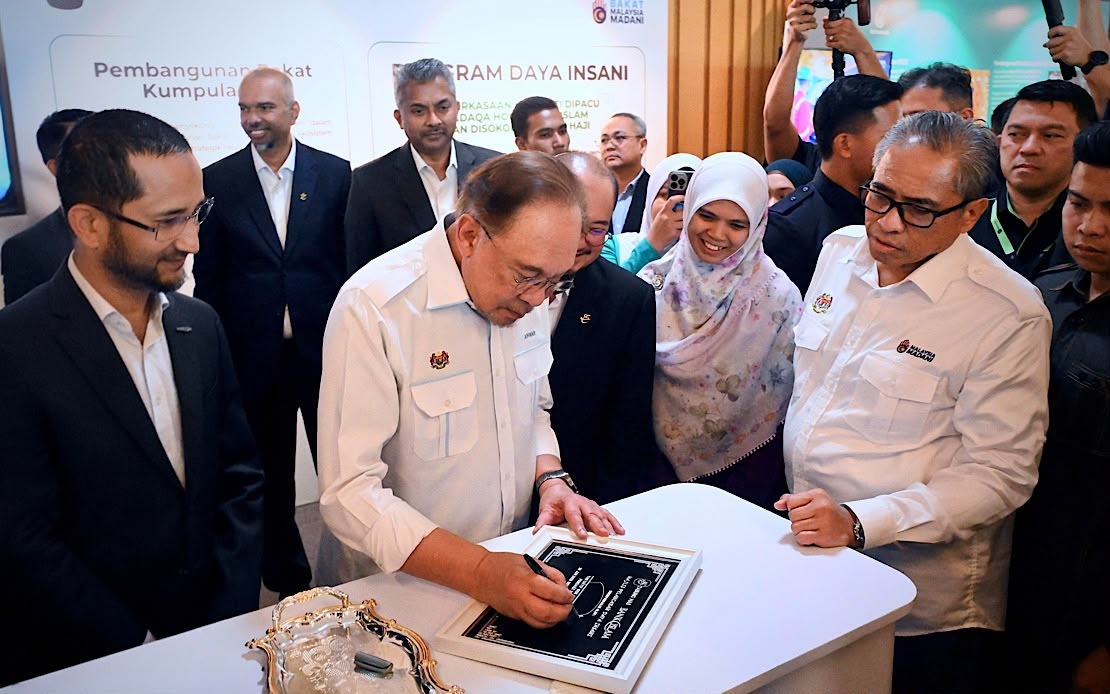
Tabung Haji and Bank Islam Malaysia Berhad have jointly unveiled the Asnaf Youth Development Programme for Inclusive and Sustainable Empowerment, known as DAYA INSANI, backed by an initial commitment of RM1 million. Announced through a formal statement, this initiative represents a significant push to equip disadvantaged young Malaysians with marketable skills and direct pathways into employment across multiple sectors. The programme was formally activated when Tabung Haji transferred funds to Sadaqa House, Bank Islam's social finance arm, during the launch of the broader MADANI Talent initiative by Prime Minister Datuk Seri Anwar Ibrahim in Sendayan, Negeri Sembilan.
The core objective of DAYA INSANI extends beyond conventional job-training models by integrating three interconnected pillars: specialised skills development, meaningful exposure to actual industry operations, and guaranteed placement opportunities with pre-identified strategic partners. By concentrating efforts on asnaf—a classification in Islamic tradition referring to those most in need of support—and orphaned youth, the programme addresses a demographic segment that typically faces systemic barriers to professional advancement. The designers anticipate that the initial funding will enable more than 100 young participants to transition from economic vulnerability into sustainable livelihoods within the formal economy.
The initiative directly aligns with the government's MADANI Talent agenda, which prioritises inclusive human capital development as a cornerstone of national economic resilience. For Malaysia, where youth unemployment and underemployment remain persistent challenges, particularly among lower-income communities, this collaboration signals a shift toward mobilising Islamic financial institutions as engines of social mobility. The partnership between a pilgrimage fund manager and a Shariah-compliant bank demonstrates how entities traditionally focused on specific religious or financial functions can be repositioned to address broader development imperatives.
Sadaqa House will serve as the operational hub, orchestrating partnerships with a carefully curated network of industry leaders and educational institutions. The Kulim Hi-Tech Park Skills Centre will focus on producing technically competent workers in high-demand manufacturing and technology sectors, addressing skill shortages that continue to frustrate employers in Malaysia's industrial corridors. Simultaneously, Kolej Universiti Bestari and Kumpulan Medic Iman Sdn Bhd will train professional nurses, responding to persistent healthcare workforce challenges across Malaysia's public and private medical systems. The Malaysian Professional Accountancy Centre will prepare certified accountants, while Showme Education will develop therapeutic professionals—sectors where qualified Malaysian practitioners remain in short supply relative to regional demand.
The programme builds upon existing momentum rather than launching entirely from scratch. A nursing diploma initiative with Kolej Universiti Bestari and KMI Healthcare commenced in 2024 with 19 enrolled students, and one graduate has already secured employment, providing proof of concept that the model can deliver measurable outcomes. In the technical domain, the first cohort at Kulim Hi-Tech Park involving 13 participants began training in June, with ambitious plans to scale participation to 100 individuals in the near term. These early results suggest the infrastructure and institutional partnerships are sufficiently mature to absorb significant expansion in participant numbers.
Tabung Haji Group Managing Director and Chief Executive Officer Mustakim Mohamad framed the initiative within a broader philosophy that prioritises investment in human potential as the optimal long-term strategy for community welfare. His statement underscored the institution's conviction that equipping youth with portable skills and professional credentials represents a more sustainable approach to addressing poverty than temporary relief mechanisms. The emphasis on Islamic financial institutions collaborating with corporate and industrial players reflects a strategic recognition that durable talent development requires ecosystem-level coordination rather than isolated institutional effort.
Bank Islam Group Chief Executive Officer Raja Datin Paduka Teh Maimunah Raja Abdul Aziz positioned the programme within a social finance framework—a model gaining traction across Southeast Asia as conventional philanthropic approaches prove insufficient to address structural economic exclusion. By embedding social objectives directly into financial operations, Bank Islam signals that profitability and community empowerment need not be contradictory imperatives. This approach resonates particularly strongly in Malaysia's context, where Islamic finance principles increasingly influence how both public and private institutions conceptualise their obligations to broader society.
The initiative explicitly welcomes additional funding contributions from corporate entities, charitable foundations, and individual donors, effectively creating a pooled resource mechanism that could substantially exceed the initial RM1 million commitment. This financing model has several implications for Malaysian philanthropy. It formalises giving channels through established institutions with credibility and operational capacity, potentially redirecting informal charitable impulses into programmatic structures with documented outcomes. For corporations, association with DAYA INSANI offers alignment with environmental, social and governance frameworks increasingly demanded by international investors and conscious consumers.
Sector-specific partnerships reveal strategic thinking about labour market realities. Healthcare, accounting, and technical manufacturing represent domains where Malaysia simultaneously faces genuine skill deficits and strong domestic and regional employment demand. By concentrating training on these fields rather than oversupplied professions, the programme maximises employment prospects for graduates. The technical emphasis on Kulim Hi-Tech Park is particularly significant given the park's role as a regional semiconductor and advanced manufacturing hub, sectors where Malaysia competes for investment and talent against Singapore, Taiwan, and Vietnam.
For asnaf youth specifically, participation in DAYA INSANI offers more than vocational certification. The programme implicitly addresses confidence deficits, professional networks, and workplace cultural navigation—intangible assets that disadvantaged populations often lack despite possessing technical capacity. By pairing skills training with industry exposure through established partners, participants develop relationships and contextual knowledge that traditionally educated but socially disconnected youth might otherwise struggle to acquire. This holistic approach to employability reflects contemporary understanding that technical credentials alone prove insufficient in competitive labour markets.
The programme's scale—targeting more than 100 participants through the initial funding—suggests ambitions extending beyond tokenistic intervention. If successful, this model could be replicated across other Malaysian states and expanded within Negeri Sembilan, potentially influencing how Tabung Haji and Bank Islam allocate resources to social objectives. The emphasis on strategic partnerships also creates incentive structures for participating institutions to invest in curriculum quality and placement outcomes, since their institutional reputation becomes intertwined with programme success.
Looking forward, DAYA INSANI's success will likely hinge on placement rates rather than training completion metrics alone. The true measure of impact will emerge when graduates transition into sustained employment, advance through career progression, and eventually support their own families and communities. For Malaysian policymakers and development practitioners, this initiative offers a template for leveraging Islamic financial institutions' comparative advantages—deep community trust, commitment to inclusive growth, and resource availability—to address talent development gaps that government programmes struggle to fill independently. As Malaysia competes for investment and talent against higher-wage regional economies, ensuring that disadvantaged youth can access quality training and employment pathways becomes increasingly central to both economic competitiveness and social cohesion.

