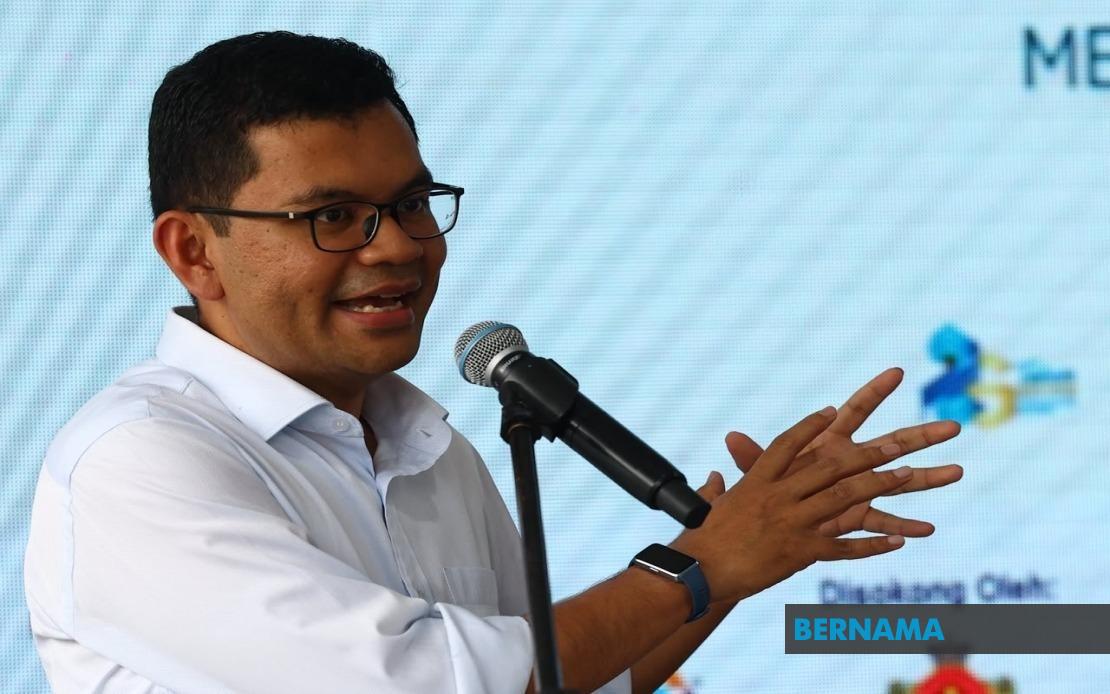
Economy Minister Akmal Nasrullah has sounded a sharp warning about the persistent problem of wasted public money stemming from negligent oversight and weak accountability mechanisms in Malaysia's government project management. Speaking in Alor Setar on August 6, Akmal pointed to a troubling pattern where successive administrations have failed to eliminate the same structural weaknesses despite nearly 70 years of national independence, suggesting that the issue reflects deeper institutional and cultural problems rather than isolated administrative lapses.
Akmal's remarks centre on his public criticism of the Kedah water treatment plant project, a matter he has tracked closely through multiple government portfolios. His willingness to speak bluntly about project failures has drawn both support and pushback, with some questioning whether such scrutiny falls within his ministerial remit. Rather than retreating from the controversy, however, Akmal has doubled down on his position, framing the issue not as departmental infighting but as a necessary intervention to protect taxpayer interests and improve government performance across the board.
The Economy Minister's intervention reveals a significant gap between policy design and execution in Malaysia's government machinery. He acknowledges that policy frameworks themselves are not the primary obstacle, noting that government policies naturally evolve to address changing circumstances. Instead, Akmal identifies attitudes and institutional mindsets as the core problem. This distinction is crucial because it suggests that Malaysia's project management failures cannot be solved through legislative reforms or policy adjustments alone; they require a fundamental shift in how government officials approach their responsibilities to the public.
The Kedah LRA project serves as a concrete illustration of these systemic weaknesses. Akmal has maintained close oversight of the initiative from its inception under the Energy Transition and Water Transformation Ministry (PETRA) through its subsequent transition to coordination under the Economy Ministry. This extended monitoring period afforded him direct visibility into the project's trajectory and the mounting concerns that emerged along the way. His frustration is evident in his statement that despite flagging multiple issues, meaningful improvements failed to materialise before the very problems he warned about ultimately came to pass.
For Malaysian taxpayers and civil society observers, Akmal's public stance raises important questions about government accountability and internal mechanisms for course correction. The fact that a senior minister felt compelled to air concerns publicly suggests that internal channels for raising and addressing project problems may be insufficient. If an Economy Minister with direct responsibility for the portfolio could not secure necessary changes through conventional bureaucratic processes, this implies systemic breakdowns in how government institutions handle warnings from senior leadership. The implications extend beyond a single water project to encompass how Malaysia manages public finances more broadly.
The broader context of government project mismanagement has long been a concern in Malaysia. Previous administrations and various audit reports have documented cost overruns, delays, quality issues, and incomplete projects across infrastructure, defence procurement, and social programmes. Akmal's willingness to break ranks and critique specific projects while still in office suggests a possible shift in how some ministers view their accountability obligations. Rather than maintaining institutional silence to protect departmental reputations, he is arguing that transparency about failures serves the larger public interest.
Akmal's position also touches on generational and institutional fatigue. The persistence of poor project management practices across multiple administrations and decades raises uncomfortable questions about whether Malaysia's bureaucratic culture fundamentally incentivises accountability. When officials can move between postings without consequences for project failures, or when whistleblowing carries professional risks, the conditions exist for complacency to flourish. His reference to "business as usual" suggests he views the current approach as institutionally embedded rather than reflecting individual incompetence or corruption.
The minister's intervention also carries implications for how Malaysia positions itself as a developing economy seeking to attract foreign investment and manage large infrastructure initiatives. Multinational companies and international development partners increasingly scrutinise governance frameworks and project delivery track records when evaluating investment environments. Persistent evidence of poor project management, coupled with weak enforcement of accountability, can undermine investor confidence and complicate Malaysia's efforts to compete for skilled talent and foreign direct investment in knowledge-intensive sectors.
For regional comparisons, Malaysia's project management challenges are not unique to the country, as many Southeast Asian nations face similar issues. However, the difference lies in institutional responses. Some regional peers have implemented stronger audit mechanisms, project governance frameworks, and consequences for poor performance. Akmal's public criticism may signal the beginning of a more critical assessment within Malaysian government about whether current systems adequately protect public resources and ensure efficient project delivery.
The practical implications for government agencies are significant. Akmal's stance creates potential momentum for strengthening project oversight, establishing clearer lines of accountability, and creating safer channels for officials to raise concerns without fear of professional retaliation. Whether this translates into actual systemic reform will depend on support from senior political leadership and broader bureaucratic buy-in. His public positioning could either catalyse meaningful change or, if left without institutional follow-up, become merely a signal of individual frustration without systemic consequence.
Looking forward, Akmal's intervention underscores that sustainable improvement in government project management requires more than technical expertise or policy frameworks. It demands a cultural shift where accountability is prioritised over institutional protection, where early warnings trigger genuine investigation rather than defensiveness, and where project managers understand their fiduciary duty to taxpayers as paramount. The Kedah water treatment plant controversy thus becomes emblematic of a much larger challenge that Malaysia must address if it hopes to improve government effectiveness and restore public confidence in how official institutions manage national resources.

