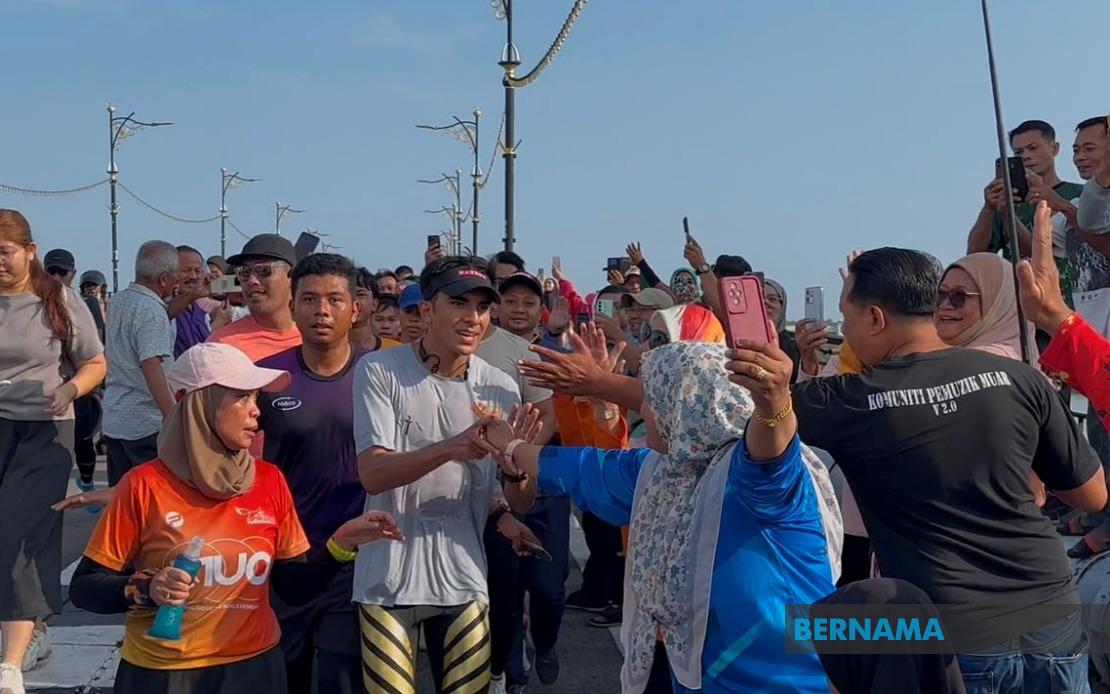
Muar Member of Parliament Syed Saddiq Syed Abd Rahman crossed the finishing line at Laman Maharani on July 19, completing his ambitious "Larian Kesyukuran" (Gratitude Run) before a jubilant crowd of approximately 2,000 supporters who had gathered since dawn. The culmination of his four-day endurance challenge marked a significant achievement in his constituency-based fundraising initiative, which officially commenced from the Palace of Justice in Putrajaya on July 16. The momentum that carried him across the final stretch proved emblematic of the widespread engagement the run had generated throughout the peninsula.
Syed Saddiq commenced the concluding 17-kilometre segment from Simpang Sungai Rambai in Melaka, traversing the Sultan Ismail Bridge in the company of the "Muo Runner" group before arriving at the designated terminus at 9.15 am. The symbolic journey through multiple states underscored the cross-regional appeal of the charitable endeavour, with participants and well-wishers joining him throughout the concluding stages. This progression through various communities reflected how the initiative had transcended municipal boundaries to capture broader peninsular interest.
The charitable mission yielded RM650,959.20 in total contributions, substantially surpassing the initial target of RM200,000 by more than threefold. This outcome demonstrated considerable confidence in the MP's commitment to directing resources toward community welfare. Syed Saddiq pledged that the entire amount would flow directly into assistance programmes for Muar residents, with particular focus on providing food baskets and educational technology devices to disadvantaged students requiring digital learning support.
Addressing supporters and media representatives at the Muar MP's Service Centre immediately following the completion, Syed Saddiq expressed profound gratification at the demonstrated solidarity. His remarks highlighted the personal dimension of fundraising drives of this nature, particularly referencing contributions from all socioeconomic segments, including a 50-sen donation from a child—capturing the inclusive spirit that animated the campaign. The breadth of participation reflected not merely financial generosity but a deeper acknowledgment of representative responsiveness to constituent needs.
The geographical reach of support extended considerably beyond Muar's formal constituency boundaries. Individuals travelling from adjacent areas such as Batu Pahat made deliberate journeys to the finishing point, signalling that the run had acquired significance transcending narrow municipal politics. This territorial expansion of engagement suggested that constituent expectations regarding elected representatives' visible investment in community welfare—particularly through physically demanding demonstrations of commitment—resonated across a wider demographic than traditional constituency divisions.
Among those making the effort to participate were 64-year-old Aminah Abd Rahman and her daughter Syarifah Fatimah Syed Ali, 26, who journeyed from Batu Pahat to offer both material and moral support. Their decision to monitor the run's daily progress through social media platforms before attending the finale illustrated how digital connectivity had amplified awareness of the initiative beyond immediate geographic proximity. Their subsequent testimony underscored a perceived distinction between representatives who undertake tangible personal exertion for constituent benefit and those whose engagement remains primarily bureaucratic.
In her commentary, Aminah observed that such initiatives remain uncommon among elected officials, noting that her family's decision to contribute emerged from sustained engagement with the run's progression across multiple days. This observation carries implications for contemporary Malaysian political culture, suggesting constituent appetite for demonstrable commitment extending beyond conventional parliamentary duties. The willingness to undertake sustained physical challenge appeared to function as a credibility marker, distinguishing commitment from mere rhetoric.
The "Larian Kesyukuran" nomenclature—translating as "Gratitude Run"—carried layered significance. Beyond its nominal description, the terminology positioned the fundraising endeavour within frameworks of thanksgiving and community acknowledgment rather than mere charity distribution. This framing proved consequential for how diverse constituencies interpreted their participation, potentially elevating their sense of agency from passive beneficiaries to active participants in collective expressions of gratitude.
For Malaysian political observers, the undertaking illustrated evolving expectations regarding representative engagement. The substantial oversubscription of fundraising targets, combined with cross-regional participation and multigenerational support, suggested public responsiveness to visible demonstrations of physical commitment. The initiative's success in mobilising resources and participation offers templates for other elected representatives considering comparable community-focused enterprises, though the personal demands involved inherently restrict widespread replication.
The welfare applications receiving support—particularly food security and digital educational access—address tangible constituent vulnerabilities that formal government provision sometimes incompletely addresses. By channelling the entire fundraising sum toward these specified needs, Syed Saddiq established direct traceability between his physical exertion and specific community improvements. This transparency regarding fund deployment enhanced the initiative's integrity and distinguished it from more amorphous charitable endeavours.
Within broader Malaysian political contexts, the run's success demonstrated continued constituent interest in representative accessibility and visible engagement with local communities. The substantial turnout at the finishing point and the willingness of supporters to commit resources and time suggested that traditional political engagement mechanisms remain functional when paired with authentic demonstrations of commitment. The initiative transcended typical parliamentary-constituency relations by introducing physical challenge as a mechanism for validating representative sincerity.
Moving forward, the resources mobilised through this endeavour will directly benefit Muar residents through specified assistance programmes. The precedent established through the run's successful completion may influence future constituent expectations regarding representative engagement, potentially encouraging comparable initiatives among other parliamentarians. The integration of physical endurance with charitable fundraising appears to have resonated strongly with Malaysian constituents, suggesting potent combinations of health consciousness and social responsibility within contemporary political culture.

