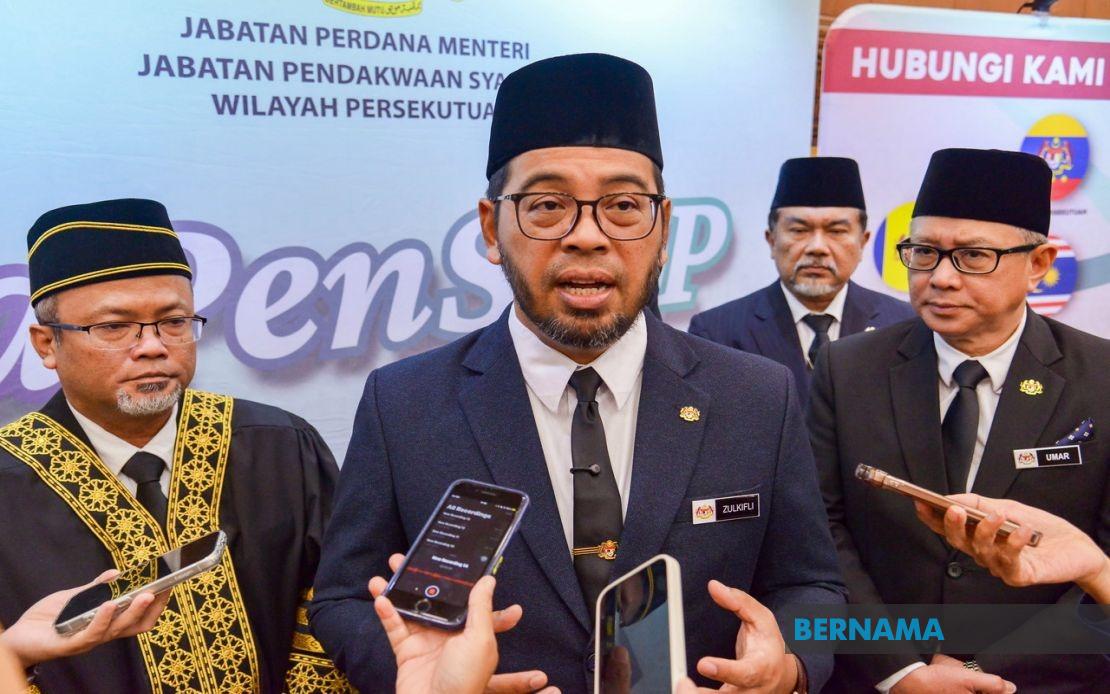
The long-awaited Syariah Judges' Remuneration Act is approaching a critical juncture, with Minister in the Prime Minister's Department (Religious Affairs) Dr Zulkifli Hasan confirming that relevant documentation has been substantially prepared and is undergoing final refinements ahead of formal submission for government action. Speaking in Putrajaya on July 15, the minister outlined the current status of the initiative, which forms part of broader efforts to strengthen Malaysia's Islamic judicial framework and enhance the professional standing of Syariah Court personnel.
The Department of Syariah Judiciary Malaysia (JKSM) has been leading a comprehensive assessment process alongside other government bodies, conducting extensive engagement sessions with relevant stakeholders to ensure the proposal reflects diverse perspectives and addresses legitimate concerns. This consultative approach underscores the complexity of the undertaking, which extends beyond simple administrative arrangements to encompass significant financial ramifications and institutional restructuring across the nation's Islamic court system.
Dr Zulkifli acknowledged that while the foundational documentation is ready for review, refinement work continues to incorporate feedback received during stakeholder consultations. The necessity for continued fine-tuning reflects the proposal's sensitivity and the interconnected nature of remuneration frameworks within Malaysia's federal structure. Government officials remain committed to expediting the process without compromising thoroughness, recognising that hasty implementation could create unforeseen complications or inconsistencies.
This initiative carries considerable significance for Malaysia's Islamic judiciary, where pay structures have historically lagged behind comparable positions in secular courts, creating potential challenges in attracting and retaining qualified judicial professionals. Addressing these remuneration disparities represents a strategic investment in institutional capacity and the quality of Islamic legal services delivered to Malaysian citizens and Muslim communities across diverse demographic and geographic contexts.
Concurrently, the government is advancing a parallel initiative to establish a dedicated Syariah Prosecution Department (JPSM), which would professionalise the prosecution function within Islamic courts. Documentation for this proposal has similarly reached an advanced stage, currently undergoing policy-level refinement before ultimately reaching the Cabinet for consideration. The interconnected nature of these two institutional developments suggests coordinated evolution of Malaysia's Islamic legal infrastructure.
Statewide consultations have been instrumental in the development process, with Dr Zulkifli emphasising that successful implementation requires genuine collaboration between federal authorities and state governments. Malaysia's federal constitution allocates responsibility for Islamic affairs primarily to state administrations, making their buy-in essential for practical effectiveness. Multiple engagement sessions have been conducted to ensure that state interests and concerns are adequately represented within the proposal's framework.
Dr Zulkifli characterised the undertaking as a genuinely collaborative endeavour rather than a centralised federal initiative imposed from above, reflecting constitutional realities and pragmatic recognition that sustainable reform requires consensus among stakeholders controlling implementation mechanisms. This inclusive approach, while extending the development timeline, enhances legitimacy and increases prospects for smooth adoption across Malaysia's thirteen states and three federal territories.
Prime Minister Datuk Seri Anwar Ibrahim previously reaffirmed the government's determination to advance this agenda, committing in July 2024 to expedited implementation of the Syariah Judges' Remuneration Act as a mechanism for elevating the professional status and institutional prestige of Islamic Court judges throughout the nation. This high-level political endorsement signals sustained governmental prioritisation despite bureaucratic complexities and competing policy demands on ministerial attention.
The timing of these announcements, made during the Malaysia Syariah Prosecutors Conference (PePSSM) 2026, demonstrates deliberate government signalling to the Islamic legal community of serious reform commitments. Public statements at professional gatherings serve multiple functions: demonstrating accountability to practitioners, reinforcing policy direction within relevant agencies, and managing expectations among affected constituencies regarding implementation timelines and likely outcomes.
For Southeast Asian observers, Malaysia's efforts to modernise its Islamic judicial framework offer instructive lessons regarding institutional development and federal-state coordination in plural societies. As other regional nations contemplate comparable structural reforms addressing professional standards and remuneration within specialised court systems, Malaysia's experience provides valuable precedent regarding both promising practices and potential pitfalls in managing complex stakeholder consultations and implementation logistics.
The successful conclusion of these parallel initiatives would represent meaningful progress toward a more professionally robust Islamic judicial system capable of commanding greater public confidence and attracting higher-calibre personnel. However, ultimate success depends upon Cabinet approval, legislative implementation, and effective execution by state authorities and JKSM—stages that remain dependent upon continued political will and bureaucratic capacity to translate policy commitments into institutional reality.

