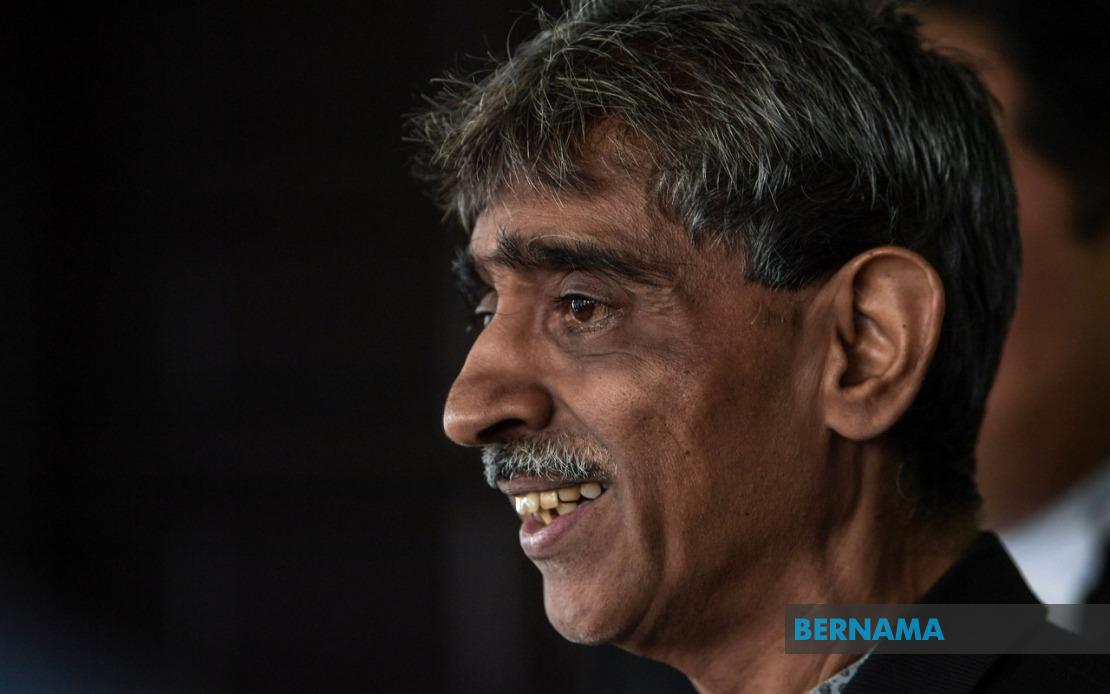
Criminal prosecution must follow swiftly once investigations into the Tabung Haji scandal produce sufficient evidence, according to Mohamed Haniff Khatri Abdulla, a lawyer who participated in the Royal Commission of Inquiry proceedings. His call reflects growing pressure on authorities to translate the RCI's findings into concrete legal action, regardless of the status or position of those implicated. The imperative to act decisively stems from the broader institutional challenge facing Malaysia's largest Islamic financial institution, which has faced severe reputational damage following allegations of mismanagement and potential wrongdoing affecting millions of depositors across the country.
The pathway from inquiry recommendations to courtroom prosecution demands meticulous adherence to evidentiary standards and procedural rigour. Mohamed Haniff emphasised that immediate action upon completion of investigations would demonstrate genuine commitment to accountability and significantly boost public confidence in both the justice system and Tabung Haji itself. Such prompt intervention sends a powerful signal that no individual, irrespective of their former authority or connections, remains above the law. This messaging proves particularly vital in Malaysia's current political climate, where public scepticism about selective justice and political motivations behind prosecutions remains a persistent concern among citizens and civil society observers.
The investigation landscape emerging from the RCI report is both vast and complex, involving two separate enforcement agencies operating under distinct administrative frameworks. The Royal Malaysia Police and the Malaysian Anti-Corruption Commission have together summoned approximately 200 individuals to provide statements, an undertaking that underscores the breadth of scrutiny required across multiple aspects of Tabung Haji's operations. These investigations extend beyond simple financial irregularities to encompass governance structures, investment decision-making processes, and potential violations of various laws governing financial institutions. Such comprehensive examination necessarily demands considerable time and resources to ensure that evidence gathered withstands rigorous courtroom scrutiny.
Mohamed Haniff proposed an innovative institutional mechanism to streamline the complex prosecutorial landscape. He recommended establishing a dedicated unit within the Attorney General's Chambers comprising three experienced Deputy Public Prosecutors specialising in both anti-corruption law and conventional criminal procedure. This specialised body would serve as a centralised evaluation point for all investigation papers submitted by PDRM and MACC, ensuring coordinated assessment rather than fragmented handling. The logic underlying this proposal recognises that investigations involving multiple agencies risk inefficiency, duplication, and potential gaps in evidence compilation if not subject to unified oversight from the prosecution side. Such structural innovation could accelerate case preparation while maintaining evidential integrity.
Realistic expectations about the timeline for completing investigations prove essential for managing public perception and political discourse. Mohamed Haniff anticipated that the investigation phase would likely extend for an additional three to six months, a projection grounded in the sheer volume of evidence requiring examination and the necessity for thorough scrutiny across interconnected matters. This timeline reflects the fundamental truth that credible criminal investigations cannot be rushed without risking both evidentiary weakness and legal vulnerabilities that defence counsel would exploit. Public impatience, while understandable given the widespread impact of Tabung Haji's difficulties, cannot override the procedural requirements upon which successful prosecution ultimately depends.
The relationship between RCI findings and subsequent prosecution deserves careful clarification, as public understanding on this point remains muddled. Former Court of Appeal judge Datuk Yaacob Md Sam, who has served as a conducting officer in multiple royal commissions including inquiries into the Butterworth ferry terminal collapse, explained that RCI reports carry no direct legal force in criminal or civil proceedings. The Commissions of Inquiry Act 1950 explicitly precludes RCI findings from serving as admissible evidence in court, meaning that enforcement agencies must independently reconstruct cases through their own investigative mechanisms. This distinction matters profoundly, as it explains why the RCI's conclusions, however damning they may appear, cannot directly translate into courtroom victories without substantial additional work.
The investigative methodology required by law enforcement agencies differs fundamentally from the inquiry approach adopted by the RCI. While royal commissions operate under government-determined terms of reference and employ flexible evidentiary standards appropriate to administrative rather than criminal proceedings, police and anti-corruption agencies must gather evidence conforming to strict criminal procedure codes and rules of evidence. Witnesses must be questioned under conditions ensuring admissibility of their statements, documentary evidence must be properly authenticated and preserved, and the chain of custody for physical evidence must meet judicial scrutiny. This transition from administrative inquiry to criminal investigation represents a substantial undertaking that cannot be compressed into unrealistic timeframes without compromising the integrity of eventual prosecutions.
Managing public expectations through strategic and phased communication emerges as a critical governance challenge. Mohamed Haniff warned against allowing public perception to become skewed by political narratives, emphasising that staged announcements of prosecutions as evidence accumulates would demonstrate that government action reflects investigative progress rather than political calculation. If authorities delay announcement of prosecutions until multiple cases reach court simultaneously, public cynicism may flourish, particularly among segments questioning whether the change in political administration influenced enforcement priorities. Conversely, regular updates explaining which investigative components have concluded and which remain ongoing would ground public understanding in evidentiary reality rather than political speculation.
The stakes underlying Tabung Haji's institutional recovery extend far beyond individual accountability or prosecutorial success. This financial institution serves as a crucial savings mechanism for millions of Malaysian Muslims planning their hajj pilgrimage, and its credibility depends upon demonstrable commitment to protecting depositor interests through rigorous investigation and prosecution of those responsible for any violations. The institution's recovery trajectory remains intrinsically linked to public restoration of confidence, which can only emerge from transparent, credible legal accountability rather than swift but potentially flawed prosecution. The balance between urgency and procedural rigour thus represents not merely a technical legal consideration but a fundamental question about institutional legitimacy and public faith in Malaysia's justice apparatus.
The broader implications for Southeast Asia's regulatory environment merit consideration, particularly given the region's ongoing struggle to strengthen financial sector governance and anti-corruption enforcement. Malaysia's handling of the Tabung Haji matter will inevitably influence regional perceptions about the credibility of anti-corruption investigations and the willingness of governments to pursue accountability regardless of institutional or political sensitivity. The investment in establishing proper prosecutorial mechanisms and allowing evidence-based investigation to proceed without artificial acceleration sends important signals to neighbouring jurisdictions about commitment to principled enforcement. Conversely, premature or politically motivated prosecution risks delegitimising future enforcement efforts across the region.
The path forward demands simultaneous commitment to both accountability and procedural integrity, a balance requiring considerable political discipline from government authorities. Mohamed Haniff and Datuk Yaacob both underscore that successful prosecution ultimately depends upon evidence capable of withstanding judicial scrutiny rather than upon political will or public pressure to secure convictions. This reality means that authorities must resist temptation to announce prosecutions before investigation teams confirm that evidence meets requisite standards, regardless of political demands for visible action. The establishment of specialised prosecutorial oversight, combined with staged communication about investigative progress, offers a structured approach to managing this tension between accountability imperatives and prosecutorial demands.
Ultimately, the credibility of any enforcement action arising from the Tabung Haji RCI will depend upon the quality and robustness of evidence presented in court, not the speed with which prosecutions commence. While public confidence undoubtedly demands visible progress, that progress must manifest through properly constructed cases rather than through rapid but potentially vulnerable prosecutions. The legal framework and expert guidance available to Malaysian authorities provide the tools necessary to pursue accountability while maintaining standards that will withstand appellate scrutiny. Success in this endeavour depends not on accelerating investigation timelines but on executing investigation and prosecution with the rigour and independence that genuine accountability demands.

