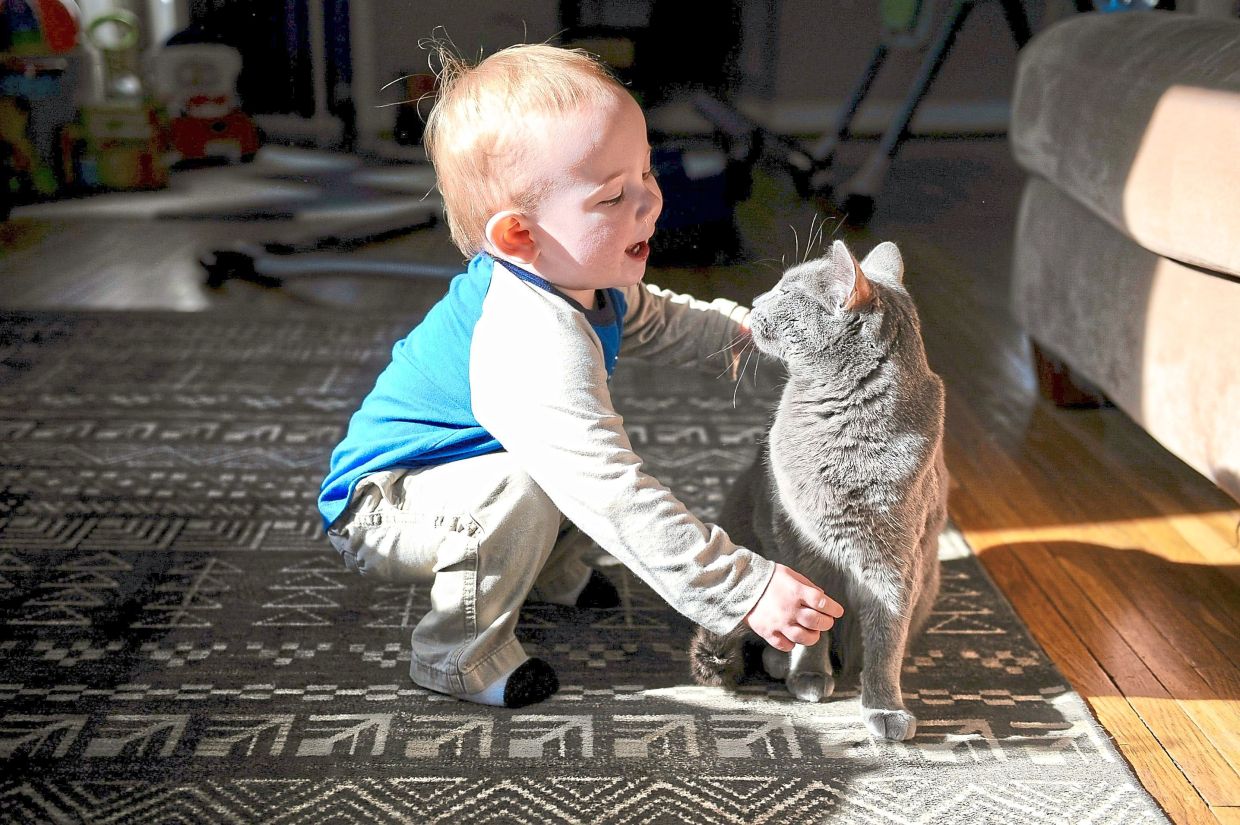
For decades, families with asthmatic children have faced a difficult choice: surrender beloved household cats or risk triggering respiratory attacks. Yet a comprehensive study from Sweden now challenges this widely held assumption, suggesting that the presence of cats in the home poses no measurable threat to children with asthma. The findings, based on tracking nearly 30,000 Swedish children over two years, may ease the minds of pet-loving families and reshape clinical guidance around asthma management and animal allergens.
Asthma ranks among the most prevalent chronic conditions affecting children globally, with the Global Asthma Network estimating that 9.1% of children and 11% of adolescents suffer from the disease. These proportions shift considerably depending on geography, local environmental conditions, and healthcare infrastructure. The condition remains a significant driver of childhood hospitalisation in many countries, particularly in developed nations where diagnosis rates tend to be higher. In Malaysia and across Southeast Asia, asthma prevalence varies by region, making evidence-based guidance on triggering factors crucial for families managing the disease.
Medical consensus has long identified several established risk factors for asthma development and exacerbation. Air pollution exposure, particularly in urban and industrial areas, ranks among the most significant contributors. Parental smoking—both during pregnancy and throughout childhood—substantially increases risk. Childhood viral infections, rising childhood obesity rates, and pre-existing allergic conditions such as eczema and hay fever also predict worse respiratory outcomes. Animal dander, particularly from cats, has traditionally occupied a prominent place in this catalogue of triggers, with many patients reporting anecdotal experiences of asthma attacks following cat contact.
However, the scientific evidence supporting this connection has remained surprisingly unclear. While patients frequently report subjective worsening of symptoms around cats, the clinical and epidemiological literature presents contradictory findings. Most previous research involved small study populations or examined specific subgroups—such as highly allergic individuals or urban dwellers—whose experiences may not reflect broader patterns across diverse populations. This gap between patient perception and research evidence created uncertainty for both families and healthcare providers.
The Swedish research team, led by Dr Resthie R Putri at Stockholm's Karolinska Institutet, addressed this evidence gap through an unusually large and comprehensive approach. Beginning in 2023, they assembled a cohort of 30,277 children aged four to seventeen years, all diagnosed with asthma or airway allergies and born between 2006 and 2020. Tracking these young patients over 24 months through 2024, the researchers accessed detailed clinical records spanning diagnoses, emergency department visits, medication prescriptions, asthma control assessments, and lung function tests—all drawn from Sweden's linked national health registers. This systematic approach eliminated reliance on patient memory or self-reporting, instead capturing objective medical events and clinical measurements.
Sweden's mandatory cat registration system, implemented in 2023 for all cats born after 2008, provided an unusually reliable method for identifying which households owned cats. The researchers found that 9.4% of the children in their cohort lived with at least one cat. By comparing asthma outcomes between this cat-exposed group and children without cats, they could assess whether the presence of feline companions meaningfully affected respiratory health. The results revealed no statistically significant associations. Among the cat-exposed children, 9.6% had moderate-to-severe asthma based on medication requirements, compared with 10.1% among those without cats. Acute asthma exacerbations—the frightening attacks requiring emergency intervention—occurred in 3.3% of cat-exposed children versus 3.5% of unexposed children.
These figures indicate not merely that cats pose no additional risk, but that asthma severity appears virtually identical between the two groups. For a subset of 1,428 children where detailed lung function testing was available, 97 lived with cats. Spirometry measurements and asthma control test scores showed no meaningful differences between cat-exposed and non-exposed children. This objective physiological data reinforces the conclusion drawn from medication and hospital records: cat exposure does not compromise respiratory function or disease control in children with established asthma.
The underlying mechanism explaining these surprising findings likely relates to the ubiquity of cat allergen exposure. As Dr Putri observes, cat dander exists in numerous shared environments beyond the home—schools, public transportation, and other community spaces where children congregate. A child without a cat at home may encounter substantial allergen exposure through these incidental contacts, potentially explaining why researchers detected no protective effect of avoiding household cats. This widespread exposure may cause desensitisation over time, or alternatively, children genuinely sensitive to cats may already have avoided exposure through other household choices, creating a selection bias that masks any true effect.
The research does carry important limitations worth acknowledging. The study lacked individual-level data on which specific allergens each child's immune system recognised, preventing researchers from identifying which asthmatic children were truly cat-sensitised. The relatively recent implementation of Sweden's cat registry means some households with cats may have been incorrectly classified as non-exposed, potentially obscuring modest protective or harmful effects. These limitations suggest the findings capture broad population-level patterns rather than precise individual predictions.
For Malaysian families and those across Southeast Asia confronting asthma management decisions, these findings offer meaningful reassurance. While individual sensitivities certainly exist, the evidence from this large Swedish cohort suggests that blanket recommendations to remove cats from asthmatic children's homes may lack scientific foundation. Instead, families can base cat ownership decisions on individual testing and observation rather than categorical exclusion policies. Healthcare providers treating childhood asthma might redirect focus toward more proven interventions: controlling air quality, managing parental smoking, addressing obesity, and identifying specific environmental triggers through proper allergy assessment rather than presumptively blaming animal companions for respiratory difficulties.

