A Swedish court has dealt another blow to a Hong Kong couple's efforts to regain custody of their young daughter, rejecting their legal challenge against the social welfare administration's bid to formally transfer guardianship to her foster family. The decision, delivered on June 10, effectively closes off one avenue for Tsang and Kwan to contest the placement of their four-year-old daughter, Lily, who has been living with foster parents since May 2024. The ruling highlights the Swedish legal system's prioritisation of child welfare protections over parental rights when the two come into conflict.
The Swedish Social Welfare Committee had issued a report three days earlier outlining its assessment that Lily required protection from what it characterised as a "rootless and insecure existence" under her biological parents' care. In that same report, the committee formally applied to the local court to appoint Lily's current foster parents as her "specially appointed legal guardians", a status that would give them full legal authority over the child's upbringing and major decisions affecting her welfare. The committee's language emphasised the child's need for stability, stating that "Lily has the right to grow up in a home where daily life is characterised by warmth, routines, predictability and safety, and where she feels secure and content every day."
The parents' inability to demonstrate what the committee termed "receptivity" and "insight" regarding their daughter's best interests proved decisive in the welfare authority's decision. The phrase suggests that social workers conducting assessments found the couple either unwilling or unable to acknowledge concerns raised about their parenting approach, or to work collaboratively with authorities toward addressing those concerns. This failure to engage constructively with the welfare system, in the eyes of Swedish authorities, justified the decision to seek guardianship transfer to the foster parents rather than pursue a family reunification pathway.
The court's June 10 rejection of the parents' legal challenge reveals an important procedural barrier: Swedish law does not permit judicial review of social welfare committee decisions through the mechanism the parents attempted to use. The court stated plainly that social welfare reviews were not subject to judicial challenges at that stage, leaving the parents to await a formal decision from authorities before they could pursue legal action. This sequential approach can leave parents in legal limbo for months, unable to mount a courtroom defence while administrative processes continue to advance toward permanent guardianship changes.
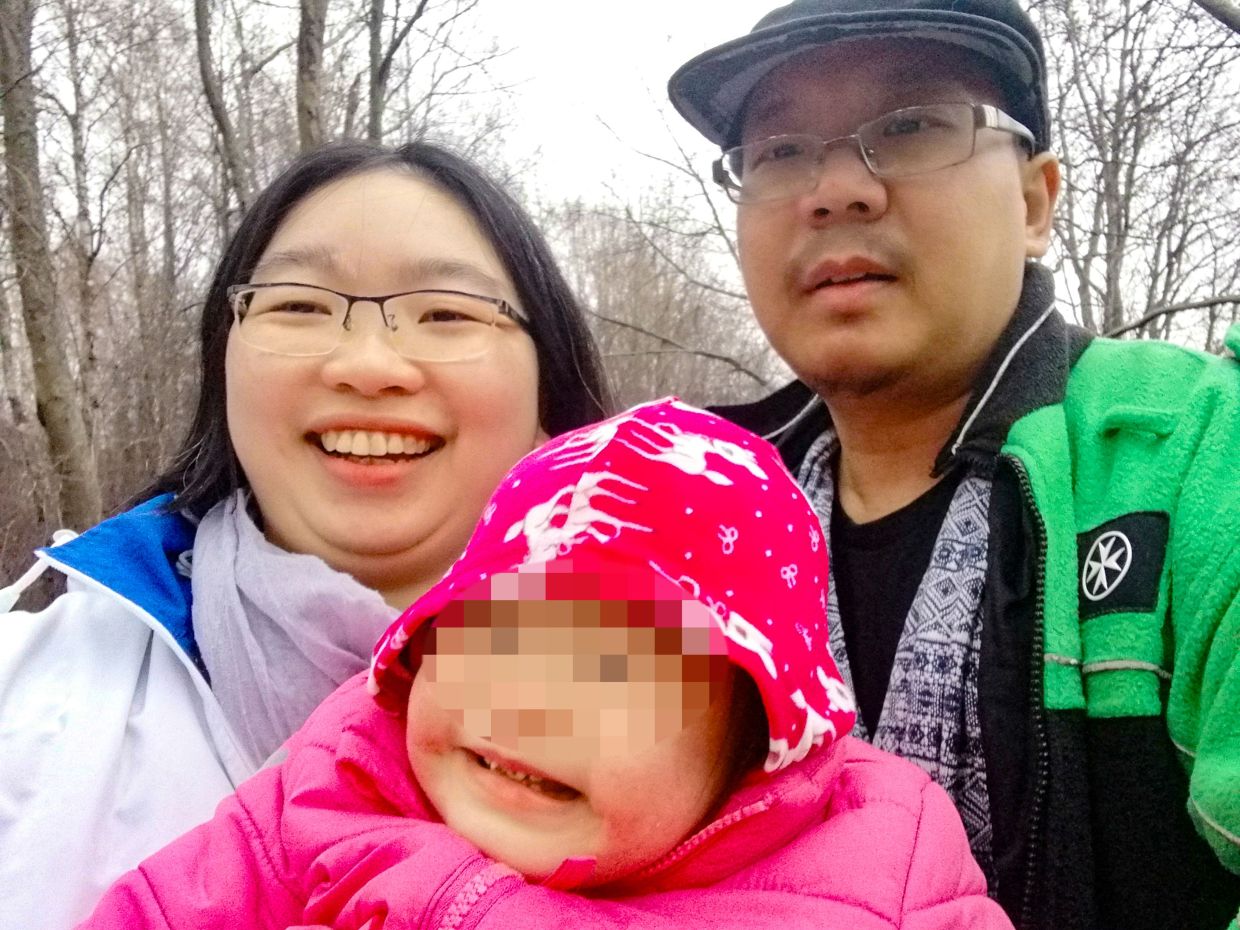
Tsang expressed significant frustration with the court's ruling to the South China Morning Post, stating that he was dismayed the Swedish court "did not even allow us the opportunity to challenge its irrationality". His complaint reflects the parents' sense of powerlessness within a system that appears, from their perspective, to exclude them from meaningful participation in decisions about their daughter's future. The couple's distress over the situation has led them to establish a social media campaign called "Save Lily", through which they have shared family photographs and documentation in hopes of generating public attention and support for their case.
The family's troubles began well before Lily's placement in Swedish care. She was born at home in Finland in October 2021, the couple's second child. Their eldest daughter, also born at home, had died at the age of one month in 2019, a tragedy that triggered involvement from Finnish authorities investigating allegations of parental negligence. When Finnish officials learned of Lily's birth, they refused to register it because the couple's permanent address was listed as Hong Kong rather than Finland, creating bureaucratic complications that would follow the family across borders.
The family subsequently relocated to Sweden, but circumstances worsened rather than improved. Both parents were arrested on suspicion of money laundering, and Lily was transferred to social welfare care in December 2023. Although Swedish prosecutors ultimately dropped the money laundering charges against the couple, their arrest and the surrounding circumstances provided the social welfare system with grounds to maintain child protection measures. The original financial crime investigation, even though it did not result in convictions, had already created official concern about the parents' circumstances and stability.
After their release on bail, Tsang and Kwan returned to Hong Kong, where they attempted to rebuild their family life. They welcomed a baby boy, Danny, earlier this year through another home birth. However, their difficulties with authorities persisted: the couple refused to submit a DNA test as proof of their biological relationship to Danny, a requirement for birth registration in Hong Kong. Consequently, the newborn was placed under the care of the Social Welfare Department, mirroring the guardianship situation that had developed with Lily in Sweden.
The situation regarding Danny remains fluid and subject to ongoing assessment. Whether the parents can regain custody will depend on social worker evaluations of their parenting capabilities and ultimately on a Hong Kong court decision. This parallel case demonstrates that child protection concerns have followed the family across jurisdictions, suggesting that authorities in multiple systems have identified issues they believe require intervention. On Monday, Tsang reported that he and Kwan had brought Danny, now approximately three months old, to a Department of Health maternal and child health centre for medical examination under the supervision of government social workers. The examination found no health irregularities with the infant.
The couple's Hong Kong case is scheduled for court hearing late this month, offering a potential opportunity to present their position before a judge in their home jurisdiction. However, the outcome in Sweden suggests the legal path may prove challenging. The Swedish precedent demonstrates how welfare authorities in developed nations increasingly assert guardianship powers when they identify what they perceive as deficiencies in parental care or stability, making it difficult for parents without established resources, community ties, or demonstrated capacity to work with social services to regain custody once authorities have intervened.
For Malaysian and Southeast Asian readers, this case raises important questions about cross-border child protection, the power of welfare authorities, and the sometimes adversarial relationship that develops between parents and child protection systems. It also highlights how home birth practices, when not properly documented, can trigger state intervention and how jurisdictional complexities can compound legal difficulties for families. The ongoing efforts by Tsang and Kwan to regain custody of both Lily and Danny illustrate the long and uncertain road parents face when contesting child protection decisions in developed nations with robust, assertive social welfare systems.