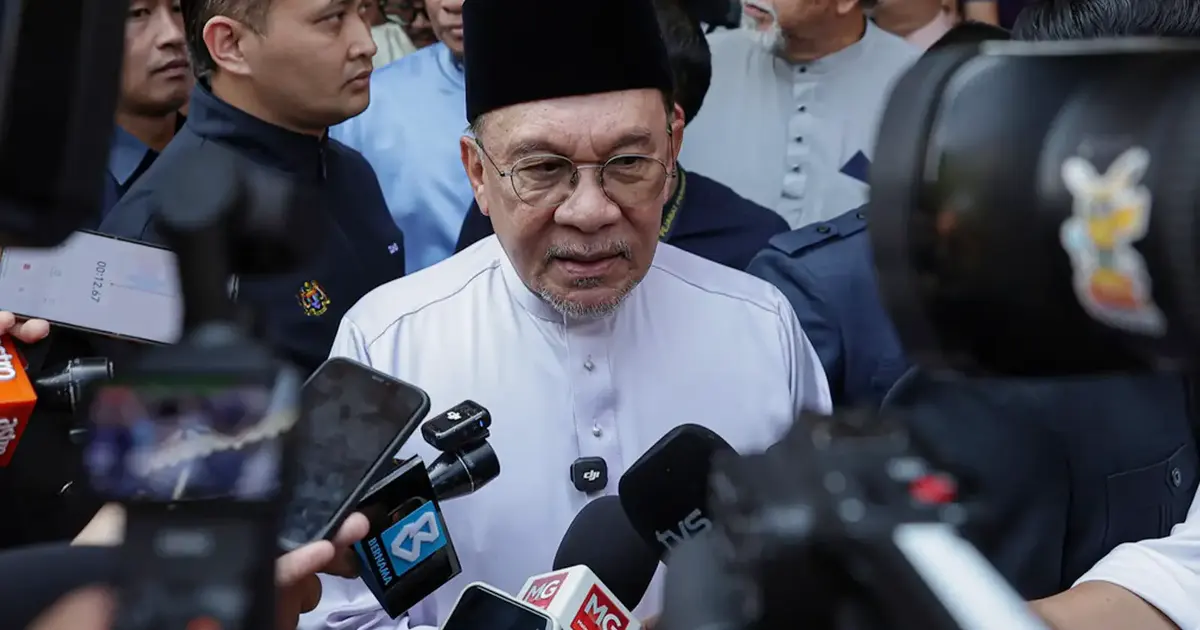
Prime Minister Anwar Ibrahim has used encouraging findings from a Merdeka Center survey as a springboard for renewed commitment rather than self-satisfaction, cautioning his administration against the pitfalls of basking in public approval. The survey's positive results, which placed the government favourably in public confidence metrics, serve as validation that the electorate recognises efforts undertaken since the administration took office, but Anwar emphasised this should catalyse further determination rather than diminish it.
The framing of survey success as a call to intensified labour rather than a resting point reflects a strategic mindset increasingly common among sitting governments seeking to maintain momentum. For Anwar's administration, which took office amid considerable expectations following the 2022 general election and subsequent political consolidation, maintaining high public engagement remains essential to sustaining the coalition's credibility. The approach also signals awareness that approval ratings can shift swiftly, particularly in a political environment as fluid as Malaysia's, where shifting coalitions and competing narratives frequently reshape public perception.
Anwar's remarks underscore a broader challenge facing his government: translating public goodwill into tangible policy outcomes that address Malaysia's persistent economic, institutional, and governance concerns. The prime minister has consistently positioned his administration as one committed to comprehensive reform, from strengthening institutional independence to tackling corruption, modernising the civil service, and pursuing more inclusive economic development. Without demonstrable progress on these fronts, even strong polling figures risk evaporating as citizens' patience for change meets the often grinding pace of bureaucratic implementation.
The Merdeka Center, a respected independent polling organisation, has become a significant barometer of public sentiment in Malaysia's political landscape. Its surveys, conducted regularly across diverse demographic and geographic segments, carry considerable weight in shaping perceptions of government performance among both policymakers and the general public. When such surveys register positive approval trends, they typically reflect public perception of competence, economic management, or progress on visible projects rather than ideological alignment alone. For a government like Anwar's, which brought together previously fractious political factions, maintaining broad approval serves as glue binding the coalition.
The economic dimension looms large in any discussion of public approval in Malaysia. The nation has grappled with inflationary pressures, employment concerns particularly among young Malaysians, and structural questions about long-term competitiveness in an increasingly digitalised global economy. Though inflation has moderated from earlier peaks, household finances remain strained for many Malaysians, and joblessness, especially among graduates, remains a persistent challenge. Survey approval, while encouraging, must eventually translate into jobs created, incomes supported, and opportunities expanded if it is to endure.
Anwar's caution against complacency also reflects lessons from Malaysia's political history, where governments have faced rapid reversals in fortune. The coalition that brought him to power united parties with differing agendas and competing regional power bases. Maintaining internal cohesion requires demonstrating consistent progress and avoiding the appearance that the government is taking voter support for granted. Should approval ratings decline, internal fault lines could widen, creating opportunities for opposition parties to reassemble fractured alliances or attract disaffected coalition members.
The institutional reform agenda, which Anwar has emphasised as central to his government's mission, remains a complex undertaking requiring sustained effort and political capital. Strengthening the independence of law enforcement agencies, enhancing parliamentary oversight mechanisms, and rebuilding public trust in institutions damaged by years of alleged abuse requires patient, systematic work unlikely to generate the same immediate public appreciation as, for instance, major infrastructure projects. Yet these reforms are essential to the longer-term credibility and stability of Malaysian governance.
Regionally, Malaysia's political trajectory attracts attention from neighbouring countries monitoring democratic resilience and governance trends across Southeast Asia. A government that maintains public confidence while advancing institutional reform could serve as a model for regional peers navigating similar challenges. Conversely, allowing approval ratings to obscure the hard work of sustainable reform could weaken Malaysia's standing as a beacon of democratic stability in the region.
Looking forward, Anwar's challenge involves calibrating ambition with realistic timelines. Pursuing too many reforms simultaneously risks overwhelming limited bureaucratic capacity and public attention, while moving too cautiously risks squandering the political capital that strong approval provides. The prime minister's emphasis on using survey findings as motivational fuel rather than grounds for satisfaction suggests he recognises this delicate balance. Whether the administration can translate this rhetorical commitment into sustained policy momentum across multiple fronts will ultimately determine whether current approval ratings reflect genuine public confidence in the government's direction or merely approval of the alternatives.

