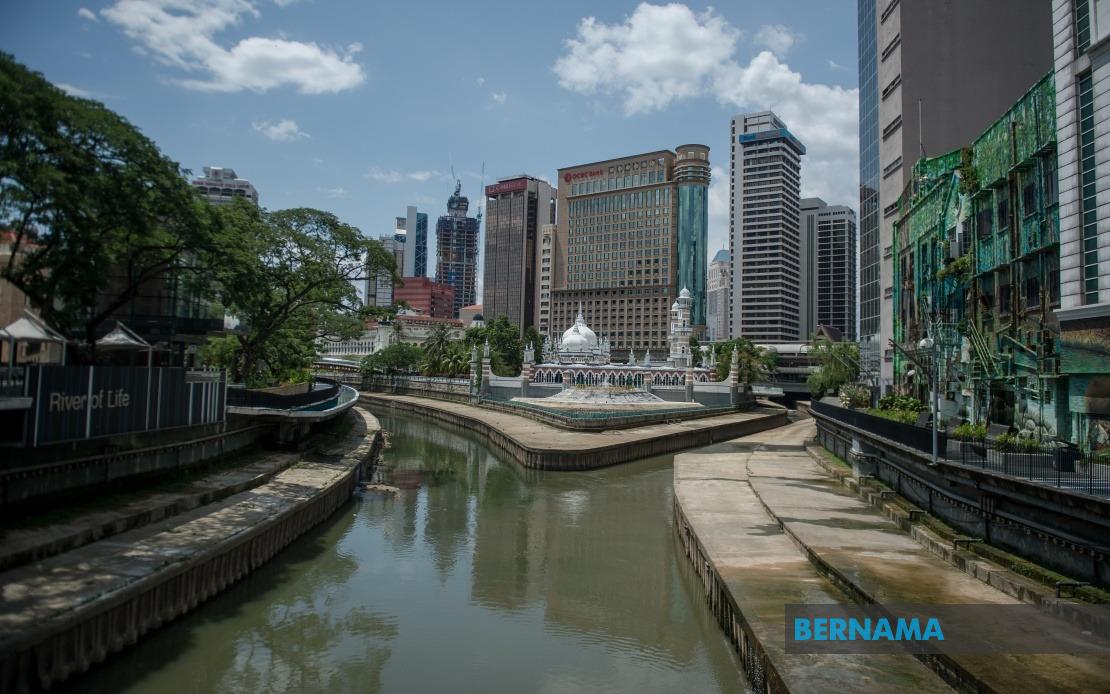
The Sungai Klang flood mitigation strategy has achieved a substantial breakthrough, with the river's water-holding capacity climbing to 22 percent from its previous threshold of less than five percent. This improvement stems from an ambitious 56-kilometre river rehabilitation programme that is currently at the 68 percent completion mark, according to Landasan Lumayan Sdn Bhd managing director Syaiful Azmen Nordin, who outlined the progress during a media briefing at the Sultan Salahuddin Abdul Aziz Shah Building in Shah Alam.
The core of this transformative effort involves extensive dredging and riverbank reinforcement work across vulnerable zones, most notably Taman Sri Muda, where overflow incidents have historically posed serious risks to surrounding communities. Since the initiative commenced in 2017, contractors have extracted approximately 1.2 million cubic metres of accumulated sediment and debris, creating a deeper and wider channel capable of accommodating larger water volumes during monsoon seasons and heavy rainfall events. This systematic removal of built-up material has proven particularly effective in reducing the likelihood of catastrophic overflows that characterised previous flooding episodes.
The distinction between Sungai Klang overflow and internal drainage failures emerged as a critical clarification during discussions around recent inundation events. Syaiful Azmen emphasised that the 2024 floods affecting parts of Selangor did not originate from river capacity breaches but rather from inadequate stormwater management systems within residential and commercial areas. This nuance is significant for understanding the multifaceted nature of urban flooding in the Klang Valley, where infrastructure coordination across multiple agencies remains a persistent challenge.
The financial commitment to maintaining river health extends well beyond dredging operations. Since 2017, authorities have invested RM19.6 million in continuous river-cleaning initiatives aimed at removing obstruction and restoring water flow efficiency. These cleanup campaigns have successfully extracted more than 98,000 tonnes of waste materials from the riverbed and banks, ranging from household refuse to construction debris and vegetation overgrowth. The tangible results demonstrate how maintenance intensity directly correlates with improved hydraulic performance.
Public participation has complemented the infrastructure investments significantly. Coordinated awareness campaigns have shifted community attitudes towards riverine waste disposal, resulting in a dramatic reduction in annual pollution loads. Where Sungai Klang previously accumulated approximately 16,000 tonnes of waste annually, current figures have stabilised between 5,000 and 6,000 tonnes, reflecting behavioural change among residents and businesses operating adjacent to the waterway. This environmental consciousness marks a fundamental shift in how stakeholders view their responsibility toward maintaining shared water resources.
Water quality indicators provide measurable evidence of the initiative's environmental success. The classification of Sungai Klang has improved from Class 5, the lowest category indicating highly polluted conditions unsuitable for any use, to Class 3 and 4 status in most stretches. While Class 3 and 4 designation still indicates moderate pollution levels requiring careful management, this progression represents genuine remediation progress that supports aquatic life and reduces public health risks associated with river proximity. Achieving further quality improvements will require sustained commitment to pollution source reduction and continued sediment management.
Looking forward, the programme's architects have established ambitious targets for completion. The current phase, managed by Landasan Lumayan Sdn Bhd, is scheduled for finalisation by the end of 2025, at which point the Sungai Klang capacity is projected to reach 40 percent of optimal water-carrying capability. This intermediate target positions the river as a substantially more resilient infrastructure asset, though planners acknowledge that achieving maximum performance will require federal government involvement in the Shah Alam to Mid Valley stretch. Coordination between state and federal authorities remains essential for ensuring seamless capacity improvements across the entire basin.
The strategic importance of Sungai Klang extends beyond flood management to encompass broader urban resilience objectives. As Selangor continues expanding economically, with populations concentrating in areas previously vulnerable to monsoon inundation, the river's rehabilitation becomes integral to enabling sustainable development. Industrial operations, commercial zones, and residential communities established within the floodplain depend upon reliable water management infrastructure. Delayed or inadequate river maintenance directly threatens property values, business continuity, and household security across economically vital regions.
Regional implications merit consideration, as Sungai Klang's watershed encompasses multiple municipalities and administrative jurisdictions. Improved management in this major river system could establish benchmarks for similar projects throughout Malaysia and Southeast Asia, where rapid urbanisation frequently outpaces drainage infrastructure development. Neighbouring states grappling with comparable flood challenges may draw lessons from Selangor's methodical approach combining physical infrastructure enhancement with community engagement and continuous monitoring.
The investment philosophy underlying this initiative reflects evolving Malaysian approaches to climate adaptation and disaster risk reduction. Rather than pursuing reactive emergency responses following major flooding events, authorities have embraced proactive infrastructure modernisation designed to build anticipatory capacity. This preventive orientation proves more cost-effective than emergency relief operations and infrastructure reconstruction, though requires sustained political will and budgetary commitment across electoral cycles. The Sungai Klang project exemplifies how patient, science-based water management can reduce vulnerability to natural hazards while improving environmental conditions simultaneously.

