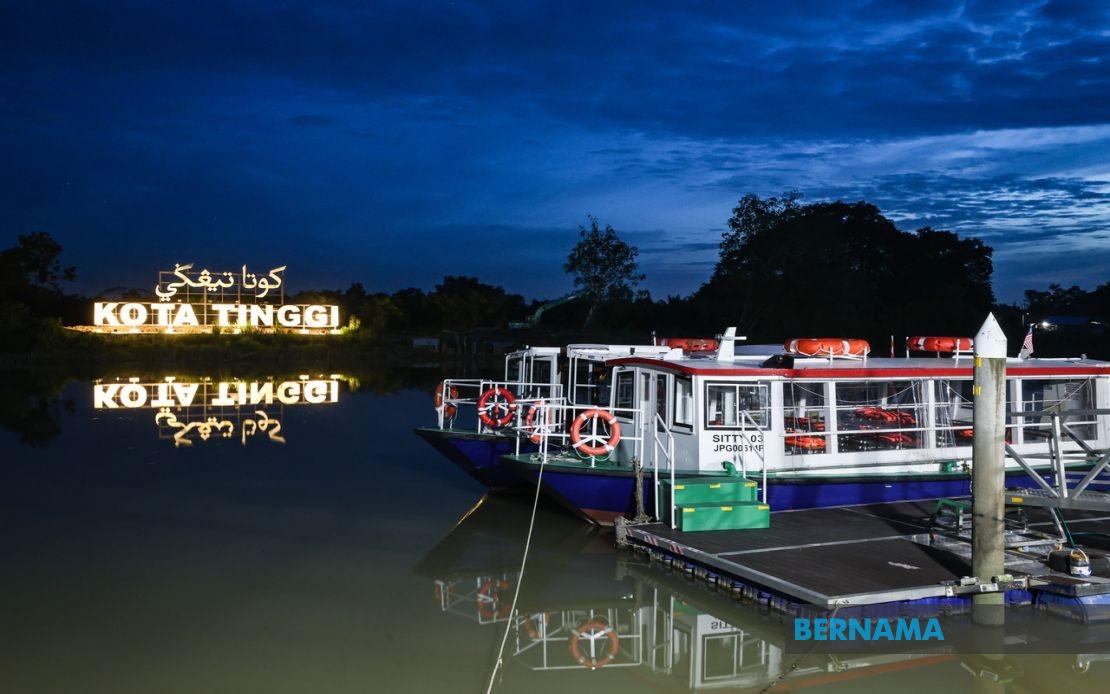
Kota Tinggi is repositioning itself as a heritage and nature tourism destination through an ambitious river-based initiative that harnesses the cultural and ecological richness of Sungai Johor. The venture reflects a broader regional strategy to diversify tourism offerings beyond conventional beach and urban attractions, tapping into growing traveller interest in immersive historical and environmental experiences. For Malaysian tourism operators and policymakers, the model offers a blueprint for sustainable development that simultaneously preserves local identity and creates economic momentum in secondary towns.
The Kota Tinggi River Cruise (KTRC) operates a 6.7-kilometre route departing from Pangkalan Kota Jetty, whisking passengers away from the town's commercial core into a landscape dominated by riverine vegetation and historical landmarks. What begins as a tranquil boat journey unfolds into a narrative journey through centuries of Johor's political and cultural significance. The operation has garnered substantial traction since launching, recording more than 10,000 visitors within its inaugural seven months—a metric that underscores both domestic appetite and cross-border regional interest in such offerings.
Historically, Sungai Johor occupied a transformational role in Southeast Asian geopolitics. Following Malacca's collapse in the 16th century, the waterway became instrumental to the consolidation of the Johor-Riau Sultanate, serving as a crucial corridor for trade, administration, and cultural exchange. Early settlements such as Johor Lama and Kampung Makam flourished along its banks, with the latter serving as a royal burial ground for multiple Johor sultans. By situating contemporary tourism around these historical anchors, KTRC leverages authentic heritage value rather than manufactured attractions—a distinction that matters significantly to culturally conscious travellers throughout Asia.
The daytime cruise itinerary incorporates several photogenic waypoints that have established themselves as social media focal points. Titian Laksamana, a pedestrian suspension bridge, provides dramatic vantage points across the river valley, while the Johor River Barrage demonstrates the intersection of colonial-era infrastructure and natural hydrology. Onboard interpretation, delivered through recorded commentary and live guide narration, contextualises these features within larger historical narratives. Passengers encounter stories of Sultan Mahmud Mangkat Dijulang and the legendary warrior Laksamana Bentan, transforming architectural remnants into entry points for understanding Johor's sultanate-era governance structures and cultural iconography.
Beyond daytime sightseeing, KTRC has developed specialist offerings that appeal to different traveller motivations and schedules. The signature Mesmerising Fireflies package operates during evening hours, when bioluminescent insects create natural light displays across the riverbanks—a phenomenon that combines ecological interest with romantic appeal. This product category particularly resonates with couples and nature photographers seeking Instagram-worthy moments grounded in authentic environmental phenomena rather than artificial installations. The diversification into evening experiences extends operational capacity and distributes visitor flows across broader time windows, reducing pressure on any single peak period.
The Dining Cruise variant addresses leisure travellers seeking relaxation rather than information-intensive touring. Guests consume meals aboard while observing sunset reflections on water and urban silhouettes across Kota Tinggi. This experiential category appeals to a different market segment—potentially higher-spending visitors prioritising comfort and ambiance over educational content. By offering multiple experience tiers at different price points and duration levels, KTRC has constructed a product matrix capable of accommodating diverse preferences and budgets, maximising revenue potential while maintaining accessibility for middle-income families.
Pricing strategy reflects sensitivity to Malaysian market conditions while capturing willingness-to-pay variation. Daytime adult tickets at RM20 position the offering as accessible to urban day-trippers while sunset and firefly experiences at RM23 maintain premium positioning justified by extended duration and specialised timing. Concessions for children (RM15 and RM17 respectively), senior citizens, and persons with disabilities demonstrate inclusive design principles increasingly expected by contemporary tourism consumers. The modest price differentials between product tiers encourage visitors to sample multiple offerings, potentially increasing per-capita spending across repeat visits.
Operational scheduling reflects sophisticated demand management. Weekday service running from 9am to 7pm caters to business travellers and local leisure users, while weekend extension to 10pm accommodates evening social visits and tourist itineraries. Hourly departure frequencies minimise queue times and provide flexibility for walk-up bookings, reducing barriers to spontaneous participation. This operational model contrasts with many regional attractions requiring advance reservations and fixed group departures, suggesting KTRC has calibrated infrastructure to accommodate both planned tourism and impulse consumption.
The success metrics achieved to date—10,000-plus visitors within seven months, coupled with documented cross-border participation from Singapore, Indonesia, and Brunei—indicate that heritage-nature hybrids possess strong regional appeal. For Johor's broader tourism strategy and the Visit Johor 2026 initiative, such outcomes validate investments in secondary destinations beyond Kuala Lumpur's gravitational pull. The arrival of international visitors from neighbouring countries particularly matters, as it demonstrates that Kota Tinggi can compete for mobile regional tourism dollars currently concentrated in established beach destinations like Kota Kinabalu or Penang.
From an environmental stewardship perspective, KTRC's operations carry implications extending beyond commercial returns. River-based tourism can incentivise watershed protection by creating constituencies with vested interests in water quality and riparian habitat preservation. Communities dependent on tourism revenue develop economic motivation to oppose upstream pollution or destructive land-use practices. Conversely, poorly managed tourism can degrade river ecosystems through boat traffic, noise pollution, and visitor pressure on sensitive habitats. The sustainability trajectory of Kota Tinggi's river tourism will depend on whether KTRC receives adequate support for environmental monitoring and adaptive management protocols.
Local economic development represents another significant dimension. The operator's expressed commitment to partnering with nearby communities suggests multiplier effects extending beyond KTRC's direct payroll. Tour guides, hospitality workers, food suppliers, and artisanal vendors potentially benefit from demand stimulation. However, benefits distribution depends on whether recruitment prioritises local residents and whether business opportunities flow toward community enterprises rather than external franchisees. Malaysian heritage tourism literature consistently documents tensions between centralised tourism revenues and peripheral community participation—patterns that affect long-term political sustainability of such projects.
The Johor state government's receptiveness to such initiatives—implicitly endorsed through the Visit Johor 2026 framework—creates enabling conditions for operator confidence and investment continuity. KTRC's appeal for sustained policy support reflects recognition that heritage-nature tourism requires consistent public sector commitment to infrastructure maintenance, regulatory clarity, and destination marketing. Unlike extractive industries vulnerable to commodity price cycles, cultural tourism depends on intangible assets requiring ongoing curation and narrative management.
For Malaysian policymakers observing Kota Tinggi's trajectory, the model suggests viable pathways for unlocking economic value in heritage-rich but economically marginal secondary towns. The formula—authentic historical narratives combined with natural amenities, accessible pricing, diversified experience offerings, and convenient operational logistics—requires modest capital investment compared to resort development while generating employment and tax revenues. As Malaysia pursues post-pandemic economic recovery and regional tourism competition intensifies, such distributed tourism models merit expanded replication across other river systems and heritage zones throughout the peninsula and Sabah-Sarawak.

