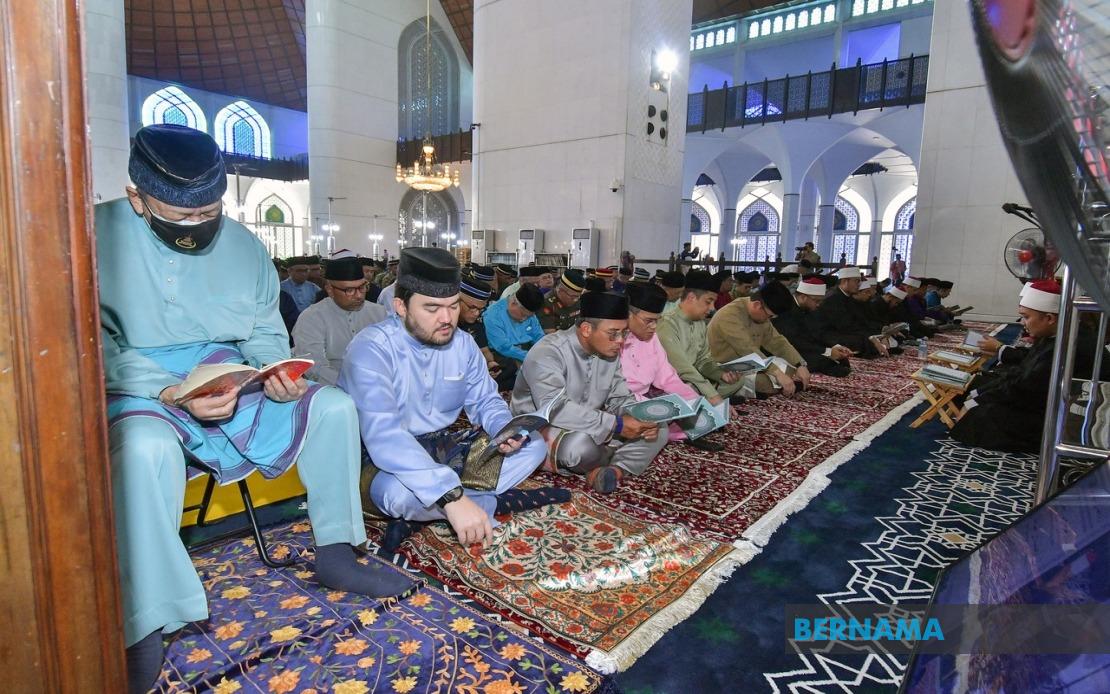
The Sultan of Selangor, Sultan Sharafuddin Idris Shah, marked the eve of the nation's Independence Day by presiding over a Surah Yassin recitation and prayers at Masjid Sultan Salahuddin Abdul Aziz Shah in Shah Alam on Wednesday. The ceremony underscored the role of religious observance in Malaysia's observance of significant national occasions, bringing together prominent state figures and everyday Malaysians in a shared moment of spiritual reflection.
Joining the Sultan was the Raja Muda of Selangor, Tengku Amir Shah Sultan Sharafuddin Idris Shah, whose presence highlighted the royal household's commitment to religious and civic engagement. Their participation in the recitation ceremony carries symbolic weight in a nation where the monarchy serves as custodian of Islamic affairs in the states. The occasion demonstrated how Malaysia's federal system enables state-level religious leadership to reinforce national identity through faith-based activities.
The gathering drew roughly 1,000 worshippers, a substantial turnout that included members of the armed forces and security personnel stationed across Selangor. This cross-section of participants—from religious scholars to military representatives—reflected the inclusive nature of the event and the broadening appeal of pre-national day religious observances beyond conventional congregational worship. The presence of uniformed personnel illustrated how state institutions integrate spiritual practices with civic commemoration.
Welcoming His Royal Highness at the mosque entrance were Selangor Menteri Besar Datuk Seri Amirudin Shari and Dr Mohammad Fahmi Ngah, the state's Islamic Affairs and Innovation Culture Committee chairman. This reception underscored the collaborative relationship between the royal institution and elected government in orchestrating religious events. Also attending were senior officials including Datuk Mohd Shahzihan Ahmad, the Selangor Islamic Religious Department director, and Datuk Salehuddin Saidin, chairman of the Selangor Islamic Religious Council, ensuring both administrative and religious hierarchies were represented.
Following the Surah Yassin recitation, the Sultan proceeded to lead the Friday prayers, demonstrating the traditional role of the monarchy in religious observance. The session featured a sermon titled "Merdeka Daripada Belenggu Kerakusan"—Freedom from the Shackles of Greed—delivered by Masjid Sultan Salahuddin Abdul Aziz Shah's Grand Imam Muhammad Farhan Wijaya. The sermon's theme proved particularly resonant for National Day, positioning spiritual liberation alongside political independence and connecting personal moral virtue with national wellbeing.
The choice of sermon topic reflected contemporary concerns within Malaysia's religious discourse. By emphasizing freedom from avarice, the imam addressed societal preoccupations with corruption, materialism, and ethical governance—issues that resonate across Malaysia's diverse constituencies. This framing transformed the mosque gathering into a platform for discussing both spiritual development and accountable public administration, themes integral to Malaysia's ongoing democratic deliberations.
The religious observance preceded Selangor's state-level National Day celebrations, scheduled for 8 pm on Sunday at Kajang Stadium. These formal festivities operate under the theme "Malaysia MADANI: Kesejahteraan Dinikmati," which translates to "Malaysia MADANI: Prosperity Enjoyed," aligning with the federal government's broader development narrative. The administrative and religious observances together frame the national occasion within both spiritual and governance contexts.
The timing of the mosque gathering reflects a sustained pattern in Malaysian public life where religious activities frame national commemoration. Unlike purely secular celebrations, incorporating Quranic recitation and Friday prayers acknowledges Islam's constitutional position and embeds national identity within religious practice. For majority-Muslim Malaysia, this integration of faith and civic observance reinforces the notion that national pride and spiritual commitment are mutually reinforcing rather than competing values.
Selangor's positioning as the nation's economic and administrative heartland makes its National Day celebrations particularly significant. The state's prominence in Malaysia's federal system means that Selangor's observance—combining royal participation, religious leadership, government officials, and broad public engagement—establishes a template that other states may reference. The participation of security personnel alongside civilians further demonstrates how national defense establishments participate in reinforcing the legitimacy and cultural importance of Independence Day observances.
The mosque gathering also illustrated Malaysia's approach to inclusive national identity. While the event centered on Islamic practice, the broad attendance spanning various state institutions and civilian sectors reflected the understanding that such religious observances strengthen social cohesion across the country's multicultural fabric. This approach—embedding religious practice within national frameworks—has become central to how Malaysia's leadership articulates and reinforces collective identity.
Looking ahead to the weekend's formal celebrations, the Sultan's participation in the mosque ceremony established continuity between spiritual preparation and public commemoration. The progression from pre-dawn religious observance to evening stadium festivities encompasses the full spectrum of Malaysia's national day tradition. For Selangor residents and the broader Southeast Asian region observing Malaysia's institutional practices, the sequence demonstrated how contemporary Southeast Asian nations balance democratic governance, religious values, and national pride in their commemorative practices.

