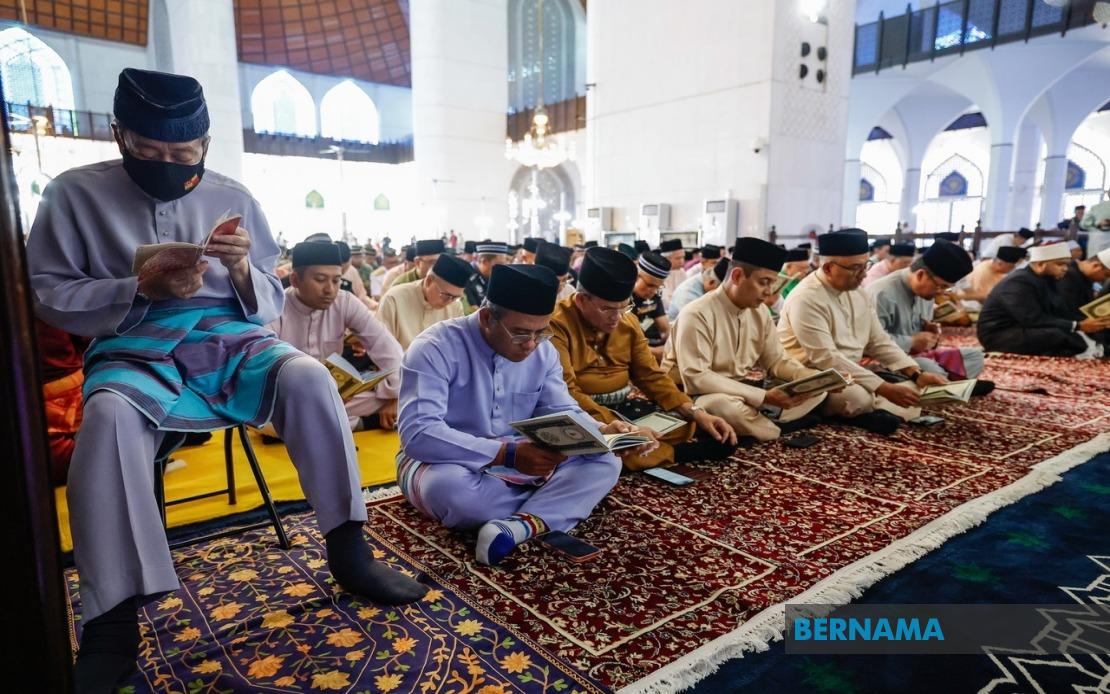
Sultan Sharafuddin Idris Shah, the reigning monarch of Selangor, participated in a solemn religious ceremony at Sultan Salahuddin Abdul Aziz Shah Mosque in Shah Alam on July 24, marking the state-level commemoration of Warriors' Day. The occasion featured traditional Islamic rites including yasin recitation, supplicatory prayers for collective wellbeing, and tahlil devotions, underscoring the spiritual dimension of honouring the nation's uniformed defenders.
The religious proceedings were orchestrated by Selangor Deputy Mufti Datuk Dr Miszairi Sitiris, reflecting the formal ecclesiastical significance attached to the event. The Sultan's attendance, alongside senior state administrators and religious figures, sent a powerful message about the government's commitment to recognising the contributions of those who serve in defence and security roles. This integration of royal participation with religious observance represents a meaningful fusion of institutional respect and spiritual recognition for national service.
Several high-ranking officials graced the occasion, including Menteri Besar Datuk Seri Amirudin Shari, who leads the state executive council. His presence reinforced the administrative hierarchy's acknowledgement of the occasion's importance. The gathering also included Dr Mohammad Fahmi Ngah, chairman of the Islamic Affairs and Innovation Committee, and Mohd Najwan Halimi, who oversees the Youth, Sports and Entrepreneurship portfolio. Additionally, Selangor Islamic Religious Department director Datuk Mohd Shahzihan Ahmad attended, ensuring representation from the state's religious administrative apparatus.
The assembly drew approximately 1,100 officers and personnel drawn from the various security forces and uniformed agencies deployed throughout Selangor. This substantial turnout illustrated the breadth of the state's security infrastructure and the significance of the occasion for those engaged in frontline protective duties. The gathering of such numbers in a single venue provided a tangible demonstration of solidarity with the defence and law enforcement communities, offering them public recognition for their ongoing responsibilities.
Following the preliminary religious observances, the congregation proceeded to perform the Friday prayers, which holds special resonance given the coincidence with the Islamic holy day. The prayers were led by Datuk Muhammad Farhan Wijaya, the Grand Imam of Sultan Salahuddin Abdul Aziz Shah Mosque, who delivered a sermon bearing the title 'Hakikat Kepahlawanan Islam', translating to 'The Reality of Islamic Heroism'. This thematic choice positioned military service and national defence within an Islamic ethical framework, connecting contemporary security work with classical Islamic concepts of struggle and sacrifice in defence of community and nation.
Warriors' Day itself, observed annually on July 31, serves as Malaysia's formal occasion for reflecting upon the dedication and sacrifices made by members of the national security forces. The date carries historical weight as it memorialises the contributions of military and paramilitary personnel who have served the nation's interests in maintaining sovereignty and territorial integrity. For a multicultural, multiethnic nation like Malaysia, this commemoration transcends sectarian lines, representing a unifying recognition that cuts across communal divides.
The decision to host Selangor's Warriors' Day observance within a mosque environment rather than at a secular venue demonstrates how religious institutions can serve as spaces for broader national purposes. This approach reflects Malaysia's constitutional framework, which recognises Islam's special position while maintaining commitment to pluralism. For Selangor, a state with significant Muslim and non-Muslim populations, such inclusive ceremonial approaches become particularly meaningful in projecting cohesion and shared national purpose.
The participation of the Sultan carried additional weight given his constitutional role as the head of state and, in Selangor's context, as the custodian of Islam within the state. His presence signalled that honouring those who defend the nation represents not merely a governmental duty but a princely obligation rooted in tradition and constitutional responsibility. This ceremonial dimension lends gravitas to what might otherwise be routine administrative acknowledgement, elevating recognition of service to the level of state ritual.
For Malaysia's security forces, particularly those stationed in Selangor—a state accounting for significant portions of the nation's economic activity and home to portions of the capital region—such public recognition holds genuine value. Beyond ceremonial appreciation, these observances reinforce to personnel that their sacrifices and professionalism are noted and valued by leadership across multiple tiers of government and society. In an environment where security personnel face demanding schedules and occasional public criticism, such institutional affirmation serves morale and cohesion purposes.
The integration of Islamic religious practice with nationalist commemoration in this event reflects broader trends across Southeast Asia, where many nations seek to anchor patriotic observances within cultural and spiritual frameworks meaningful to majority populations while maintaining inclusive national narratives. For Malaysia specifically, such ceremonies represent attempts to synthesise the constitutional position of Islam with the nation's foundational principles of pluralism and shared citizenship. The Warriors' Day observance at the mosque thus becomes a microcosm of how Malaysia negotiates the relationship between particular religious identities and overarching national purpose.

