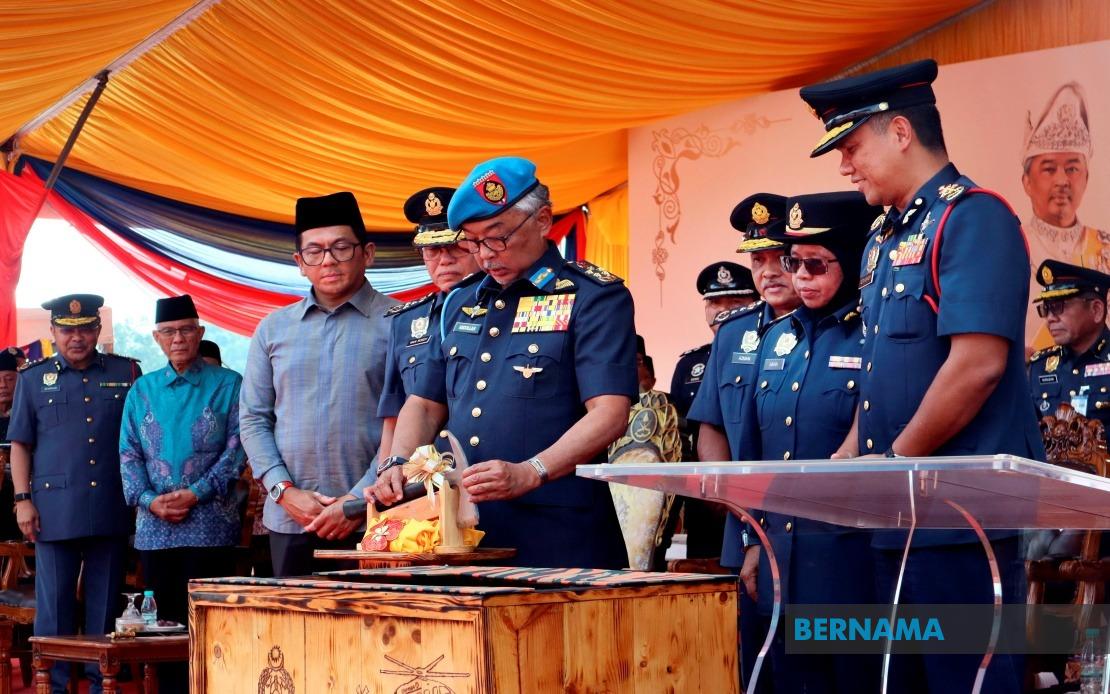
The Sultan of Pahang, Al-Sultan Abdullah Ri'ayatuddin Al-Mustafa Billah Shah, publicly acknowledged the collaborative efforts of both federal and state governments in channelling development funds to Pahang during a visit to Kuantan on July 2. Speaking at the official opening of the Sungai Lembing Fire and Rescue Station, His Royal Highness emphasized the significance of infrastructure spending, particularly projects designed to mitigate flood risks that have long threatened communities across the state.
Sungai Lembing holds particular importance in Pahang's flood management strategy. The town, situated in one of the state's most geographically vulnerable locations, typically experiences inundation during the northeast monsoon season and serves as an early warning indicator of broader flooding threats to the wider Kuantan area. Recognition of this vulnerability has made it a focal point for government intervention, with substantial budgetary allocations directed towards strengthening its resilience. The Sultan's specific mention of the area underscores the monarchy's understanding of localized risk patterns and the need for targeted, rather than generic, disaster mitigation approaches.
Beyond expressing appreciation for completed projects, Al-Sultan Abdullah issued directives that reflect an active engagement with water management infrastructure. He instructed that waterways adjacent to populated zones be dredged and deepened, a practical intervention aimed at expanding channel capacity and reducing overflow incidents during severe weather events. This directive carries implications for both immediate remediation efforts and longer-term maintenance protocols that state and local authorities must incorporate into their planning cycles. The emphasis on preventive engineering suggests a shift towards proactive rather than reactive disaster management.
The royal visit also recognized the crucial contribution of the Fire and Rescue Service, an institution that operates at the frontline of public safety. The Sultan acknowledged the personnel's relentless commitment to duty, noting that his daily briefings consistently include accounts of their interventions across multiple emergency categories ranging from structural fires to vehicular accidents and natural disasters. His characterization of their work as both demanding and indispensable reflects the broader national discourse around disaster preparedness, a topic of heightened significance in a country prone to seasonal flooding and other environmental hazards.
Notably, Al-Sultan Abdullah expressed a personal commitment to maintaining direct engagement with emergency responders and affected communities. His stated intention to visit disaster scenes and accompany Fire and Rescue personnel when circumstances allow demonstrates a hands-on approach to royal oversight that extends beyond ceremonial functions. For Southeast Asian monarchies, such direct involvement carries symbolic weight, signalling to both public servants and citizens that the highest office maintains active interest in welfare outcomes and institutional performance.
Among the officials present at the ceremony were Pahang Menteri Besar Datuk Seri Wan Rosdy Wan Ismail, Deputy Housing and Local Government Minister Datuk Aiman Athirah Sabu, and Deputy Economy Minister Datuk Mohd Shahar Abdullah, who also represents Paya Besar as a Member of Parliament. The multi-level governmental presence reflected the cross-agency coordination required for comprehensive disaster management and infrastructure development, illustrating how federal-state partnerships operationalize public service delivery.
The Sultan additionally raised concerns about service gaps in remote areas, specifically proposing that a volunteer fire brigade be established in Kampung Bantal within the Ulu Tembeling region of Jerantut. This suggestion addresses a persistent challenge across Malaysia's less densely populated districts, where professional emergency services are geographically dispersed and response times to incidents can prove critical. The proposal to develop volunteer-based capacity reflects pragmatic acknowledgment of resource constraints while attempting to enhance coverage in underserved communities. Such initiatives have gained traction across Southeast Asia as complementary mechanisms to professional services in rural settings.
Flood mitigation emerges as a central development priority in Pahang, a state with significant exposure to monsoon-driven precipitation and river overflow. The investment frameworks highlighted by the Sultan touch upon broader questions regarding climate resilience and infrastructure adaptation in a region increasingly affected by meteorological variability. Malaysia's experience with flooding has prompted successive government administrations to allocate enhanced resources toward preventive engineering, early warning systems, and community preparedness.
The Sungai Lembing Fire and Rescue Station itself represents concrete manifestation of this commitment, providing essential infrastructure for emergency response across the district. Its opening during monsoon season—a period of elevated flood risk—carries symbolic timing, reinforcing governmental messaging around disaster preparedness. For Malaysian policymakers and regional observers, such projects serve as benchmarks against which to measure institutional capacity and political will in addressing environmental vulnerability.
The Sultan's emphasis on collaborative governance structures underscores an important element of Malaysia's federal framework, wherein development priorities emerge through negotiation between central authorities and state-level actors. Pahang's experience illustrates how flood management transcends jurisdictional boundaries, requiring integrated planning across multiple administrative levels. This model gains particular relevance for other Southeast Asian nations grappling with similar hydrological challenges and federal-state governance arrangements.
Looking forward, the directives issued during this visit signal expectations for accelerated implementation of remaining water management projects and expedited assessment of service delivery gaps in peripheral communities. The monarchy's public endorsement of these initiatives amplifies their political salience and potentially accelerates bureaucratic responses to delayed implementations. For citizens across Pahang and broader Malaysia, such royal engagement serves to validate official priority-setting and reaffirm government accountability regarding disaster preparedness as a fundamental public service obligation.

