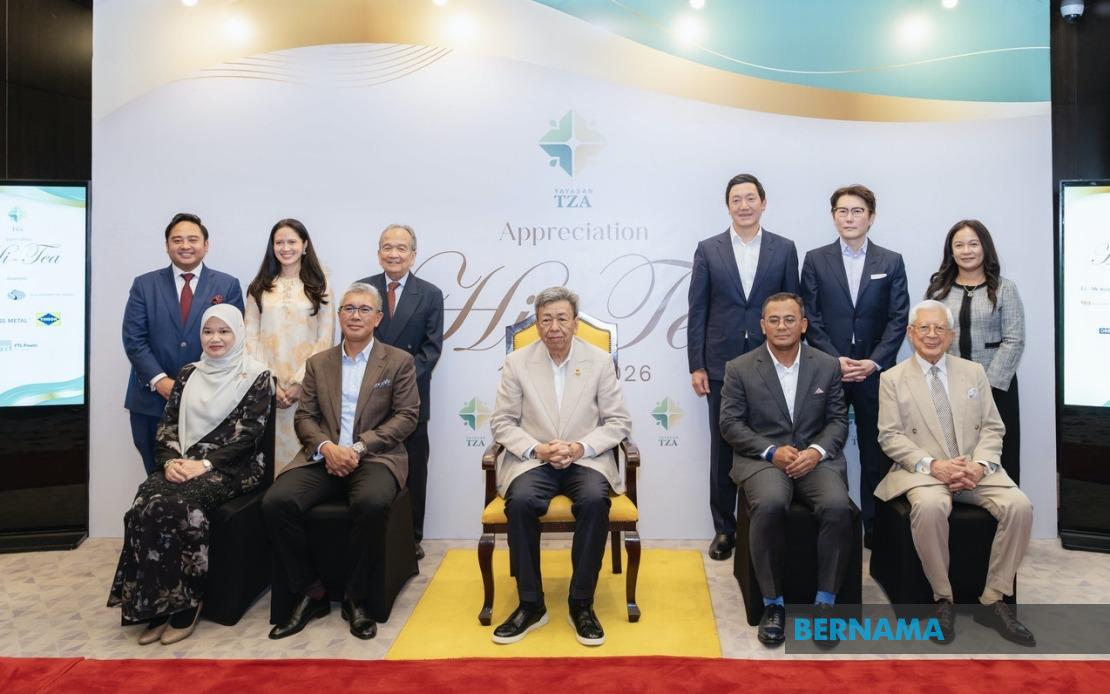
Sultan Sharafuddin Idris Shah, the Sultan of Selangor, attended the Yayasan TZA (YTZA) Appreciation Hi-Tea Ceremony in Kuala Lumpur on June 18, marking a significant recognition of the foundation's work in the social development sector. The royal dignitary's presence underscored the importance of philanthropic initiatives in the state, as the foundation continues its mission to uplift marginalised communities through targeted intervention programmes.
The Sultan's arrival at 3.50 pm was followed by formal receptions from YTZA chairman Tan Sri Arshad Raja Tun Uda and YTZA advisor Tengku Datuk Seri Zafrul Abdul Aziz. The ceremony also drew attendance from senior government figures including Selangor Menteri Besar Datuk Seri Amirudin Shari and Education Minister Fadhlina Sidek, reflecting the cross-sector collaboration required to address educational inequality in Malaysia.
Tengku Zafrul articulated the foundation's overarching vision during his address, emphasising that YTZA's programmes extend beyond immediate relief to foster sustainable empowerment within communities. The advisor highlighted how the foundation's multifaceted approach—spanning educational support, environmental sustainability, grassroots outreach, and community celebrations—seeks to cultivate resilience and inclusivity across Malaysian society. This comprehensive strategy reflects growing recognition among philanthropic organisations that lasting social change requires simultaneous interventions across economic, educational, and social dimensions.
Educational empowerment stands as a cornerstone of YTZA's operations, with the ACE SPM initiative serving as a flagship vehicle for change. The programme specifically targets Sijil Pelajaran Malaysia (SPM) candidates from B40 households, a demographic historically disadvantaged by limited access to quality examination preparation resources. By addressing this critical gap, the foundation directly tackles one of Malaysia's persistent equity challenges in education, where socioeconomic background continues to correlate strongly with academic outcomes.
The scale of ACE SPM's reach has expanded considerably, with Tengku Zafrul reporting that in 2025 alone, the programme has supported 467 students across ten Selangor schools. Beyond in-person classes, YTZA's digital initiatives have extended academic support to over 4,000 additional students, leveraging technology to overcome geographical and resource constraints that typically exclude low-income learners from supplementary education. This blended approach—combining traditional tutoring with digital accessibility—exemplifies how foundations can multiply their impact through strategic use of technology.
The foundation's ambitions for scaling these efforts became evident in Tengku Zafrul's commitment to expanding both programmes in subsequent years. The successful outcomes recorded thus far have validated the ACE SPM model, providing evidence-based justification for increased investment. For Malaysian policymakers, such demonstrations of effective targeted intervention offer valuable lessons as the government pursues its own educational equity agenda, particularly through initiatives like the Madani framework.
Corporate support proved instrumental in enabling YTZA's continued expansion, as evidenced during the ceremony when His Royal Highness Sultan Sharafuddin witnessed presentations of substantial donations. Kuok Brothers Sdn Bhd contributed RM1 million while YTL Power International Berhad pledged RM300,000, collectively injecting RM1.3 million into the foundation's operations. These contributions reflect growing recognition among Malaysian corporate entities that addressing social inequality through structured philanthropic channels generates both meaningful community impact and sustainable business value.
Tengku Zafrul took the occasion to publicly recognise all sponsors, donors, strategic partners, and volunteers whose contributions enable YTZA to fulfil its mission. This acknowledgment underscores a fundamental reality of effective social development work: sustainable programmes require sustained multi-stakeholder commitment rather than sporadic charitable gestures. The foundation's ability to mobilise such diverse support reflects its credibility and track record in delivering measurable community benefit.
Looking ahead, YTZA unveiled Larian KITA@Klang, a community fun run scheduled for October 10 in conjunction with the Sultan of Selangor's Silver Jubilee celebration. This represents the fourth iteration of the Larian KITA series, an initiative that deliberately weaves together physical wellness, community belonging, and cultural celebration. Such programmes serve dual purposes: they create accessible entry points for marginalised communities to participate in wellness activities while simultaneously fostering social cohesion and celebrating local heritage through routes deliberately designed to showcase culinary and cultural attractions.
The convergence of royal patronage, governmental participation, and corporate generosity at the YTZA appreciation ceremony reflects broader institutional shifts in Malaysia's approach to social development. Rather than treating philanthropy as peripheral to national progress, stakeholders increasingly recognise targeted private sector investment in education and community wellbeing as complementary to government efforts. For Southeast Asian observers, Malaysia's experience demonstrates how structured partnership models—combining formal social programmes with community engagement activities—can address persistent equity gaps while building inclusive prosperity.
For beneficiary communities, particularly B40 households in Selangor, these initiatives represent tangible pathways to improved educational outcomes and enhanced social participation. The ACE SPM programme directly influences examination performance trajectories that shape tertiary education access and subsequent economic mobility. Equally, community programmes like Larian KITA cultivate social capital and mutual support networks that research increasingly demonstrates correlates with improved health, educational, and economic outcomes across generations.

