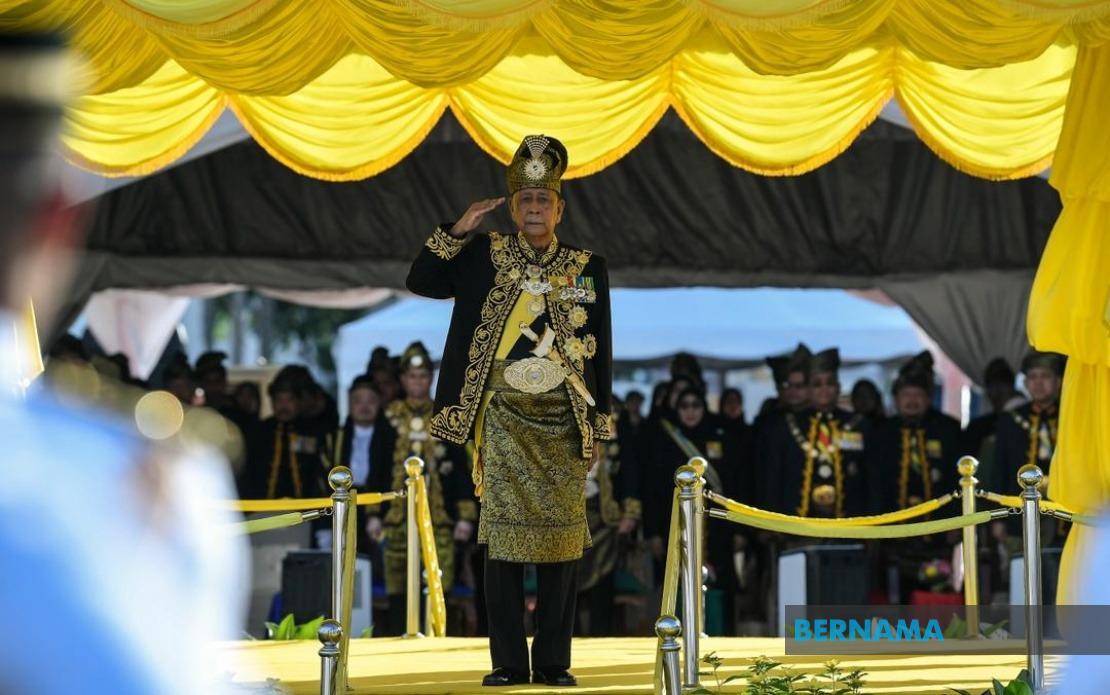
The Sultan of Kedah, Al Aminul Karim Sultan Sallehuddin Sultan Badlishah, was honored with a grand guard of honour parade in Alor Setar on July 5 to commemorate his 84th birthday. The ceremony, held at Dataran Medan Bandar, brought together members of the royal family, state government officials, and military contingents in a display of respect and celebration befitting the constitutional monarch's milestone birthday.
Accompanying the Sultan throughout the proceedings was the Raja Muda of Kedah, Tengku Sarafudin Badlishah Sultan Sallehuddin, underscoring the ceremonial significance of the occasion and affirming the continuity of the sultanate. The presence of senior royal figures demonstrated the importance the state places on marking such occasions within the framework of constitutional monarchy observed across Malaysia's nine sultanates.
Representing the state administration were Kedah Menteri Besar Datuk Seri Muhammad Sanusi Md Nor and State Secretary Datuk Seri Norizan Khazali, alongside members of the State Executive Council. Their participation reflected both administrative respect for the institution of the sultanate and the formal protocols that govern state-level ceremonial events in Malaysia's federal system, where sultans retain significant constitutional and symbolic roles.
The military component of the parade was substantial and precisely coordinated. A total of 103 members and three officers from the 6th Battalion of the Royal Malay Regiment participated in the ceremonial proceedings, with Major Muhammad Nasrullah Abdullah commanding the formation. The structured hierarchy of responsibility extended to Lieutenant Mohamad Aiman Hanif Samsudin carrying the regimental colours and Warrant Officer 1 Mohd Fairuz Ramli bearing the regiment standard, positions that carry historical weight within Malaysian military traditions.
Musical accompaniment came courtesy of the RAMD Central Band, under the leadership of Captain Muhamad Fauzee Japar and with assistance from Sergeant Mohd Shahrilaizad Bakhtiar. Military bands play an integral role in state ceremonies across Malaysia, adding ceremonial grandeur while reinforcing the formal protocols that define official functions at both federal and state levels.
The celebratory spectacle extended beyond ground-based formalities to include a remarkable aerial component. Two EC120B aircraft from the Flying Training Institute's second campus and three PC-7 MK II training aircraft from INSPEN 1 conducted a coordinated flypast above the ceremony venue. This integration of air force training assets into civilian ceremonial occasions demonstrates how Malaysia's military infrastructure supports formal state functions, while also providing valuable training opportunities for pilot personnel.
The pyrotechnic element of the ceremony came courtesy of a 21-gun salute, a traditional honor maintained across Commonwealth nations. The 41st Battery of the Royal Artillery Regiment (Ceremonial) stationed at Sungai Buloh Camp in Selangor executed the salute under the command of Major Hafizan Md Ghani. This ceremonial artillery unit regularly travels throughout Malaysia to provide such honors at significant state events, illustrating the coordination required between federal military assets and state-level celebrations.
The layering of ceremonial elements—royal presence, military personnel, musical accompaniment, aerial display, and artillery salute—reflects deep-rooted Malaysian traditions that blend Islamic monarchical customs with Commonwealth ceremonial practices inherited from the country's colonial period. Such occasions reinforce the symbolic role of sultans within Malaysia's constitutional framework, where these rulers embody state identity and historical continuity even as executive authority rests with elected governments.
Birthday celebrations for reigning monarchs hold particular significance in Malaysia's political culture. At 84 years old, the Sultan of Kedah represents an elder statesman figure within the Council of Rulers, an institution that plays important consultative and constitutional roles. The ceremony thus served not merely as a personal celebration but as a public affirmation of the institutional continuity that the sultanate represents within Kedah's governance structure and broader Malaysian constitutional arrangements.

