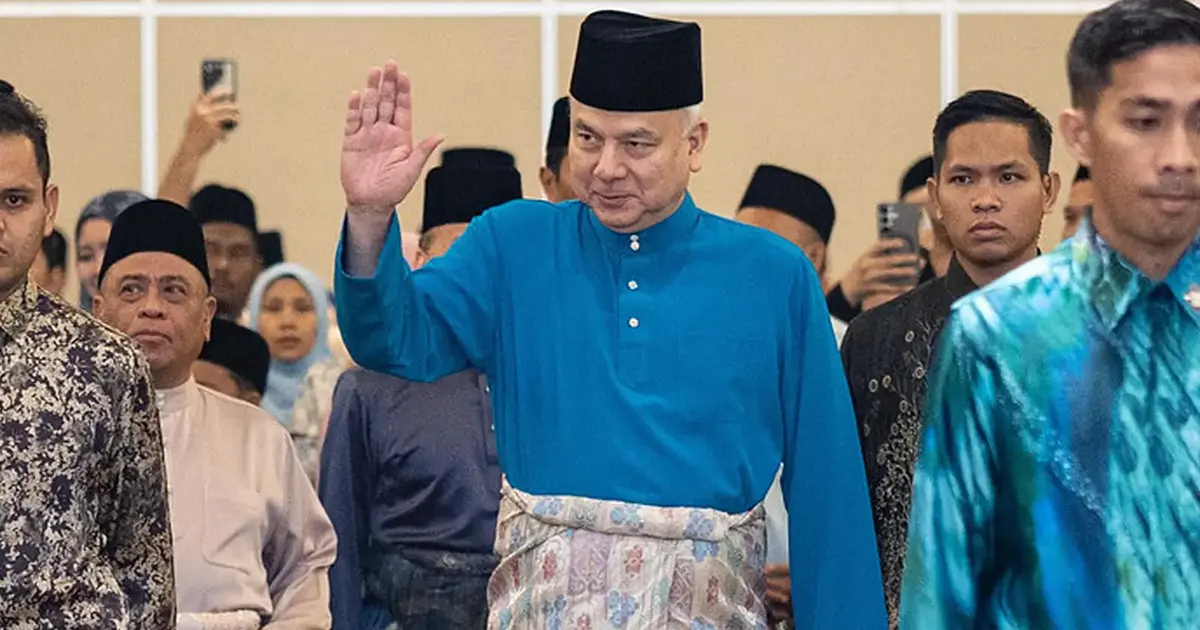
Sultan Nazrin Shah, the Deputy Agong, has issued a significant warning to the country's leadership cadre, urging them to exercise restraint and careful judgment when making decisions that shape the nation's trajectory. Speaking on matters of national importance, the Perak ruler stressed that impulsive and emotionally-driven choices have no place in governance, particularly when such decisions affect millions of citizens and the country's long-term stability.
The message comes at a time when Malaysia faces various political and social challenges requiring measured responses and consensual decision-making. Sultan Nazrin's intervention highlights concerns within the institution of constitutional monarchy about the quality of governance and leadership conduct in contemporary Malaysia. His emphasis on avoiding emotional reactions reflects a broader unease with decision-making patterns that prioritise short-term political gains or personal considerations over national interests and collective welfare.
Central to Sultan Nazrin's message is the proposition that national success fundamentally depends on the foundation of cooperation among all segments of society. This principle acknowledges Malaysia's plural composition, where diverse ethnic, religious, and cultural communities must work towards shared objectives. The Deputy Agong's articulation underscores that development and progress cannot be achieved through unilateral action or decisions imposed without regard for other perspectives and stakeholders.
Mutual respect forms the second pillar of the vision articulated by the royal institution. In a diverse nation, respect for differing viewpoints, religious beliefs, customs, and cultural practices remains essential for preventing friction and ensuring that citizens feel valued and included in national endeavours. This principle extends beyond ceremonial acknowledgment to meaningful recognition of competing interests and the legitimate concerns of minority communities, which form an integral part of Malaysia's social fabric.
Harmonious coexistence represents the ultimate outcome that Sultan Nazrin emphasises should guide all leadership decisions. Rather than viewing different communities and political factions as adversaries, the Deputy Agong's message suggests that leaders must consciously build bridges and create inclusive policy frameworks. Harmony is not the absence of disagreement but rather the presence of mechanisms and attitudes that allow disagreement to be resolved constructively without resorting to divisive or confrontational approaches.
The timing of such a statement carries particular significance for Malaysian observers. The nation continues to grapple with questions about institutional strength, political maturity, and the health of democratic processes. When constitutional monarchs and senior palace officials intervene in public discourse, they typically do so because they perceive threats to national stability or deterioration in standards of governance. Sultan Nazrin's remarks suggest concern that current decision-making processes may be falling short of the prudence and inclusive consideration that complex societies require.
For political leaders across the spectrum, the message carries an implicit challenge. Those in government must demonstrate that their policy choices reflect careful deliberation and consultation rather than reactive emotion. Those in opposition must engage constructively with governance issues rather than simply opposing for tactical advantage. Both responsibility and reciprocal goodwill are required for the cooperative environment that the Deputy Agong describes.
The emphasis on avoiding impulsive decisions also carries practical implications for specific policy domains. Whether addressing economic challenges, managing interethnic relations, pursuing educational reforms, or handling security matters, rushing to judgment without adequate consultation and analysis risks unintended consequences. Thorough vetting of proposals and considering multiple perspectives strengthens decision quality and increases the likelihood of public acceptance.
Sultan Nazrin's intervention reflects the constitutional role of Malaysia's monarchy as guardian of national unity and symbol of stability. While the institution operates within defined constitutional limits, senior royals retain the moral authority to comment on matters affecting the nation's character and prospects. Their statements often serve as barometers of institutional concern and can influence how political actors perceive their responsibilities to the broader public good.
The message also implicitly acknowledges that leadership requires temperance and self-control, particularly in an age of rapid information flows and heightened political tension. Digital media environments can amplify emotional responses and create pressure for immediate reactions. Yet sustainable solutions to complex problems rarely emerge from hasty reactions to events or provocations. Disciplined leadership demands stepping back, consulting widely, and making decisions grounded in principle and careful analysis.
For Malaysian citizens, Sultan Nazrin's remarks represent a call to hold their leaders accountable to higher standards of conduct and decision-making. A healthy democracy functions best when public opinion exerts pressure on politicians to behave responsibly and inclusively. Citizens can support leaders who demonstrate measured judgment while questioning those whose decisions appear driven by impulse or self-interest rather than national welfare.
The broader regional context also matters. Southeast Asia's success as a region has frequently depended on nations managing diversity through cooperative frameworks and respectful dialogue rather than confrontation. Malaysia's ability to model such conduct influences its standing in the region and its capacity to contribute to broader Southeast Asian stability and development initiatives.
Moving forward, Sultan Nazrin's message serves as an institutional checkpoint on the quality of Malaysian governance. Whether current and future leaders heed this advice will significantly influence the nation's trajectory and the lived experience of its citizens. The challenge now lies in translating the royal sentiment into concrete changes in how decisions are made and how different groups engage with one another in the national project.