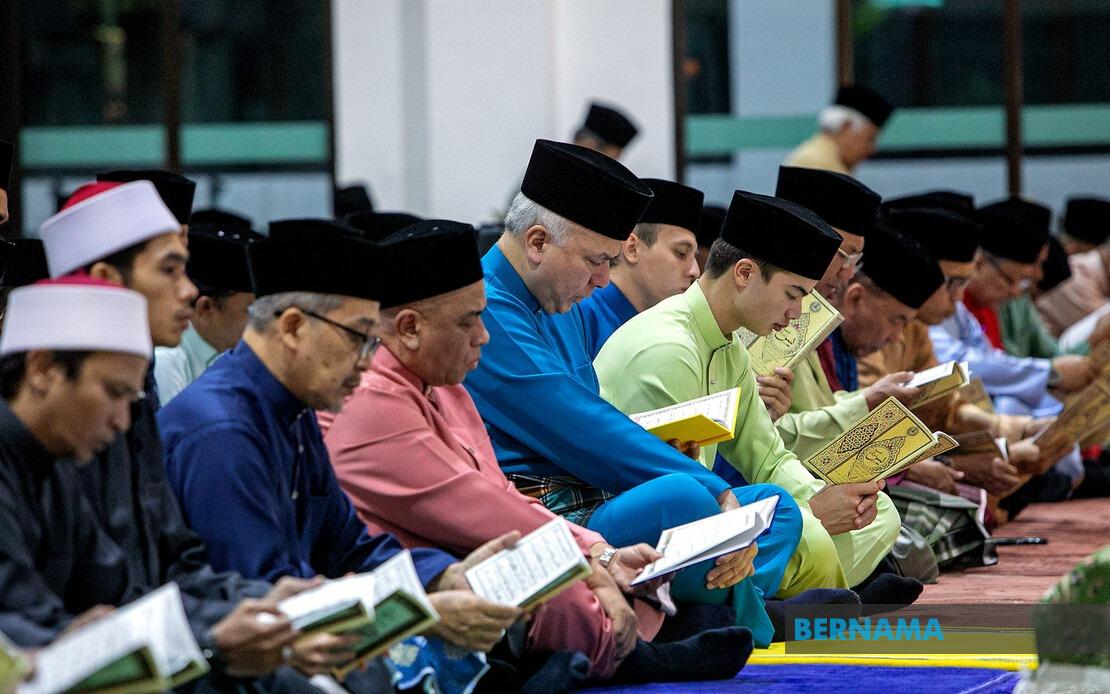
IPOH — The Sultan of Perak, Sultan Nazrin Shah, presided over commemorative religious ceremonies at the newly completed Masjid Imam As Syafie on Friday evening, marking a significant moment in the state's National Day festivities. The event drew approximately 1,000 worshippers who gathered to participate in Yasin recitation, tahlil, and doa selamat prayers, underscoring the spiritual dimension of Malaysia's annual celebration of independence and national identity.
Accompanying His Royal Highness were Menteri Besar Datuk Seri Saarani Mohamad and Tan Sri Mohd Annuar Zaini, president of the state Islamic Religious and Malay Customs Council (MAIPk). The presence of senior political and religious leadership reflected the ceremonial importance attached to both the mosque inauguration and the broader National Day observance across Perak.
The Masjid Imam As Syafie represents a substantial infrastructure investment for the state, having been constructed at a cost of RM8.7 million over the past several years. The facility, which completed construction last year, was designed with considerable capacity in mind, capable of accommodating approximately 1,600 worshippers simultaneously. This scale suggests the mosque was developed to serve a growing Muslim population in the Ipoh district and surrounding areas, addressing both immediate religious needs and anticipated future demand for prayer facilities.
The official inauguration ceremony followed traditional royal protocols. Sultan Nazrin symbolically unveiled the plaque affixed to the mosque structure, a gesture marking the formal opening of the religious facility for public use. Following this ceremonial act, His Royal Highness participated in the doa selamat, joining ordinary congregants in supplication and collective prayer. This practice of royal participation in communal worship emphasises the constitutional role of Perak's monarch as defender of Islam within the state.
The Sultan subsequently took an active part in the Yasin recitation and tahlil, traditional Islamic devotional practices that hold particular significance during significant religious and national occasions. These recitations, guided by Masjid As Syafie Imam II Muhammad Luqmaan Mohd Helmi, represent a form of communal Islamic expression that brings together people from various backgrounds in collective spiritual practice. The tahlil particularly carries deep cultural resonance within Malaysian Islam, frequently performed during moments of national significance and personal reflection.
Following the Yasin and tahlil recitations, Sultan Nazrin remained at the mosque to join the congregational Isyak prayer, the evening prayer in the Islamic five-daily prayer cycle. His participation throughout the entire ceremony, from the formal dedication through to the completion of evening prayers, demonstrated full engagement with both the infrastructural achievement and the spiritual dimensions of the occasion. Such sustained involvement by the head of state sends a significant message about the importance placed on religious observance within official state functions.
The timing of this mosque inauguration within Perak's state-level National Day celebration is noteworthy. It intertwines the secular commemoration of national independence with explicitly Islamic religious practice, a pattern reflective of Malaysia's constitutional framework which recognises Islam's special position while maintaining a multifaith society. This integration illustrates how Perak, like other Malaysian states, balances national identity with religious identity in its public observances.
For Ipoh and surrounding Perak communities, the opening of Masjid Imam As Syafie addresses concrete infrastructure needs within the Muslim population. The RM8.7 million investment, while substantial, reflects the growing demands placed on state resources to provide adequate religious facilities as urban populations expand. The 1,600-person capacity positions this mosque among the larger prayer facilities in the region, capable of accommodating worshippers during peak times such as Friday prayers and the Ramadan month.
The involvement of MAIPk's president in the ceremonies underscores the institutional coordination between political leadership, royal authority, and formal Islamic administrative structures that characterises governance in Malaysia's Islamic affairs. These interconnected layers of authority, each with distinct constitutional and administrative roles, converge in events such as this mosque inauguration, demonstrating how religious matters are managed within Malaysia's federal and state systems.
From a broader Southeast Asian perspective, this event reflects how Malaysian states continue investing in religious infrastructure as an expression of state commitment to faith-based institutions. Unlike some regional neighbours where religious practice operates with varying degrees of state involvement, Malaysia's model integrates public resources and official state participation into the development and inauguration of religious facilities. This approach carries implications for how Islam is institutionalised within secular frameworks across the region.

