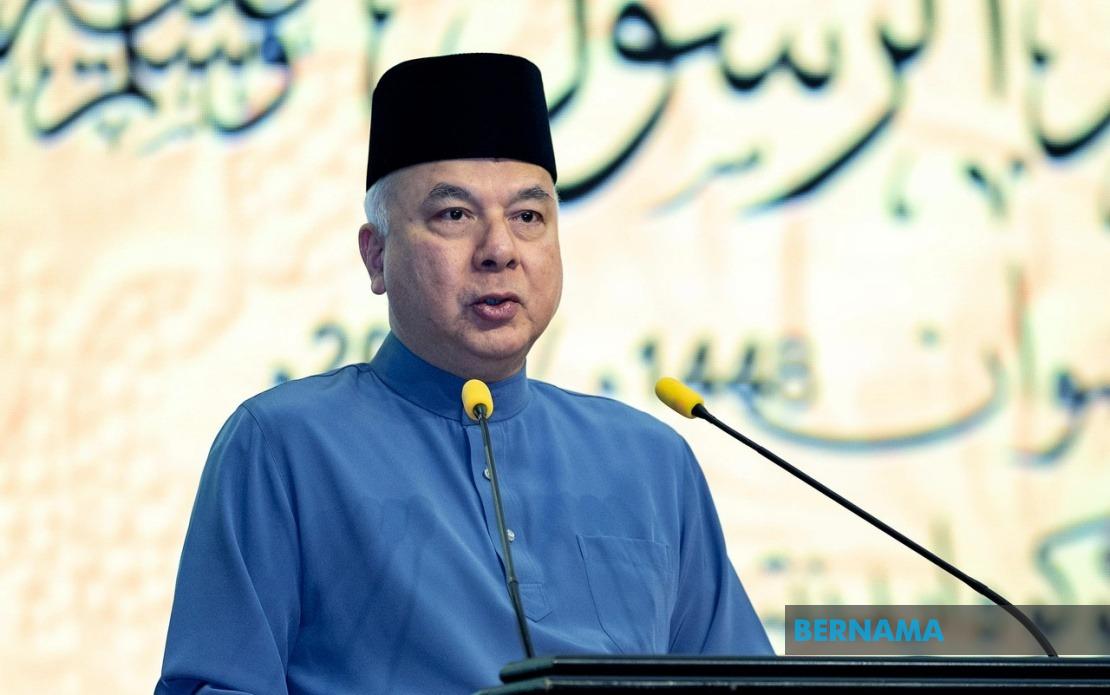
The unity of the Muslim ummah is increasingly fragmented by competing allegiances, ideological fissures, and the pursuit of power and material gain, according to Sultan Nazrin Shah of Perak. Delivering his remarks at the state-level celebration of Maulidur Rasul in Ipoh on August 25, the Sultan articulated a concern that resonates across Malaysia and the broader Muslim world: internal discord threatens the coherence and strength of Islamic communities when external pressures demand collective resilience. His intervention reflects the growing anxiety among senior Malaysian leaders that sectarian and political fragmentation undermines the ability of Muslims to address common challenges and advance shared interests in an increasingly polarised environment.
The Sultan identified multiple fault lines weakening the bonds of Islamic brotherhood. Political competition, divergent schools of Islamic thought, ethnic particularism, and individual self-interest have created a landscape where Muslims find themselves at cross-purposes rather than united in common purpose. These centrifugal forces gain additional momentum from the universal human tendency toward the accumulation of status, wealth, and comfort. The result, Sultan Nazrin observed, is that the deeper Islamic principle of fraternity—a cornerstone of Muslim identity and collective action—becomes progressively overshadowed. This analysis carries particular significance in Malaysia, where religious pluralism, ethnic diversity, and democratic competition have historically created spaces for both cooperation and conflict among Muslim communities.
The Sultan directed pointed counsel toward Muslim political leaders and those heading Islamic organisations and movements. Rather than allow their institutional roles and ideological commitments to fuel endless disputes, these figures should consciously deprioritise partisan rivalries and seek common ground where possible. The implicit criticism here extends beyond mere squabbling: it acknowledges that when leaders compete for dominance, they drain resources, energy, and moral authority that could be redirected toward substantive improvement in Muslim societies. For Malaysia specifically, this message carries weight at a moment when political realignments have created new tensions and when questions about Islamic governance, pluralism, and national identity remain hotly contested among different political actors claiming Islamic legitimacy.
Yet the Sultan's address was not merely diagnostic; it carried a prescription rooted in practical optimism. Amid the political contestation and division, he noted with appreciation that numerous individuals and organisations are pursuing constructive initiatives that strengthen Islamic civilisation and identity. These efforts span multiple domains: Islamic economics and finance represent emerging fields where Muslim-majority nations can develop alternatives to conventional Western financial structures; the halal industry creates both commercial opportunity and reinforces Islamic compliance across global supply chains; waqf systems preserve Islamic charitable traditions while providing sustainable funding for community projects; digital dakwah leverages technology to disseminate Islamic knowledge; and strengthening family institutions addresses the cultural foundation upon which stable societies rest. The Sultan's recognition of these initiatives serves a dual function: it credits those working in unglamorous, constructive spaces, and it implicitly suggests that progress need not follow the path of political confrontation.
Expanding and deepening these initiatives requires sustained commitment and scaled implementation. The Sultan urged that existing programmes be reinforced and that successful models be extended more widely. This emphasis on implementation distinguishes his approach from mere exhortation; he recognised that good intentions and awareness campaigns carry limited impact without concrete, measurable outcomes. For Malaysian policymakers, this suggests an agenda where government support for Islamic finance, halal certification, waqf administration, and Islamic education could be strengthened as alternatives to primarily political expressions of Islamic identity and governance.
A second major concern addressed by the Sultan relates to cultural resilience in an age of globalisation and digital connectivity. Muslim societies worldwide face unprecedented exposure to cultural influences transmitted through social media, entertainment platforms, and the mobility of modern lifestyles. These forces need not be understood as purely corrosive, but they do pose genuine challenges to the transmission and preservation of distinctive Islamic values, aesthetics, and ways of life. Malaysia, as an aspirationally modern Muslim-majority nation with deep internet penetration and significant exposure to global media, exemplifies these tensions acutely. The challenge lies not in rejecting modernity itself but in determining which aspects of contemporary life align with Islamic principles and which represent departures that communities wish to resist.
The Sultan advocated for strategic equilibrium rather than defensive retreat. His formulation—that progress and modernisation must not erode Islamic identity—acknowledges that Muslims need not choose between advancing technologically and economically while abandoning their faith commitments. This balanced posture has profound implications for Malaysia's trajectory as a developing nation competing globally while maintaining Islamic character in its governance and society. It suggests that investments in Islamic financial technology, halal innovation, Islamic education integrated with modern curricula, and faith-conscious approaches to digitalisation are not contradictions but complementary endeavours.
The specific challenge, as Sultan Nazrin framed it, involves maintaining confidence in one's own identity while engaging with global modernity. This psychological and cultural dimension proves as important as institutional or policy reform. When Muslims become ambivalent about their heritage or defensive toward their own traditions, they become vulnerable to external definition and lose agency in shaping how they engage with the wider world. Conversely, confident articulation and practice of Islamic values can coexist with technological sophistication, scientific knowledge, and economic dynamism. Nations and communities that achieve this balance—where modernisation occurs on their own terms rather than through imposition or passive absorption—typically experience greater stability and legitimacy.
The gathering where Sultan Nazrin delivered these remarks included senior state officials, the Raja Permaisuri of Perak Tuanku Zara Salim, and Perak Menteri Besar Datuk Seri Saarani Mohamad, underscoring the importance accorded to this message within state leadership circles. The presence of the Raja Muda and other members of the royal family emphasised that these concerns transcend party politics and reflect institutional thinking about the future of Muslim society. This emphasis on unity and common purpose from the palace level carries particular weight in Malaysia's constitutional framework, where sultans occupy symbolic and substantive roles in matters of Islam at the state level.
The Sultan's intervention arrives at a moment when Malaysian politics remains fractious, when questions about Islamic governance and pluralism generate fierce debate, and when external pressures—geopolitical tensions, economic challenges, cultural globalisation—affect Muslim communities everywhere. By elevating the discourse beyond immediate political competition to encompass the longer-term interests of Muslim civilisation, Sultan Nazrin offered a reminder that political leaders possess responsibilities beyond their partisan constituencies. His emphasis on constructive initiatives in Islamic finance, education, and social strengthening provides a template for how Muslim-majority societies can advance without requiring constant zero-sum political contestation.
The broader implication of the Sultan's message extends across Southeast Asia and the Muslim world. The challenges he identified—political fragmentation, sectarian division, cultural pressure, the tension between modernity and tradition—affect Muslim communities globally. Yet his response remains contextually rooted: he advocated not for rejection of modernity or retreat into parochialism, but for conscious, deliberate engagement where Muslims retain agency in shaping their future. For Malaysia, implementing his vision would require that political leaders, regardless of their partisan affiliations, recognise their role in either exacerbating or mitigating these deeper societal challenges. It would also suggest that measuring success in Islamic governance should encompass not merely political victory but genuine advancement in economic justice, educational quality, charitable impact, and the preservation of Islamic identity in an interconnected world.

