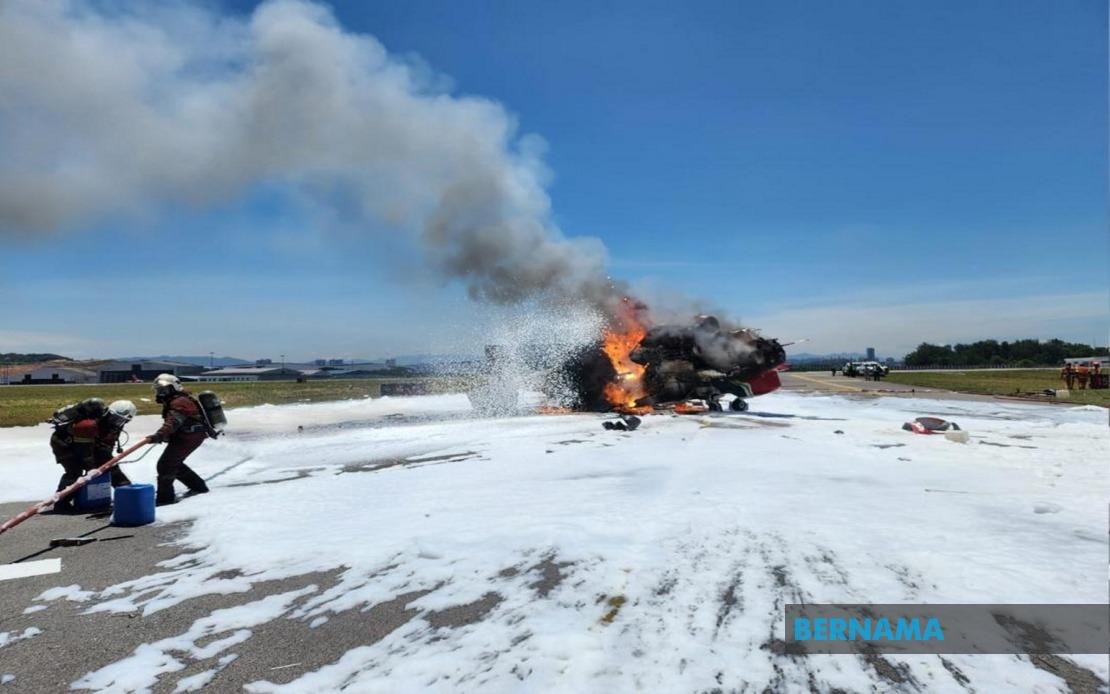
Operations at Sultan Abdul Aziz Shah Airport resumed on Thursday afternoon after a dramatic incident involving a Ukrainian helicopter brought temporary disruption to the facility serving Malaysia's busiest aviation hub. The runway reopened for traffic at 2.57 pm following the suspension of all flight movements, according to Malaysian Civil Aviation Authority (CAAM) chief executive officer Capt Datuk Norazman Mahmud. The incident, which unfolded at midday, underscores the critical role that rigorous safety protocols play in maintaining smooth airport operations and passenger confidence in Malaysia's aviation infrastructure.
The explosion occurred at 12.28 pm at Taxiway Victor when a Kamov KaV-32S helicopter registered in Ukraine experienced catastrophic failure during a ground engine run-up test. This type of maintenance activity, essential for ensuring aircraft readiness, turned hazardous when the twin-engine helicopter caught fire amid what authorities described as routine testing procedures. Four Ukrainian nationals—comprising the pilot, co-pilot, and two additional crew members—were conducting the maintenance work at the time of the incident. One crew member sustained minor injuries from debris propelled by the explosion, though the quick emergency response prevented more severe casualties.
The immediate impact on airport operations proved substantial, though manageable within the airport's contingency frameworks. Throughout the runway closure period, which lasted approximately two and a half hours, eight inbound flights were diverted to alternative airports, while three departing aircraft experienced delays as flight operations ground to a halt. The swift diversion of arriving aircraft prevented congestion and potential safety complications, demonstrating the effectiveness of coordination between CAAM and airlines operating from the facility. Display screens throughout the terminal building were updated to reflect the revised schedules for multiple flights heading to various domestic and international destinations, ensuring passengers had current information about their travel plans.
CAAM's decisive action in temporarily closing all departure and arrival operations, while exceptional, reflected standard emergency protocols designed to protect all personnel and aircraft in the vicinity. Capt Norazman advised passengers to maintain contact with their respective airlines for the most up-to-date information regarding their flights, acknowledging the inconvenience caused by the incident. The authority's transparent communication during the crisis helped manage passenger expectations and prevented the kind of confusion that can compound operational disruptions at busy terminals.
Sultan Abdul Aziz Shah Airport, commonly known as Subang Airport, serves as a critical node in Malaysia's aviation network and handles significant traffic volumes daily. The facility's ability to manage such incidents without extended disruption speaks to its operational resilience and the professionalism of its emergency response teams. For Malaysian air travellers and the broader Southeast Asian aviation sector, such incidents reinforce the importance of maintaining rigorous maintenance standards and comprehensive safety oversight across all aircraft operations.
The involvement of a foreign-registered helicopter in a ground incident at a major Malaysian airport also highlights the international dimension of aviation operations within the region. Ukraine-registered aircraft occasionally operate in Malaysian airspace and at Malaysian facilities for various commercial purposes, including specialized services. The incident raises questions about the harmonization of maintenance protocols and safety standards across different operator jurisdictions, particularly regarding how ground testing procedures are conducted and supervised at Malaysian airports.
The rapid restoration of airport operations reflected the efficiency of CAAM's coordination with ground services, emergency responders, and airline operations teams. Within hours of the incident, the runway was cleared of debris and inspected to ensure no compromise to safety standards. This swift turnaround minimized the cumulative impact on the day's flight schedules and prevented the kind of cascading delays that can reverberate throughout aviation networks. For the airlines and passengers affected, the relatively brief disruption was preferable to extended closures that could have disrupted travel plans more severely.
From a broader perspective, the incident underscores the inherent risks associated with helicopter operations, particularly during maintenance and testing phases when aircraft are being pushed beyond normal operational parameters. While the explosion appears to have been contained to the affected aircraft, the potential for ground fires during engine run-ups represents a recognized hazard that requires constant vigilance. The fact that only minor injuries occurred suggests that emergency protocols and safety distances were appropriately maintained, though investigators will likely examine whether additional precautions could enhance safety during such procedures.
Looking ahead, CAAM will presumably conduct a thorough investigation into the root causes of the explosion, focusing on maintenance records, pre-test inspections, and the sequence of events leading to the failure. Such investigations are standard practice in aviation and serve the dual purpose of determining liability and identifying systemic improvements. For other helicopter operators and maintenance facilities in Malaysia and the wider region, lessons learned from the incident will likely be shared through aviation safety networks and regulatory channels, contributing to the industry's ongoing evolution toward even higher safety standards.

