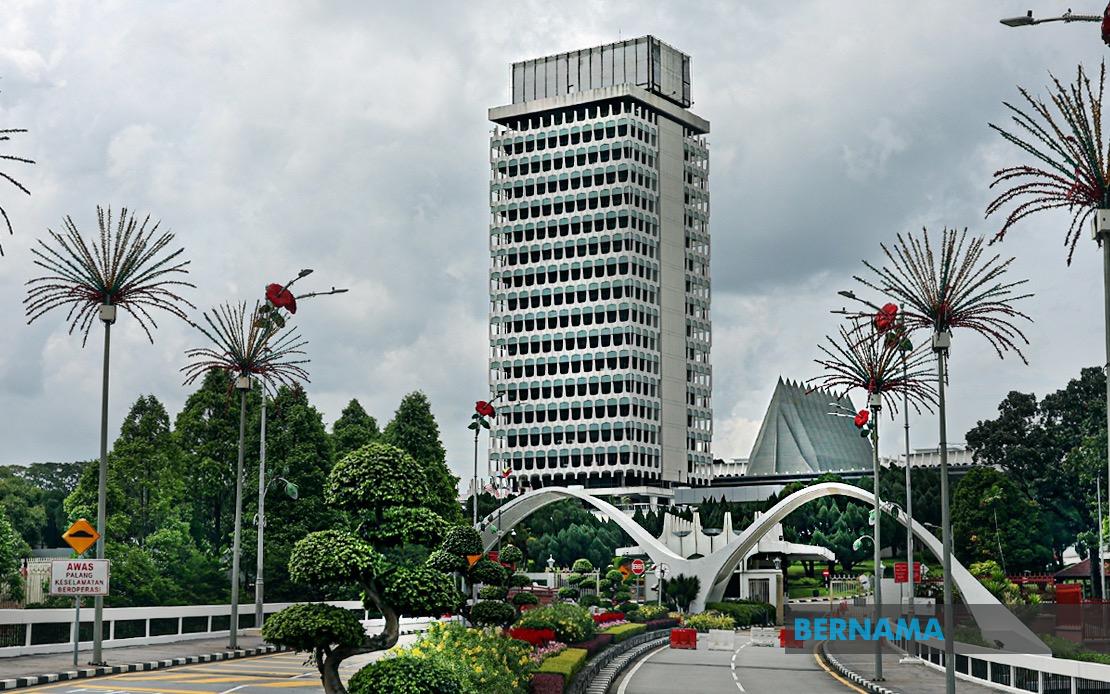
Lawmakers in the Dewan Rakyat are pivoting their attention towards structural governance reforms and macroeconomic pressures that have increasingly affected ordinary Malaysians. The parliamentary session, which began on July 1 and will run through July 16, has placed significant emphasis on two interconnected policy challenges: modernising the institutional framework of Malaysia's human rights body and reconciling the apparent gap between headline inflation statistics and the lived experience of households struggling with daily expenses.
The proposed amendments to the SUHAKAM Act 1999 represent a fundamental shift in how the Human Rights Commission of Malaysia might operate financially. Under the current framework, SUHAKAM relies almost entirely on government budget allocations for its operational expenses, a dependency that potentially constrains both its autonomy and its capacity to expand programmes. Teresa Kok Suh Sim, the Seputeh representative from Pakatan Harapan, has raised the critical question of whether the government intends to permit SUHAKAM to diversify its revenue streams through the provision of training programmes and specialised courses. This approach, common among advanced human rights institutions internationally, could allow the commission to reduce its reliance on annual government appropriations whilst simultaneously strengthening its institutional capacity and reach across civil society and the corporate sector. Such financial independence carries broader implications for governance transparency and the credibility of human rights monitoring in a region where institutional autonomy remains contested.
Parallel to these governance concerns, lawmakers have zeroed in on an economic puzzle that has become increasingly visible to Malaysian consumers: the widening chasm between the official inflation rate published by government statisticians and the actual cost pressures that families experience at supermarkets, petrol pumps, and rental counters. Mohd Syahir Che Sulaiman from Perikatan Nasional, representing the Bachok constituency, has specifically directed the Economy Minister to assess this discrepancy and explain which indicators the government employs to ensure that economic expansion genuinely translates into tangible improvements in household purchasing power. This question reflects a sophisticated understanding that nominal growth figures, whilst encouraging on spreadsheets, often mask distributional realities where the benefits of expansion concentrate among specific segments of the population.
The divergence between inflation metrics and lived costs carries particular salience in Malaysia's current economic context. Official inflation figures, which typically aggregate price movements across a broad basket of goods and services, may not accurately reflect the purchasing patterns of working-class and middle-income households whose spending is concentrated in categories such as food, transportation, and housing. When these categories experience sharper price increases than luxury goods or imported durables, the aggregate inflation rate underestimates the squeeze on household budgets. The parliamentary inquiry suggests recognition that conventional economic indicators may be failing to capture the full extent of cost-of-living pressures affecting voters and their families.
Beyond fiscal and economic matters, the parliamentary agenda encompasses environmental governance challenges. V. Ganabatirau, representing Klang for Pakatan Harapan, has placed emphasis on the review of land conversions affecting flood retention ponds, particularly within Kuala Lumpur's metropolitan area. This issue sits at the intersection of urban planning, climate resilience, and property rights, reflecting mounting concerns about how rapid development has compromised the city's capacity to manage stormwater and mitigate flooding during monsoon seasons. The question signals parliamentary attention to whether regulatory frameworks adequately protect critical environmental infrastructure against commercial pressures.
Educational and workforce development priorities have also secured parliamentary attention. Kubang Pasu's Datuk Dr Ku Abd Rahman Ku Ismail has posed questions to the Higher Education Minister about the current composition of student enrolment in Science, Technology, Engineering, and Mathematics fields relative to other disciplines, alongside government targets for training engineers across various specialisations. These questions reflect awareness that Malaysia's transition towards high-technology manufacturing and services requires deliberate calibration of tertiary education outputs to labour market demands. The emphasis on STEM disciplines reflects both regional competitive pressures and the recognition that knowledge-intensive sectors generate higher-value employment and improved wage trajectories for graduates.
The parliamentary session will also feature the tabling of the Cybercrime Bill 2026 for its second reading, a legislative initiative that carries significant implications for digital rights, online commerce, and cybersecurity governance in Malaysia. This legislation represents a effort to modernise criminal law frameworks for the digital era, addressing challenges ranging from online fraud to data security breaches and digital identity theft. The bill's passage through Parliament will signal the government's commitment to establishing clearer legal frameworks for digital conduct whilst simultaneously raising questions about the balance between security objectives and individual privacy protections.
The convergence of these parliamentary priorities reflects deeper structural questions confronting Malaysia's governance and economic trajectory. Questions about SUHAKAM's institutional independence, the credibility of inflation measurement, environmental protection, workforce development, and digital governance all point towards concerns about whether existing institutional frameworks and policy tools remain adequate for addressing contemporary challenges. The fact that these issues have secured prominent placement on the parliamentary agenda suggests recognition amongst elected representatives that citizens increasingly perceive disconnects between statistical assertions of economic progress and their everyday experiences of cost pressures and institutional effectiveness.
The parliamentary session's focus on these matters also indicates emerging consensus that incremental policy adjustments may prove insufficient for addressing structural economic anxieties. The gap between inflation statistics and household experience suggests that conventional demand-management and monetary-policy tools may require supplementation with targeted interventions addressing the specific cost pressures affecting vulnerable populations. Similarly, questions about SUHAKAM's institutional capacity and independence reflect broader concerns about whether Malaysia's governance institutions possess adequate resources and autonomy to perform their constitutional functions effectively.
For regional observers, Malaysia's parliamentary engagement with these issues carries significance beyond national borders. The region's major economies face similar challenges regarding the credibility of official economic statistics, the balance between development imperatives and environmental protection, and the institutional capacity required to manage digital transformation. How Malaysia's Parliament addresses these questions may offer instructive lessons for neighbouring countries wrestling with analogous governance and economic challenges. The outcomes of these parliamentary deliberations over the coming weeks will likely influence both public confidence in official economic management and the trajectory of institutional reforms affecting institutional autonomy and governance effectiveness.

