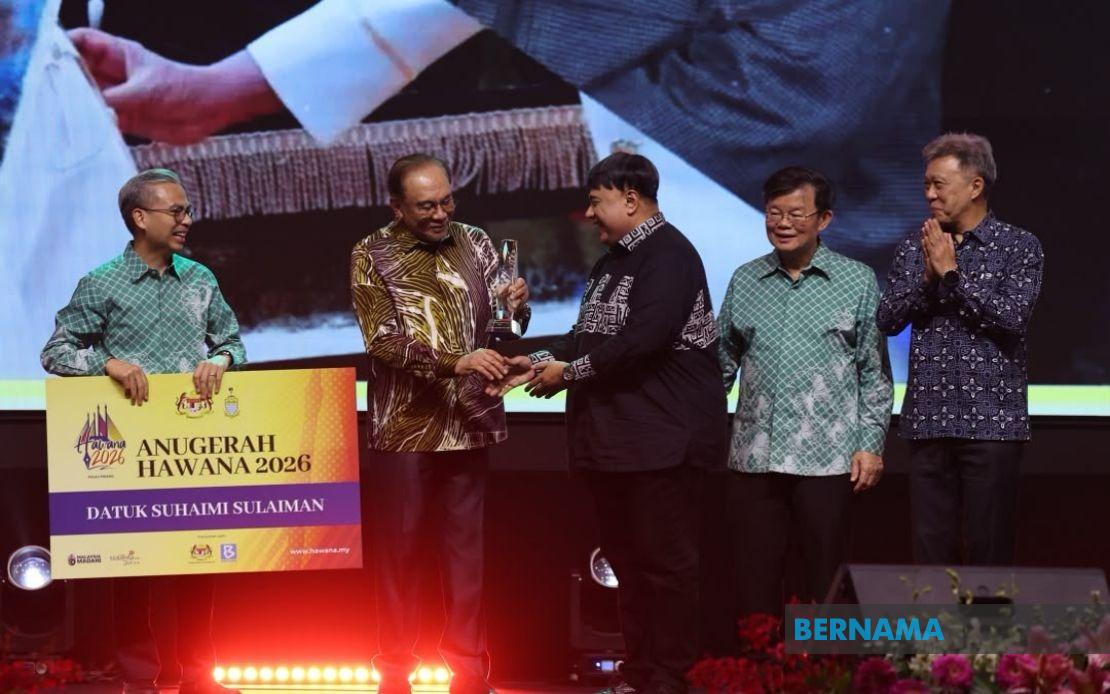
Datuk Suhaimi Sulaiman, whose career in broadcasting and journalism spans more than three decades, has been honoured with the National Journalists' Day (HAWANA) 2026 Award in acknowledgment of his substantial impact on Malaysia's media landscape. The ceremony took place on June 20 at the PICCA @ Arena Butterworth Convention Centre, with Prime Minister Datuk Seri Anwar Ibrahim presenting the award to the decorated industry veteran in the presence of senior government and media officials.
The recognition of Suhaimi's career milestone represents a significant moment for Malaysian journalism, particularly given the transformative period the industry is currently navigating. His tenure as Broadcasting Malaysia (RTM) director-general positioned him as a influential figure in shaping the nation's public broadcasting standards, and his continued engagement with media professionals underscores the importance placed on institutional memory and mentorship within the sector. The award ceremony drew attendance from prominent figures including Penang Chief Minister Chow Kon Yeow, Communications Minister Datuk Fahmi Fadzil, and Malaysian National News Agency (Bernama) chairman Datuk Seri Wong Chun Wai, reflecting the occasion's significance within Malaysia's broader media and communications ecosystem.
Suhaimi's perspective on his award reveals a practitioner acutely aware of the evolving challenges confronting journalism in the contemporary era. Rather than viewing the recognition as a culmination of his work, he frames it as both an affirmation and a renewed mandate to remain engaged with the field's most pressing concerns. His remarks to Bernama emphasise that the award strengthens his commitment to continuous learning and knowledge-sharing among the next generation of media professionals—a particularly pertinent stance given the rapid technological shifts reshaping newsrooms across the region.
The emergence of artificial intelligence as a transformative force in media operations has created both opportunities and anxieties within the profession globally, and Suhaimi's explicit acknowledgment of this challenge reflects the realistic assessment many senior journalists are bringing to industry discussions. The integration of AI technologies into news production, editorial decision-making, and audience analytics presents Malaysian media organisations with opportunities to enhance efficiency and reach, yet simultaneously raises fundamental questions about editorial integrity, employment structures, and the quality of journalistic output. Suhaimi's commitment to acquiring new knowledge in this domain positions him as a bridge between traditional journalism values and technological adaptation—a role increasingly vital as Southeast Asian newsrooms compete in a digital-first information economy.
The HAWANA awards programme itself serves as an important institutional mechanism for recognising excellence and dedication within Malaysia's journalism community, elevating the profession's status at a time when trust in media institutions faces headwinds globally. By honouring individuals like Suhaimi who have demonstrated sustained commitment across multiple decades, the awards reinforce journalism's role as a foundational democratic institution requiring societal investment and respect. The participation of senior government ministers in the ceremony underscores official recognition of media professionals' contributions to national discourse and development.
Suhaimi's career trajectory reflects broader patterns within Malaysian broadcasting history. His ascent to RTM's top position during a period of significant media evolution places him among a cohort of administrators who navigated the transition from analogue to digital broadcasting while maintaining institutional credibility. His perspectives on the industry carry particular weight given this institutional background, and his continued engagement with contemporary challenges suggests that Malaysia's media leadership continues to benefit from experienced voices capable of contextualising present transformations within longer historical narratives.
The award recognition arrives at a moment when Malaysian media organisations are actively recruiting talent and strengthening their professional capabilities across multiple platforms. The emphasis Suhaimi places on learning and adaptation aligns with organisational imperatives to upskill existing workforces while maintaining editorial standards. His role as a mentor and thought leader within the industry carries implications for how Malaysian journalism schools and newsroom training programmes approach curriculum development and professional development strategies.
For Malaysian readers and media observers, Suhaimi's recognition underscores the value placed on journalistic integrity and long-term institutional commitment in a media landscape increasingly characterised by rapid personnel transitions and platform fragmentation. The award validates the investment of substantial career effort in traditional broadcasting institutions, signalling that even as digital transformation reshapes media consumption patterns, the foundational skills and ethical frameworks developed through careers in established organisations remain highly valued within the profession.
The broader context of this award extends beyond individual recognition to encompass questions about how Malaysia's media industry nurtures, retains, and learns from its most experienced practitioners. As regional media markets increasingly compete for audience attention and advertising resources, the institutional knowledge and professional networks that individuals like Suhaimi possess become strategic assets for organisations seeking to navigate market disruption while maintaining editorial quality and audience trust.

