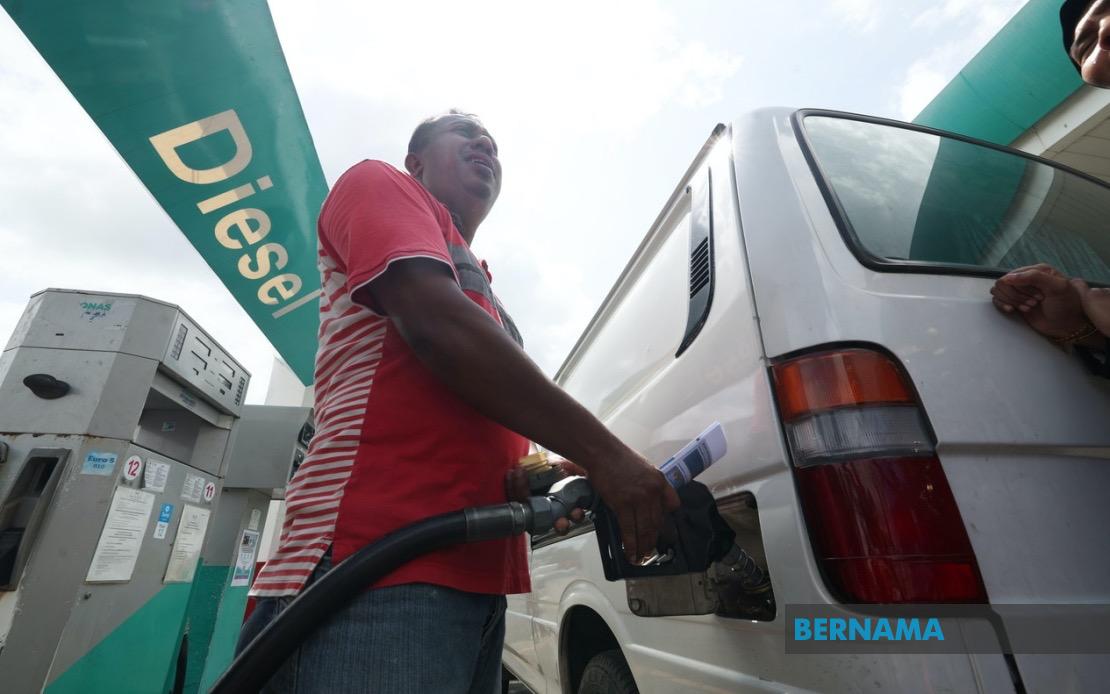
The Malaysian government will introduce a new pricing structure for diesel fuel next month, reducing the subsidised rate to RM2.10 per litre for eligible citizens from July 2026. Prime Minister Datuk Seri Anwar Ibrahim made the announcement during an event in Bintulu, signalling the government's continued commitment to managing fuel costs for ordinary Malaysians while reforming subsidy mechanisms to improve efficiency and fiscal responsibility.
The policy reform marks another step in the MADANI administration's broader subsidy restructuring strategy. Rather than offering blanket subsidies available to all consumers regardless of income or need, the government is shifting towards a targeted approach that limits benefits to verified Malaysian citizens. This methodology mirrors the established BUDI MADANI RON95 (BUDI95) programme, which has been successfully implemented for petrol and uses MyKad identification for verification purposes.
The use of MyKad authentication represents a technological solution to a persistent policy challenge in Southeast Asia: ensuring subsidies reach intended beneficiaries while minimising leakage, smuggling, and misuse. By tying fuel subsidies to national identification, the government creates a trackable system that can identify eligible recipients and prevent abuse. This approach also generates valuable data on subsidy distribution patterns, allowing policymakers to refine programmes based on actual usage statistics and demographic trends.
Finance Minister II Datuk Seri Amir Hamzah Azizan was scheduled to provide detailed implementation guidelines to media representatives the following day in Kuala Lumpur, indicating that further specifics regarding eligibility criteria, distribution mechanisms, and transition procedures would follow shortly. Such announcement sequencing allows government agencies time to prepare operational frameworks while building public understanding of the new system's mechanics.
For Malaysian consumers, this pricing development carries mixed implications. The RM2.10 per litre rate represents a meaningful reduction from previous levels, providing relief to households and businesses dependent on diesel fuel. Commercial operators, particularly in logistics, agriculture, and transportation sectors, will likely experience improved operating margins. However, the targeted subsidy model means not all fuel purchasers will access this price; verification requirements may exclude migrant workers, non-citizens, and those lacking proper documentation, potentially creating equity concerns.
Regionally, Malaysia's subsidy reforms demonstrate broader Southeast Asian trends toward more fiscally sustainable energy policies. Countries including Indonesia and the Philippines have grappled with similar tensions between social welfare objectives and budget constraints. Malaysia's willingness to couple price reductions with stricter eligibility criteria suggests a maturing approach that acknowledges subsidy programmes' fiscal costs while attempting to preserve support for vulnerable populations. This balancing act remains politically sensitive across the region.
The announcement occurred during the Cheque Handover Ceremony marking Bintulu Port's transition from federal to state jurisdiction, underscoring how multiple governance and economic reforms are progressing simultaneously within the MADANI administration's agenda. Energy policy, fiscal management, and infrastructure decentralisation represent interconnected priorities within a broader developmental framework.
Diesel subsidy policy carries particular weight in Malaysia given the fuel's role in industrial production, agricultural operations, and transportation networks. Small-scale farmers, fishing communities, and trucking operators operating on thin margins depend significantly on fuel cost stability. The targeted subsidy approach recognises these groups' vulnerabilities while attempting to avoid paying subsidies for fuel purchased by wealthier consumers or for speculative purposes such as cross-border smuggling.
Implementation of the MyKad-verified system will require coordination across multiple agencies including the Ministry of Finance, petroleum retailers, and identification verification authorities. Training retail staff, updating point-of-sale systems, and managing public awareness campaigns represent substantial logistical undertakings. Early experience from the RON95 programme provides valuable institutional knowledge, though scaling to encompass diesel distribution across Malaysia's extensive retail network presents additional complexity.
The July 2026 implementation timeline allows stakeholders approximately six months for preparation, yet questions remain regarding transition arrangements. Will existing diesel purchase patterns continue unchanged until the new system launches, or will preliminary measures precede full rollout? How will motorists and businesses register for the programme, and what documentation will be required? Finance Minister Amir Hamzah's subsequent media briefing would presumably address these operational details.
Malaysia's approach to fuel subsidy reform offers instructive lessons for other emerging economies balancing social welfare provision with fiscal sustainability. Rather than abandoning subsidies entirely—a politically fraught option—the government is restructuring them toward greater transparency, accountability, and efficiency. This represents pragmatic policymaking that acknowledges both economic constraints and legitimate public expectations regarding affordable energy access.
Looking ahead, the success of this diesel subsidy reform will significantly influence public support for further subsidy rationalisation across other commodities including cooking oil and basic foodstuffs. If the targeted diesel system proves administratively workable and achieves its intended coverage of genuinely needy populations, political capital may accumulate for extending similar approaches elsewhere. Conversely, implementation challenges or perceived inequities could undermine support for broader subsidy reforms, complicating the government's fiscal adjustment agenda.

