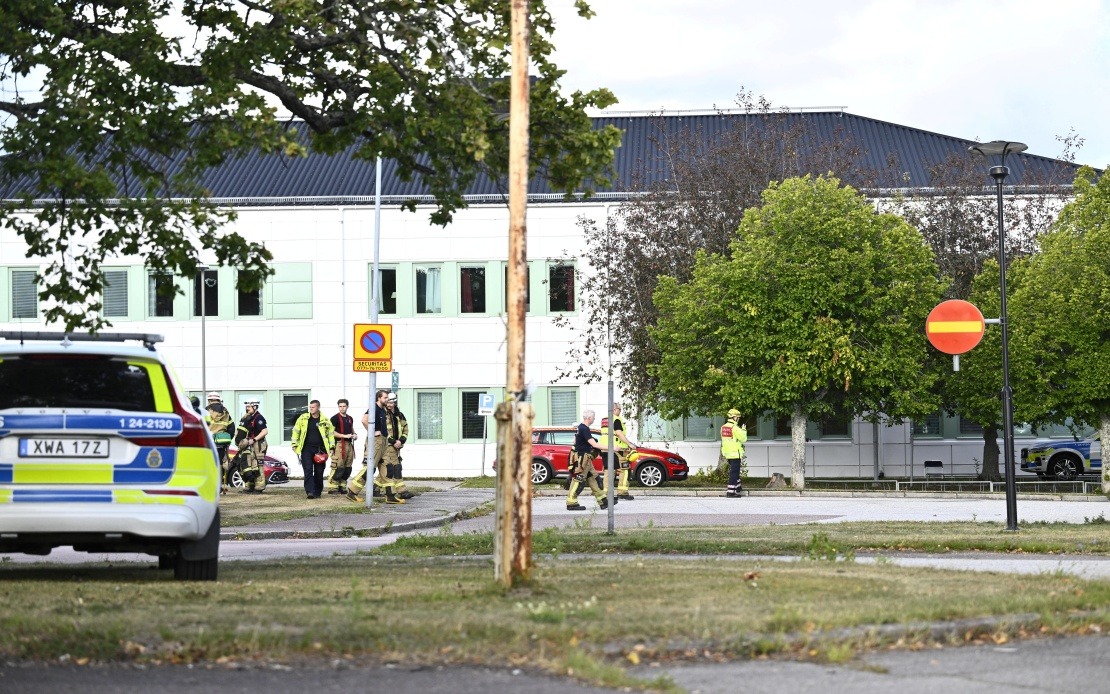
A deadly weapon attack at a school in central Sweden has left one person dead and multiple others wounded, prompting an urgent police response and widespread security lockdowns across the community. The incident unfolded at Brinell School in Fagersta when emergency services received calls at 2.06 pm local time, triggering a coordinated response from law enforcement and medical personnel to address what would prove to be a serious violent crime.
According to public broadcaster SVT, an individual armed with a sword entered the school premises and carried out the assault, resulting in one fatality and injuries to several others. The attack underscores the ongoing challenge of school safety in Scandinavian countries, which have historically experienced lower violent crime rates than many other regions but remain vulnerable to periodic incidents of this nature. The circumstances surrounding what motivated the assailant to commit this act remain under investigation by Swedish authorities.
Two victims, both male students under 18 years old, sustained serious injuries and were reported to be in stable condition following medical intervention. A third person suffered minor wounds in the incident. The fact that the more severely injured victims are minors adds particular gravity to what authorities are treating as a critical public safety matter requiring immediate investigation and preventive measures.
Police have arrested an 18-year-old male in connection with the attack. Investigators have linked the suspect to two residential addresses within Fagersta, and records indicate he was previously enrolled at Brinell School, suggesting familiarity with the institution and its layout. The suspect's prior connection to the school as a student raises questions about potential grievances or triggers that may have motivated the violence, though authorities have not yet disclosed specific motives.
In response to the attack, municipal authorities implemented comprehensive security measures affecting multiple educational and recreational facilities across Fagersta. Seven institutions—Olympen, Fagerstahallen, Risbroskolan, Skogsglantan, Bjorksta, Prastkragen, and Norrbybacken—were placed under lockdown protocols to prevent any potential secondary incidents and to allow emergency responders to establish scene control and gather evidence.
For Malaysian and Southeast Asian observers, this incident reflects a pattern of isolated but serious violence in Western educational settings that contrasts with the region's own varying security challenges. While Malaysia and neighbouring countries have dealt with their own school safety concerns, ranging from gang-related incidents to extremist threats, the Scandinavian context presents a different profile of youth violence, often linked to individual psychological crises or personal grievances rather than organized criminal or ideological motivations.
The Swedish government has moved swiftly to address the situation at the highest levels. Justice Minister Gunnar Strommer issued a statement confirming that the administration was maintaining close contact with law enforcement agencies and monitoring developments continuously. His public acknowledgment of the incident's severity and the government's engagement demonstrates the political significance attached to school security incidents in Sweden, where such violence remains comparatively rare despite the country's international reputation for progressivism.
School violence presents particular challenges for security officials across all jurisdictions because educational institutions operate as open environments by design, with regular foot traffic, multiple entry and exit points, and a young population that may be particularly vulnerable during an active threat. Swedish authorities, like their counterparts globally, must balance the imperative to maintain accessible, welcoming campuses with the need to implement effective security protocols that can detect and deter potential threats.
The involvement of an 18-year-old former student raises troubling implications about the reintegration of young people who leave schooling, particularly those who may harbour resentment or psychological distress stemming from their educational experience. This pattern—wherein individuals return to schools where they previously studied to commit violent acts—has been observed in various countries and represents a distinct security concern that schools and mental health services struggle to address preventively.
Investigators will likely focus considerable attention on understanding the suspect's psychological state, recent behaviour, and any warning signs that preceded the attack. Swedish law enforcement has developed sophisticated crisis intervention and threat assessment protocols, and this incident will contribute to ongoing refinements in how authorities identify and intervene with individuals at risk of committing violent acts. Mental health services and educational institutions frequently coordinate in such investigations to determine whether intervention opportunities were missed.
For the Fagersta community, this incident will likely have profound psychological and social reverberations. Students and staff will require trauma counselling and psychological support, and the school itself will need to implement security enhancements while working to restore a sense of safety and normalcy. The broader implications extend to how Swedish society conceptualizes school security and youth mental health intervention more broadly.
As investigations proceed, Swedish authorities will examine potential contributing factors ranging from social isolation and mental illness to possible access to weapons and earlier warning signs. The arrest of the suspect, while removing the immediate threat, marks the beginning rather than the conclusion of the investigative and prosecutorial process that will unfold over coming months.

