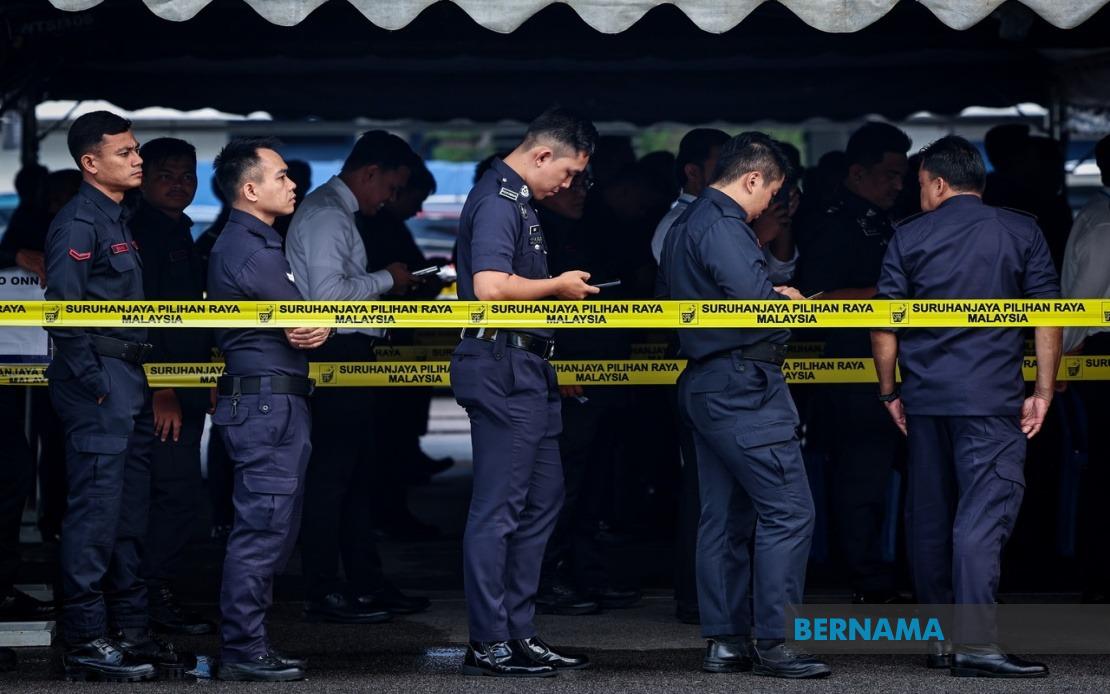
Early voters in the Johor state election demonstrated robust participation rates on July 7, with the Election Commission reporting that nearly four in ten registered advance voters had cast their ballots by mid-morning. The 38.64 per cent turnout figure, confirmed through the EC's official Facebook page, suggests strong electoral enthusiasm ahead of Saturday's main polling day, when the entire state will choose representatives for the 56 assembly seats.
The early voting exercise accommodated advance voters including active military personnel, their spouses, and police officers—groups whose work commitments often prevent them from participating during standard polling hours. Official figures showed that 7,963 individuals from these security and defence sectors made use of the facility, underscoring the logistical importance of early voting provisions for maintaining inclusive democratic participation across all segments of society.
Organisational efficiency was evident in the setup and execution of the advance voting process. The Election Commission deployed 64 polling centres across Johor, each opening at 8 am to serve 20,607 registered early voters. This decentralised approach allowed for manageable queue lengths and reduced congestion at individual voting stations, contributing to a smooth polling experience for participants throughout the morning hours.
The staggered closing times for polling centres—ranging from noon to 6 pm depending on location and accumulated voter numbers—reflected practical considerations about managing voter flow and ensuring that latecomers could still participate. This flexibility demonstrated the EC's efforts to maximise accessibility while maintaining orderly conduct at each voting site.
The broader Johor state election context provides important perspective on these early voting numbers. A total of 172 candidates are competing for the 56 state assembly seats across Johor, representing multiple political parties and independent candidates seeking voter mandates. This competitive field reflects ongoing political contestation within one of Malaysia's most significant states, where the outcome carries implications beyond Johor's borders in terms of federal coalition dynamics and regional political momentum.
The main polling day on Saturday is expected to draw the participation of approximately 2.7 million registered voters across the state. This substantial electorate size positions the Johor state election as a major democratic exercise, with turnout figures and voter preferences likely to shape political discussions and coalition negotiations at both state and national levels. The early voting data suggesting healthy participation could indicate similarly strong engagement when the full voter population has an opportunity to cast ballots.
Early voting turnout rates often serve as barometers for overall electoral enthusiasm. The 38.64 per cent figure represents a meaningful proportion of advance voters exercising their franchise, though the full significance of this metric will become clearer when compared against historical early voting participation rates in previous Johor elections and other recent state polls across Malaysia.
The Election Commission's transparent communication of voting data through real-time updates reflects modern democratic practice and voter interest in understanding electoral processes as they unfold. Public availability of such information builds confidence in electoral administration and allows independent observers, political analysts, and media to track participation patterns throughout the voting period.
For Malaysian political observers, the Johor election carries weight beyond the state level. The composition of the state assembly and the strength shown by various political coalitions will influence calculations about federal politics, particularly regarding coalition stability and the positioning of parties ahead of any potential national elections. Early turnout suggesting sustained voter engagement may energise campaign efforts during the final days before Saturday's polling.
The participation of security sector personnel in early voting highlights how electoral frameworks accommodate the practical realities of maintaining essential services during polling periods. By enabling military and police officers to vote in advance, the system ensures that their democratic rights are upheld while they fulfil professional duties that may require them to remain on duty during standard voting hours.
As Johor voters prepared to make their final decisions between now and Saturday's polling day, the early voting exercise had already provided election officials with operational experience and logistical data that could inform management of the main polling day. The smooth conduct of early voting across 64 centres suggested that preparations for handling the larger volume of voters on Saturday were similarly well-organised and resourced.

