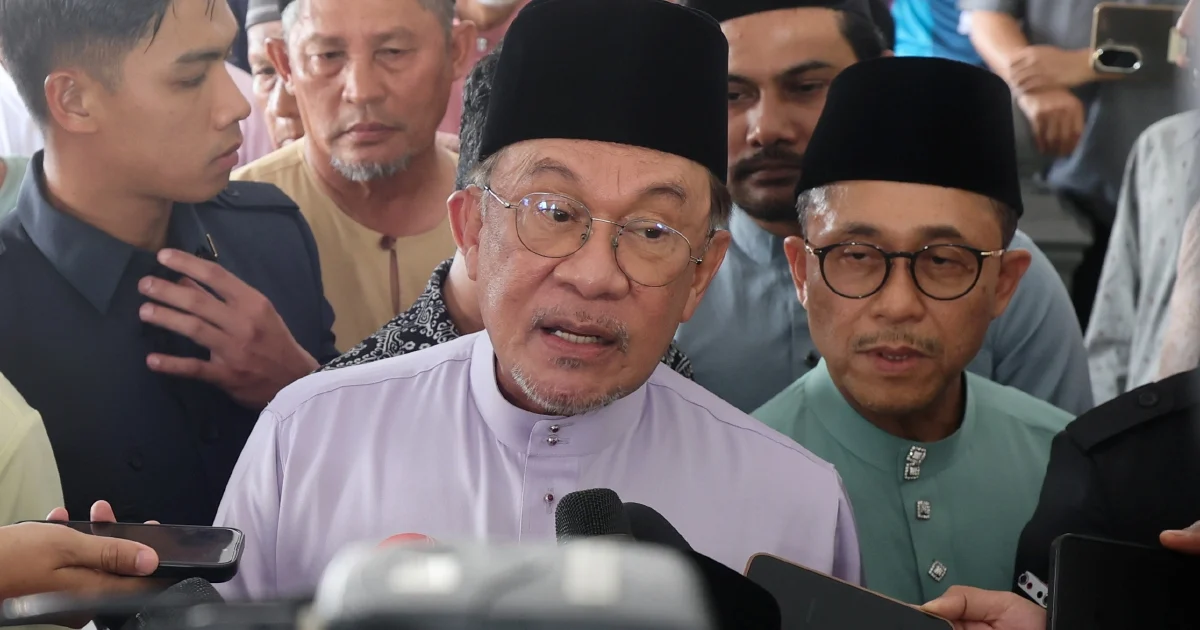
Prime Minister Datuk Seri Anwar Ibrahim has moved to allay concerns about proposed enhancements to Malaysia's Syariah judicial system, emphasising that such reforms will preserve the existing religious freedoms and constitutional safeguards guaranteed to non-Muslim citizens. The reassurance came as the government pursues broader institutional strengthening of Islamic courts, a priority that has generated debate about the constitutional balance between religious autonomy and secular governance in the nation's dual legal framework.
The dual court system established under the Malaysian Constitution represents a foundational aspect of the federation's framework. Syariah courts operate within a defined jurisdictional scope, primarily addressing matters of personal Islamic law affecting Muslim citizens, while secular courts maintain authority over civil and criminal matters affecting all residents. This institutional separation has long underpinned Malaysia's approach to religious pluralism, and the Prime Minister's statement seeks to reinforce this demarcation as the government contemplates improvements to Syariah court infrastructure and procedures.
Efforts to modernise and strengthen Syariah courts have gathered momentum in recent years, reflecting broader arguments that the Islamic legal system requires updated mechanisms, improved efficiency, and enhanced capacity to serve Malaysia's growing Muslim population effectively. Proponents argue that investment in these institutions—including better-trained judicial officers, refined procedural mechanisms, and improved court facilities—represents a legitimate government function that strengthens the administration of Islamic law within its constitutionally defined sphere. The government's position suggests that such enhancements operate entirely within the constitutional mandate granted to Islamic authorities over Muslim personal affairs.
Malaysia's constitutional framework grants significant autonomy to state religious authorities in matters of Islamic law, yet this autonomy exists alongside explicit protections for religious freedom. Article 11 of the Federal Constitution guarantees every person the right to profess, practise, and propagate religion, while other provisions protect the rights of non-Muslim communities to manage their own religious institutions and practices. These constitutional safeguards create a legal environment where both religious autonomy and pluralistic coexistence theoretically coexist, though tensions periodically arise over jurisdictional boundaries and institutional scope.
The specific concern animating recent discussions involves whether expanding Syariah court authority or capacity might encroach upon spheres affecting non-Muslim citizens or mixed-religion family contexts. Inter-faith marriages, inheritance disputes involving non-Muslim spouses, and conversion-related matters have occasionally generated legal complexities that expose gaps or ambiguities in the existing framework. The Prime Minister's assurance addresses apprehension that institutional strengthening might be accompanied by jurisdictional expansion that could indirectly affect non-Muslim interests or constrain their existing rights and remedies.
From Malaysia's economic and social perspective, religious cohesion represents a critical asset. The country's capacity to manage religious diversity while maintaining institutional legitimacy within Muslim communities depends fundamentally on preserving constitutional boundaries and public confidence that religious autonomy does not translate into religious domination. International observers monitoring governance quality in Southeast Asia frequently reference Malaysia's handling of religious pluralism as either exemplary or problematic depending on whether such judicial enhancement proceeds transparently and within acknowledged constitutional limits. The Prime Minister's statement appears designed to signal commitment to maintaining this balance.
Non-Muslim communities in Malaysia, including Chinese and Indian citizens of various faiths, have long expressed underlying sensitivity about judicial evolution that might imperceptibly expand religious authority into domains nominally secular. While Syariah courts currently possess sharply delineated jurisdiction over Muslim personal law, previous instances of institutional mission creep—or perceived overreach—have required clarification or legislative amendment. The government's preemptive reassurance suggests awareness of this underlying concern and an intent to proceed with reforms that enjoy broader social acceptance rather than triggering constitutional controversy.
The timing of these remarks coincides with broader regional discussions about Islamic governance and religious authority in Southeast Asia. Singapore, Brunei, and Indonesia have all grappled with questions about balancing religious institutional development with protection of minority rights and secular governance principles. Malaysia's approach carries particular significance given its explicit constitutional commitment to federalism, Islam's special position, and non-Muslim rights. How the government navigates Syariah court strengthening will likely influence regional perceptions of Malaysian governance quality and religious pluralism.
Implementation mechanisms will ultimately determine whether the Prime Minister's reassurance translates into actual protection of non-Muslim interests. Transparency in drafting any legislative amendments, consultation with non-Muslim stakeholders regarding potential impacts, and explicit safeguards within new institutional frameworks would strengthen public confidence that religious authority strengthening remains bounded by constitutional intent. The government appears aware that successful institutional reform requires not merely formal assurance but demonstrable procedural inclusion of affected communities in decision-making processes.
Looking forward, Malaysia's governance reputation depends significantly on whether religious and secular institutions evolve collaboratively rather than competitively. The Prime Minister's statement, while politically reassuring, sets expectation that government action will match verbal commitment. Close monitoring by civil society organisations, opposition political parties, and international governance observers will likely persist as reforms proceed. This sustained scrutiny, while occasionally contentious, ultimately serves Malaysia's long-term interest in maintaining institutional legitimacy across the diverse communities that comprise the nation.

