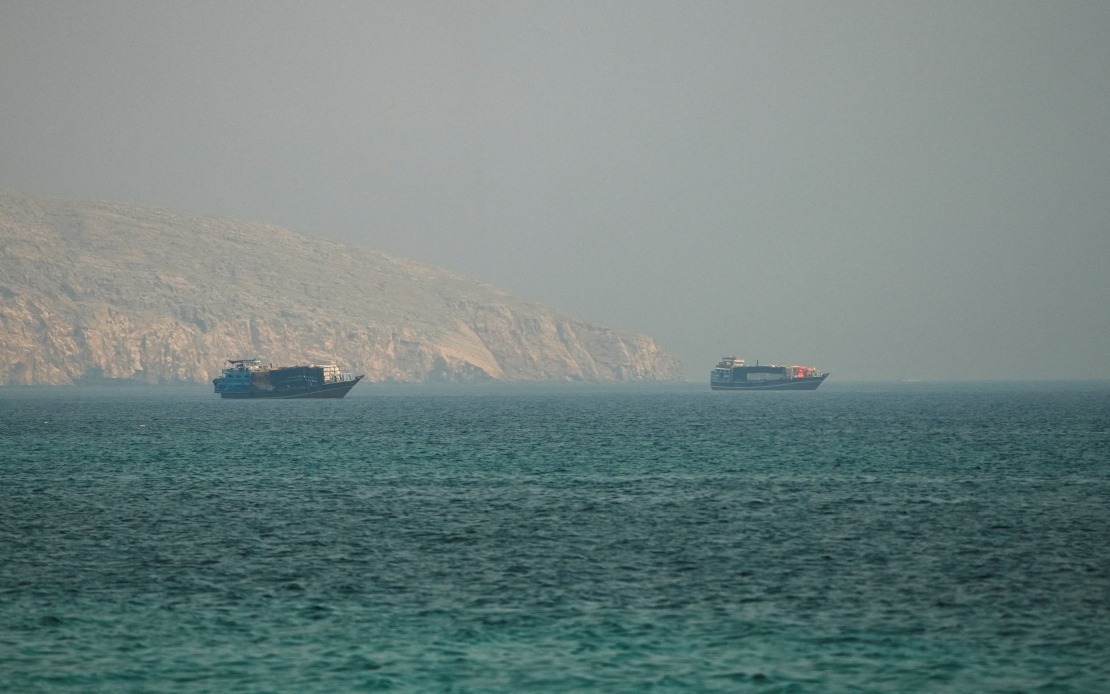
One of the world's most strategically vital shipping corridors remains under a severe security alert, according to the UK Maritime Trade Operations, which oversees merchant vessel safety in international waters. The Strait of Hormuz, through which roughly one-fifth of global petroleum passes daily, continues to experience elevated risk following a series of coordinated attacks on commercial shipping that have reignited military confrontation between the United States and Iran.
The warning issued through UKMTO's Joint Maritime Information Centre acknowledges the expansion of a southern transit route through the strait, which remains technically accessible to all legitimate maritime traffic. However, this official designation of availability masks the persistent dangers that mariners face when navigating this chokepoint between the Persian Gulf and the Gulf of Oman. The agency has issued specific guidance requiring vessels to maintain vigilance for radio contact initiated by naval forces operating across very high frequency channels, a standard security protocol that underscores the military presence and heightened readiness in the region.
Maritime operators are additionally cautioned to exercise extreme caution regarding designated mine-danger areas, a concern that reflects both historical and contemporary risks in the waterway. The proliferation of naval assets and the presence of potentially hazardous ordnance transform what should be a routine commercial passage into a complex navigation challenge requiring constant awareness and coordination with multiple military authorities.
The deterioration of shipping security in the Strait of Hormuz stems directly from a cycle of tit-for-tat military operations between Washington and Tehran. The United States has conducted multiple strikes targeting Iranian military installations and associated infrastructure, justifying these actions as necessary responses to attacks that threatened international maritime commerce and American interests. These operations represent a significant escalation in a broader proxy conflict that extends beyond the Persian Gulf region.
Iran has responded to American military actions with drone strikes directed at US military facilities positioned throughout the Gulf and in Jordan, further demonstrating the geographic reach and escalating nature of the confrontation. Tehran's insistence that all vessels coordinate passage through the strait exclusively with Iranian authorities and utilise only Iranian-designated routes reflects both sovereignty concerns and strategic leverage. This position creates a fundamental tension with international maritime law, which guarantees freedom of navigation through international straits.
For Malaysian and Southeast Asian shipping interests, the situation carries substantial implications. Malaysia's robust maritime trade depends on reliable access to Middle Eastern energy supplies and markets for processed goods and manufactured exports. Disruptions or increased insurance costs associated with transiting the Strait of Hormuz directly affect regional economies that lack domestic energy reserves and depend heavily on Persian Gulf petroleum imports. The uncertainty surrounding shipping safety raises operational costs for Malaysian carriers and complicates long-term supply chain planning for regional manufacturers.
Despite these mounting tensions, diplomatic efforts have not entirely ceased. Last month, Iran and the United States brokered a memorandum of understanding facilitated by Pakistan, aimed ostensibly at de-escalating military hostilities and establishing a framework for sustained peace negotiations. This agreement represented a notable diplomatic achievement, suggesting that both parties recognised the unsustainability of continuous military confrontation. However, the practical implementation of this accord remains questionable given the persistence of violent incidents and retaliatory military operations.
The fragility of the diplomatic arrangement becomes apparent when examining the timeline of events. Attacks on merchant vessels, American military responses, and Iranian counter-strikes have continued even after the peace memorandum was signed, indicating that the agreement has failed to establish effective mechanisms for preventing escalation or creating confidence-building measures between the parties. This disconnect between diplomatic progress and military reality suggests that underlying grievances and strategic objectives remain fundamentally unresolved.
The international maritime community, including regional powers with significant shipping interests, faces a precarious situation where the legal framework for freedom of navigation exists in tension with actual operational security. Insurance premiums for vessels transiting the strait have risen substantially, effectively creating an additional tax on global trade. For developing economies and small to medium-sized shipping operators, these cost increases can render certain trade routes economically unviable, effectively restricting commerce.
Regional stability in the Middle East directly influences Southeast Asian economic performance, making developments in the Strait of Hormuz a matter of genuine concern for Malaysian policymakers and business leaders. The continued severity of maritime threats in this critical waterway underscores the vulnerability of global supply chains to geopolitical conflicts and the interconnectedness of regional security challenges with distant economies.
Moving forward, the persistence of the severe threat assessment suggests that stakeholders should anticipate continued volatility in the region. Malaysian maritime authorities and export-dependent industries should monitor developments closely and consider operational adjustments to mitigate exposure to shipping disruptions. The resolution of US-Iran tensions ultimately depends on progress in bilateral negotiations that moves beyond temporary memoranda toward substantive agreements addressing core security concerns of both parties.

