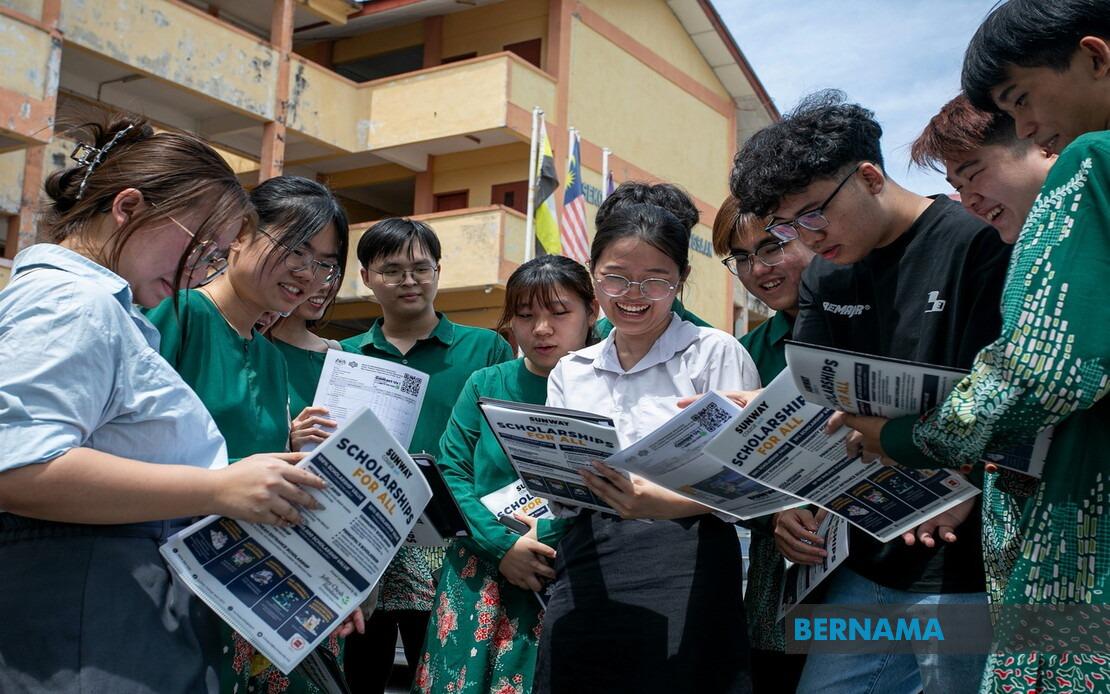
Malaysia's Form Six programme has demonstrated renewed strength as a credible and accessible university entrance pathway, with high-achieving students from varied socioeconomic and educational backgrounds proving the system's capacity to deliver academic excellence. The 2025 STPM examination results, announced in Kuala Lumpur, brought particular attention to three students who attained the maximum 4.00 cumulative grade point average, each representing distinct advantages the qualification continues to offer in an evolving education landscape.
Hazaril Hakimi Hassan, an Orang Asli student from Kampung Paya Mendoi in Kuala Krau, Pahang, exemplifies how Form Six serves underrepresented communities seeking university admission. His perfect result at SMK Temerloh signals that traditional barriers to academic achievement in Malaysia's education system remain surmountable when students receive proper guidance and institutional support. Hazaril credits his accomplishment to a combination of discovering Form Six's genuine advantages, encouragement from educators, and family backing—highlighting that student success frequently hinges less on privilege than on informed decision-making and consistent mentorship. His ambition to read Malay Language Education at Universiti Putra Malaysia and subsequently pursue an academic career illustrates how STPM qualifications directly enable progression toward professional goals in sectors where Malaysia maintains both domestic need and international competitiveness.
The affordability dimension emerged prominently through Ng Yu Yong's narrative. The SMK Tsung Wah student from Perak, who secured five A grades including in Physics and Biology, deliberately selected STPM specifically because its significantly lower cost compared to private college alternatives made it feasible for his family circumstances. This economic reality matters substantially across Malaysia, where many capable students face genuine constraints in pursuing tertiary pathways. Ng's observation that STPM remains internationally recognised and provides pathways to leading overseas universities adds another layer: the qualification functions not merely as a domestic entrance route but as a globally credible credential that expands opportunities beyond Malaysian shores. His stated intention to pursue an MBBS at Universiti Malaya demonstrates how STPM can position students competitively for demanding professional programmes, contradicting any perception that the qualification represents a second-tier option.
Yeoh Chwen Yih's achievement introduces the crucial accessibility dimension often overlooked in education policy discussions. As a visually impaired student from St John's Institution who also attained 4.00 CGPA, Yeoh demonstrated that Form Six infrastructure—specifically screen-reading technology and associated learning support systems—provides materially superior accommodation compared to available alternatives for students with disabilities. The capacity to access learning materials more rapidly through software than through traditional Braille formats represents a genuine technological advantage that can substantially enhance educational outcomes. Yeoh's experience suggests that STPM institutions have implemented inclusive design principles enabling students with disabilities to compete on substantively equal footing with their sighted peers, a significant achievement in Malaysian secondary education. The aspiration to pursue law studies reflects confidence that STPM qualification and demonstrated capacity will translate into university acceptance and professional opportunity.
Collectively, these three student narratives address persistent misconceptions about Form Six within Malaysian education discourse. Despite occasional positioning as a less-preferred pathway in comparison to private college routes, STPM continues delivering demonstrable academic rigour. The examination's competitive nature—acknowledged by successful candidates themselves—ensures that strong results carry genuine validation of mastery and intellectual capability. Universities worldwide, particularly in medical and professional programmes, continue recognising STPM qualifications as indicators of readiness for university-level work.
The Malaysian Examinations Council's formal recognition of these achievements through excellence awards provides institutional validation that STPM remains a priority within Malaysia's examination framework. This recognition matters for student perception and for parental decision-making regarding post-secondary options, domains where public messaging significantly influences pathway selection. When high-achieving students publicly articulate STPM's genuine advantages rather than presenting the pathway apologetically, it counteracts narratives suggesting that Form Six represents academic compromise.
From a policy perspective, these outcomes illustrate that investment in STPM infrastructure—particularly technology enabling students with disabilities, teacher training enhancing support, and equitable access across socioeconomic cohorts—generates measurable returns in terms of student achievement and opportunity realisation. The qualification's continued relevance hinges substantially on such institutional commitment to maintaining educational quality and inclusive practices. For Malaysian families evaluating post-secondary options, these examples provide concrete evidence that STPM merit need not be accepted on faith but can be verified through student testimony and demonstrable outcomes.
The competitive landscape in Malaysian post-secondary education has shifted considerably in recent years, with private institutions proliferating and international qualifications gaining prominence. Within this environment, STPM's sustainability depends partly on market perception and partly on genuine institutional delivery. These perfect-scoring students serve as evidence that the pathway continues performing its essential function: enabling capable Malaysian learners to transition successfully toward university studies and professional careers, regardless of background or circumstance. Their public recognition reinforces STPM's position as a pathway worthy of serious consideration by students and families navigating crucial educational decisions.
As Malaysia confronts evolving workforce demands and positioning considerations within regional education hierarchies, the STPM pathway's combination of academic rigour, affordability, international recognition, and demonstrated inclusivity provides distinct advantages in the domestic education landscape. The 2025 results offer Malaysian policymakers and educators data-driven reassurance that continued investment in Form Six infrastructure and quality assurance yields tangible returns in student achievement and expanded opportunity for diverse learner populations.

