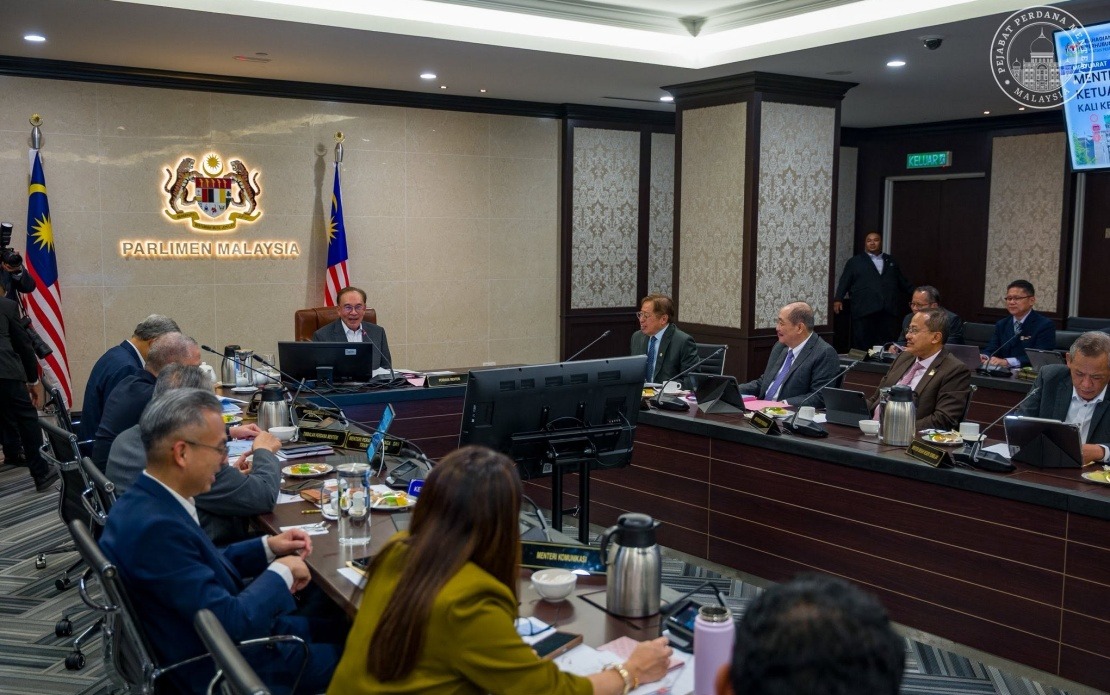
Prime Minister Datuk Seri Anwar Ibrahim has convened the 149th Meeting of Menteris Besar and Chief Ministers at the Parliament Building in Kuala Lumpur, signalling a coordinated federal-state approach to navigating Malaysia's economic challenges and emerging climate threats. The gathering represents a critical alignment mechanism between Putrajaya and the states, a necessity given the interconnected nature of policy implementation across Malaysia's federal system where development initiatives often require seamless cooperation across multiple jurisdictions.
The centrepiece of discussions revolved around strategies to fortify and revitalise the national economy in an environment clouded by geopolitical instability, particularly the ongoing conflicts in West Asia. These Middle Eastern tensions have created significant headwinds for the global economy, disrupting supply chains, energy markets, and investment flows—consequences that directly ripple through Malaysian businesses and consumer confidence. By bringing state leaders into this conversation, the federal government is attempting to ensure that economic recovery measures are not implemented in silos but rather embedded within state-level initiatives and local economic ecosystems.
Beyond immediate economic concerns, the meeting explicitly examined Malaysia's vulnerability to the El Niño phenomenon, a cyclical climate pattern that poses multifaceted threats to the nation. The Prime Minister emphasised that El Niño's expected impacts could fundamentally disrupt water supply systems, particularly in drought-prone regions, placing strain on both domestic consumption and industrial operations. For an agricultural sector already grappling with labour shortages and input cost inflation, El Niño presents an acute challenge to productivity and yields, raising serious questions about food security and Malaysia's ability to maintain domestic production levels.
The anticipated increase in extreme heat events and haze episodes underscores an often-overlooked vulnerability in Malaysia's tropical climate profile. While Malaysians are accustomed to annual haze cycles, typically originating from Indonesian sources, climate-driven intensification could exacerbate air quality crises, damage tourism competitiveness, and trigger public health complications. The coordination outlined in this meeting suggests a recognition that climate adaptation cannot be treated as an environmental ministry concern alone but requires integration across health, agriculture, transportation, and economic portfolios.
Anwar's statement emphasised that every policy initiative and government programme must be implemented with greater integration and efficiency while maintaining a people-centric orientation. This framing suggests frustration with siloed departmental approaches and underperformance in translating policies into tangible outcomes for citizens. The emphasis on integration reflects a broader governance philosophy that recognises how fragmented implementation breeds inefficiency, delays, and ultimately, citizen dissatisfaction. For Malaysia's diverse population spanning multiple states with distinct economic structures and demographic profiles, this message carries particular weight—a one-size-fits-all approach from Kuala Lumpur often fails to account for local conditions.
Strengthening economic competitiveness emerged as a secondary but equally important theme. Malaysia's position within global value chains has been contested by competitors like Vietnam and Indonesia, while China's dominance in manufacturing and battery technology creates upstream pressures. The meeting's focus on attracting quality investments signals a strategic pivot away from purely volume-driven growth towards higher-value activities that generate better employment opportunities and technological spillovers. This distinction matters significantly for Malaysia's middle-income aspirations and its ability to transition towards a knowledge-driven economy.
The safeguarding of Malaysian well-being, mentioned in Anwar's summary, extends beyond economic metrics to encompass livelihood security, affordable living costs, and equitable access to development benefits. Rising inflation, property costs, and education expenses have eroded purchasing power for middle and lower-income households, making this dimension of policy conversation increasingly salient. State governments, managing basic services like education, healthcare, and housing provision, bear significant responsibility for translating federal economic policies into improved citizen welfare.
The meeting's emphasis on federal-state consensus and togetherness carries deeper implications for Malaysia's political stability. Following years of complex coalition politics and shifting alliances between Putrajaya and state administrations of different political hues, reaffirming collaborative frameworks helps depoliticise essential governance functions. When state governments of various political colours work harmoniously with a federal administration, policies gain legitimacy and resilience—less vulnerable to partisan reversal following elections. This cooperative tone also matters for foreign investor confidence, which responds positively to signals of institutional predictability.
The timing of this meeting, occurring amid global economic headwinds and climate uncertainties, reflects prudent crisis anticipation rather than reactive governance. Malaysia's experience with past economic shocks—the 1997 Asian financial crisis, the 2008 global downturn, and the 2020 pandemic—has presumably instilled appreciation for proactive coordination mechanisms. By convening this assembly now, Anwar is essentially stress-testing Malaysia's policy infrastructure before challenges fully materialise, an approach that contrasts sharply with more ad-hoc crisis management styles.
For Malaysian businesses and citizens, these discussions at the state leadership level ultimately determine implementation speed and effectiveness. Whether initiatives to stimulate economic activity, build climate resilience, or improve service delivery actually translate into tangible change depends on how successfully Menteris Besar and Chief Ministers operationalise federal guidance within their respective jurisdictions. The meeting's success will be measured not in communiqués but in observable improvements to business conditions, agricultural productivity, water security, and air quality across Malaysia's diverse states over coming months.

