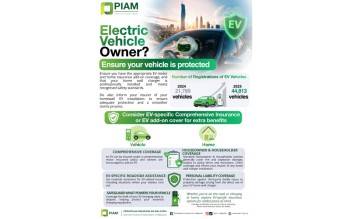
Malaysian homeowners with standard fire and house owner insurance are protected against damage caused by electric vehicle charging systems, provided their policies have not been breached and no fraudulent circumstances exist, the General Insurance Association of Malaysia (PIAM) has clarified. The statement comes in response to growing concerns about EV charging safety following a fire in Cheras involving an installed EV home charger that caused substantial property destruction. PIAM's chief executive Chua Kim Soon outlined the association's position on coverage, emphasising that fire damage claims are typically honoured under standard policies regardless of what ignited the blaze, subject to normal policy terms and the absence of deliberate misconduct.
The distinction between different types of EV charging equipment affects how they are insured within the existing policy framework. Hard-wired EV chargers that are permanently installed in homes generally fall under the 'buildings' section of a standard house owner policy, classified as fixtures and fittings forming part of the property structure. In contrast, detachable or portable charging cables and equipment are usually covered through specialised electric vehicle motor insurance policies or supplementary add-on packages that insurers offer separately. This categorisation is important for homeowners to understand, as it determines which part of their insurance structure provides protection and whether additional coverage needs to be obtained.
Insurers operating in Malaysia expect policyholders to maintain reasonable safety standards and take appropriate precautions to prevent electrical hazards on their premises. When evaluating claims related to fire damage, insurers will typically request and review official investigation reports from the fire department to establish the cause and rule out excluded circumstances such as arson, deliberate acts, or negligence. The presence of unauthorised electrical modifications or uncertified installations that violate statutory regulations may also affect claim assessment and potentially lead to partial or full claim rejection. This investigation process protects both insurers and legitimate policyholders by ensuring fraudulent or reckless claims do not artificially inflate premiums.
Homeowners contemplating the installation of a permanent EV charger should proactively notify their insurance provider before proceeding with the work. Declaring electrical upgrades and modifications ensures that the declared sum insured accurately reflects the current replacement value of the property, accounting for the added electrical infrastructure and modern equipment now present. This transparency strengthens the policyholder's position during a claims assessment, as it establishes that the insurer was aware of the modification and consented to coverage terms. Failure to notify insurers of significant structural or electrical changes can create ambiguity about what the original policy sum was intended to cover, potentially complicating claims resolution.
The process of verifying and updating sum insured amounts deserves particular attention from property owners in the current environment. As Malaysian homes increasingly incorporate modern fixtures, renewable energy systems, and vehicle charging infrastructure, the replacement cost of rebuilding the property rises accordingly. Homeowners must regularly review their current policies to confirm that the nominated sum insured reflects these enhanced rebuilding costs. An under-insured property may result in claims being settled on a proportional basis, leaving the owner to bear a portion of the loss personally. This is especially relevant for owners of terrace homes and apartments who have invested in permanent charging infrastructure.
Public liability protection becomes a significant consideration for homeowners in densely occupied residential settings, particularly those living in terraced houses or high-rise condominium buildings. If an electrical fire originating from an EV charger spreads to neighbouring properties or common areas, the property owner may face legal liability for damage to adjacent residences and shared facilities. While standard Malaysian house owner policies typically provide a public liability limit of RM50,000, this may prove inadequate in scenarios involving multiple affected units or substantial structural damage. PIAM has advised homeowners to evaluate their current public liability coverage limits and consider purchasing optional extensions to increase this protection, ensuring they have sufficient coverage to manage potential neighbour claims.
The advice from PIAM extends beyond basic coverage to encompass a holistic insurance review for EV owners. Owners should examine both their motor insurance policies and residential property insurance in tandem, identifying potential gaps in coverage that could leave them financially exposed. Some owners may discover that their motor insurance does not adequately cover charging equipment or that their home insurance excludes certain types of damage related to electrical systems. By conducting a comprehensive policy audit, owners can determine whether they need additional coverage layers, such as specialised EV charging equipment insurance or enhanced electrical systems coverage. This approach ensures that the vehicle, the charging infrastructure, and the residential structure are all protected under a coherent insurance framework.
The Cheras incident that prompted this guidance illustrates the real-world consequences of EV charging fires and underscores why comprehensive insurance protection matters. As electric vehicle adoption accelerates across Malaysia, the number of homes with installed charging systems will grow significantly, and the incidence of charging-related electrical incidents may increase proportionally. Insurance industry experience with similar situations in other countries shows that most fire damage is covered, but claims become problematic when homeowners have failed to declare modifications, installed uncertified equipment, or neglected basic electrical safety. The emphasis on notification, compliance with electrical standards, and maintaining adequate sum insured serves as practical guidance to help homeowners avoid these pitfalls.
The regulatory and safety framework surrounding EV charging installations also influences insurance outcomes. Homeowners are expected to engage qualified electricians for permanent installations and ensure that all work complies with Malaysian electrical codes and building regulations. Insurance companies may request evidence of professional installation and certification before processing claims, particularly if electrical faults or violations are suspected as contributing factors to a fire. This creates an incentive for homeowners to invest in proper installation from the outset, rather than attempting cost-cutting measures that could invalidate their coverage. The intersection of safety compliance, professional installation standards, and insurance coverage highlights that protecting against EV charging fires requires coordination across multiple domains.

