Suresh Sallay presents a remarkable paradox in Sri Lanka's ongoing reckoning with the 2019 Easter bombings. The retired Major General, until recently celebrated as a terrorism expert, once stood before audiences at the Pentagon and delivered lectures on the dangers of social media-fuelled extremism. His international credentials seemed impeccable—a career military officer who had represented his country in diplomatic postings across Europe and studied at prestigious institutions in India and Britain. Yet in February, this same man was arrested under anti-terrorism legislation and accused by his own government of orchestrating the deadliest attack against civilians in Sri Lanka's modern history.
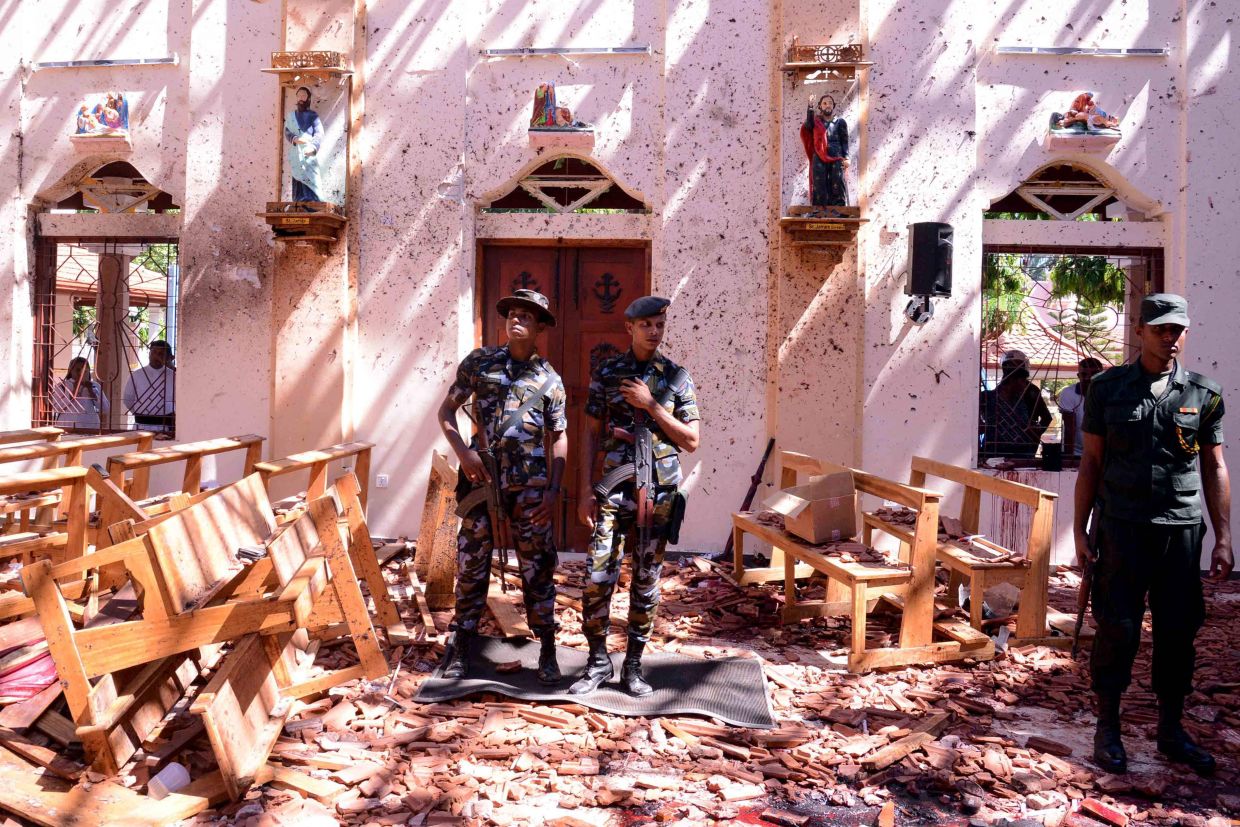
The Easter bombings of April 21, 2019, remain seared into the nation's collective memory. In a coordinated assault that unfolded across a single day, suicide bombers targeted three luxury hotels and three churches, leaving 279 dead and more than 500 wounded. The victims included 45 foreigners—tourists from Australia, Britain, China, Denmark, the Netherlands, Japan, and the United States—whose deaths thrust Sri Lanka into an international spotlight it desperately wished to avoid. For nearly five years, the official narrative held firm: Islamist extremists, inspired by the Islamic State group, had carried out the attacks in the absence of adequate intelligence gathering and border security measures. The government attributed the security failures to negligence rather than conspiracy.
Yet the arrest of Sallay signals a profound inversion of that narrative, one that raises uncomfortable questions about the nature of state power in Sri Lanka and the murky boundaries between counterterrorism and political manipulation. Public Security Minister Ananda Wijepala declared in parliament this June that Sallay was the true "mastermind" who "conspired with and strategically directed Islamic extremists until they carried out the attacks." According to Wijepala's account, in the three weeks immediately preceding the bombings, Sallay had met with Muslim men to gather detailed information about the locations subsequently targeted. These allegations represent not merely a shift in blame, but a wholesale reconstruction of the bombing's origins—one that implicates the highest levels of Sri Lanka's intelligence apparatus in what critics characterize as a state-orchestrated atrocity.
The political context surrounding these accusations cannot be separated from their investigation. Gotabaya Rajapaksa, the then-powerful presidential candidate from the Rajapaksa political dynasty, ran his 2019 election campaign on a hardline pledge to crush Islamist extremism and restore national security. According to Channel 4's 2023 investigative report, whistleblower allegations suggest the Easter bombings were permitted to occur precisely because they would provide Rajapaksa with the security crisis he needed to win the presidency on a strongman platform. Investigators have told the courts that the alleged scheme was designed to generate chaos and position Rajapaksa as the authoritarian leader capable of crushing militancy—just as he had orchestrated military victory against Tamil separatists a decade earlier during the civil war.
What gives these allegations their particular toxicity is the historical precedent they evoke. Rajapaksa administrations have openly acknowledged that the Sri Lankan state funded jihadist groups during the 1983-2009 civil war, ostensibly to gather intelligence on Tamil rebel movements. Those same administrations now claim that these militants "double-crossed their handlers" and independently decided to launch the Easter bombings. Yet critics argue this explanation strains credulity. Instead, they contend that intelligence operatives deliberately cultivated a network of extremist actors specifically to create an enemy threatening enough to justify greater state resources, military authority, and public acceptance of security measures. The bombings would thus represent the most catastrophic and visible manifestation of this strategy, with ordinary tourists and worshippers serving as collateral damage in a power struggle at the highest echelons of government.
Sallay's own biography embodies the complexity and diversity of modern Sri Lanka, even as it became entangled in this darker narrative. A Muslim officer married to a Buddhist woman, with a Catholic mother who has appealed to the pope for his release, Sallay represented the possibility of a secular, professional military establishment transcending religious and ethnic divisions. His career had taken him to postings in France and Malaysia, to the halls of India's National Defence College, and to lecture podiums at the Pentagon. In a 2003 speech titled "Suicide Terrorism and its Impact," he had spoken to Pentagon audiences about the mechanics of extremist violence. As recently as 2023, he delivered remarks at United Nations headquarters warning that terrorism represented "one of the greatest challenges" to international security, specifically highlighting the role of social media and digital platforms in radicalising vulnerable populations. His rhetoric and analysis placed him squarely within the global counterterrorism establishment, working in concert with allied intelligence agencies.
Paradoxically, Sallay's fortunes rose sharply under Gotabaya Rajapaksa's ascendancy. Following the 2019 election victory, Rajapaksa appointed Sallay to head the State Intelligence Service, making him the first military officer to occupy that position. This elevation gave Sallay extraordinary power within Sri Lanka's security apparatus at a moment when that apparatus was consolidating authority under Rajapaksa's nationalist political project. Yet this proximity to power may have also made Sallay expendable once political circumstances changed. In 2020, while still serving as intelligence chief, Sallay had orchestrated the arrest of human rights lawyer Hejaaz Hizbullah, accusing him of masterminding the Easter bombings. Hizbullah spent twenty-two months in detention before authorities released him without producing substantial evidence of his involvement. That case established a troubling precedent: ambitious accusations, arrests without adequate proof, and eventual releases that left the underlying questions of guilt unresolved.
Sallay now finds himself in precisely the same precarious position. He has not been formally charged with any offence, and he categorically denies wrongdoing. His next court hearing was scheduled for July 10, yet weeks and months have elapsed with no clear resolution in sight. The court proceedings themselves remain clouded by the same evidentiary problems that plagued Hizbullah's case. Investigators have told the courts that Sallay directed the attacks through contacts and meetings, yet the specific mechanisms of his alleged direction, the evidence of his communications with the bombers, and the documentation proving his intent remain murky. The allegations against him emerge not from careful forensic investigation but from ministerial pronouncements in parliament, themselves suggestive of political rather than legal priorities.
The implications of Sallay's arrest extend far beyond his individual fate. If the government's accusation proves substantiated, it would represent an extraordinary breach of trust by a senior military and intelligence officer—someone educated at the world's finest institutions and trusted with the nation's most sensitive security responsibilities. Yet if the accusation proves baseless, as critics increasingly suspect, it would demonstrate the terrifying capacity of authoritarian power to manufacture scapegoats and rewrite history to serve political purposes. Either possibility speaks to profound instability within Sri Lanka's security establishment and profound questions about the reliability of official narratives surrounding events of enormous international significance. For Malaysia and other Southeast Asian democracies watching Sri Lanka's trajectory, Sallay's case offers a cautionary glimpse into how security crises can become vehicles for political consolidation, how terrorism can be instrumentalised, and how institutions meant to protect citizens can instead become tools of state manipulation.

