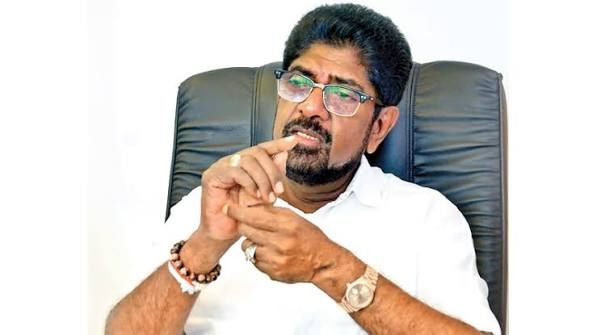
A former Sri Lankan government minister has been taken into custody by the country's anti-corruption watchdog following allegations that he orchestrated the removal of a priceless historical artefact from one of the nation's most culturally significant sites. Keheliya Rambukwella, detained on August 18, faces accusations stemming from the disappearance of a ceremonial moonstone, an intricately carved granite rock that served as part of the symbolic entrance threshold to the palace of Veera Parakrama Narendrasinghe, Sri Lanka's last Sinhala monarch who ruled until 1739. The Commission to Investigate Allegations of Bribery or Corruption has alleged that Rambukwella not only facilitated the theft of this valuable artefact but also actively worked to impede police investigations into the crime when it occurred in December 2022.
The moonstone holds profound cultural and historical significance within Sri Lankan heritage, representing a tangible connection to the island's pre-colonial monarchical era. Such ceremonial entrance stones typically featured zodiacal carvings and symbolic motifs that reflected the spiritual and cosmological beliefs of ancient kingdoms. The theft of such a carefully wrought historical object raised questions about the security protocols protecting Sri Lanka's cultural assets during a period of significant national instability. The timing of the alleged crime—occurring just eight months after the country's devastating economic collapse—underscores how institutional breakdown during periods of crisis can create vulnerabilities for heritage theft and looting.
The corruption investigation has expanded considerably beyond the moonstone incident, with authorities also charging Rambukwella with misappropriating state resources for personal enrichment. Specifically, he is accused of deploying public funds to employ six individuals for work directly related to his own private commercial ventures, a flagrant breach of public trust that reflects patterns of institutional misuse documented across multiple state agencies during this tumultuous period in Sri Lankan governance. These allegations paint a picture of systematic abuse of ministerial authority for personal gain, suggesting that Rambukwella treated public assets and resources as extensions of his private interests.
Rambukwella's current predicament extends far beyond heritage theft charges, encompassing a series of criminal investigations that reveal the broader dysfunction within Sri Lanka's health ministry. While serving as health minister during the country's unprecedented economic catastrophe, he authorised the procurement of medications that proved to be entirely fraudulent, most notoriously endorsing the purchase of what was marketed as a life-saving cancer therapy but was later determined to be ordinary water. This shocking malfeasance occurred precisely when Sri Lankan patients faced desperate shortages of genuine pharmaceuticals, transforming what should have been lifesaving interventions into deadly deceptions. Police have informed the court of evidence demonstrating Rambukwella's direct authorisation of this purchase, establishing his complicity in endangering public health.
The pharmaceutical fraud scandal extends well beyond Rambukwella's individual responsibility, with multiple senior health ministry officials facing indictment for their involvement in the counterfeit medicine scheme. This reveals a systemic problem within the health bureaucracy, where oversight mechanisms failed catastrophically and chains of accountability dissolved entirely. The emergence of such wholesale corruption within the health sector during a period of acute medicine shortages suggests either deliberate malfeasance or profound institutional collapse—neither scenario reflecting positively on governance structures. For Malaysian observers, the scandal serves as a cautionary example of how quickly health systems can be undermined when corruption intersects with economic crisis and administrative dysfunction.
The context underlying these charges cannot be separated from Sri Lanka's April 2022 default on its US$46 billion foreign debt, a catastrophic economic implosion that paralysed the nation's ability to function. This bankruptcy triggered an acute shortage of essential medicines as the country lacked foreign currency to finance pharmaceutical imports, creating precisely the conditions under which counterfeit medications might circulate. While the shortage was itself attributable to macroeconomic mismanagement and external pressures, the authorities' response—manifested through Rambukwella's fraudulent purchases—represented an additional layer of culpability for the health crisis. Rather than transparently communicating the shortage or implementing rationing systems, officials allegedly exploited the chaos to profit from desperation.
Rambukwella's arrest represents a broader reckoning within Sri Lankan institutions following the political upheaval that accompanied the economic crisis. The detention of high-ranking former officials on corruption charges signals that investigative bodies have gained sufficient political space to pursue accountability without fear of retaliation or political interference. However, the delayed prosecution—with the moonstone theft occurring in December 2022 and the arrest coming nearly two years later—suggests that institutional weakness persists. The length of time between alleged crime and arrest raises questions about whether political considerations influenced the timing of enforcement actions, and whether other comparable wrongdoings remain unprosecuted.
The theft of the moonstone and the counterfeit medicine scandal exist within overlapping contexts of institutional failure and personal corruption that characterised certain phases of Sri Lankan governance. The heritage theft investigation appears part of a broader pattern of asset stripping and looting that occurred during the economic chaos, when oversight mechanisms had deteriorated and law enforcement agencies were overwhelmed. The medicine fraud, conversely, represents deliberate deception that harmed vulnerable patients, suggesting malice rather than mere negligence. Together, these investigations demonstrate how a single official can simultaneously embody different manifestations of institutional corruption—opportunistic theft, abuse of state resources, and reckless endangerment of public welfare.
For Malaysia and other Southeast Asian nations observing Sri Lanka's trajectory, the case study presents several instructive lessons about institutional resilience and governance safeguards. The ease with which health ministry procurement systems could be compromised suggests insufficient separation of powers, inadequate auditing procedures, and potentially inadequate criminal penalties for pharmaceutical fraud. The theft of a protected heritage artefact from a secure location indicates that security protocols for national treasures may require upgrading across the region. Additionally, the concentration of criminal allegations against a single individual—though serious—should prompt reflection on whether broader institutional reforms have addressed the systemic vulnerabilities that enabled such abuses to proliferate.
The investigation and prosecution of Rambukwella also illuminates how anti-corruption bodies navigate political pressures in post-crisis environments. The Commission to Investigate Allegations of Bribery or Corruption has chosen to pursue multiple overlapping cases against the same individual, potentially strengthening the prosecutorial position through redundancy while also demonstrating institutional capacity. However, observers have noted that accountability measures targeting lower-level officials sometimes proceed more rapidly than investigations into those occupying the highest political offices, raising questions about whether anti-corruption efforts truly reach the apex of power structures or primarily target mid-level officials as sacrificial figures.
The broader implications of these cases extend to regional discussions about institutional accountability and the rule of law in South and Southeast Asia. Sri Lanka's experience suggests that economic crises can precipitate not only financial collapse but also comprehensive institutional degradation, where previously functioning systems rapidly deteriorate and professional ethics erode. The appearance of counterfeit pharmaceuticals in state supply chains indicates that corruption can literally become lethal, transforming administrative malfeasance into public health catastrophe. As countries in the region contemplate their own institutional vulnerabilities and governance challenges, the detailed facts of Rambukwella's alleged conduct—particularly the purchase of fake cancer medication during acute shortages—serve as a stark reminder that abstract questions of corruption ethics become intensely concrete when they involve life-and-death consequences for ordinary citizens.

