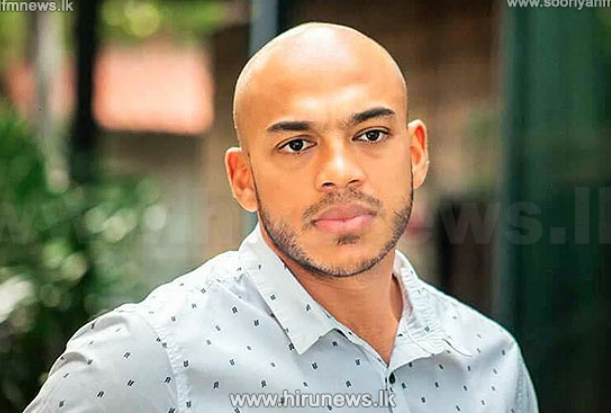
Sri Lankan authorities have arrested Yoshitha Rajapaksa, the 38-year-old son of former president Mahinda Rajapaksa, on corruption-related charges stemming from his military career. The Bribery Commission confirmed the detention on Wednesday, June 17, accusing him of improperly accessing public funds to finance officer training abroad while allegedly advancing through naval ranks despite lacking the required qualifications. The arrest marks another significant development in what has become an intensifying accountability campaign targeting one of South Asia's most controversial political dynasties.
Yoshitha Rajapaksa stands accused of securing a coveted placement at Dartmouth, Britain's prestigious naval college, through his father's political influence rather than merit. The arrangement drew criticism from observers who contended that his attendance displaced a deserving naval cadet who had legitimately earned selection through competitive examination. What made the situation particularly contentious was that Mahinda Rajapaksa held the presidency during his son's attendance, creating an obvious conflict of interest and raising questions about whether state resources were appropriately deployed for family advancement.
The Bribery Commission's formal statement outlined the specific charges, indicating that Yoshitha Rajapaksa faces prosecution for "aiding and abetting" in connection with irregular recruitment procedures and subsequent misappropriation of government funds designated for international training programmes. This represents the most serious charge levelled against him to date, though it builds upon existing legal jeopardy he has faced. Prior to this arrest, he was already implicated in two separate money-laundering investigations and had been subject to a foreign travel restriction, conditions under which he had previously been released on bail.
The financial irregularities surrounding Yoshitha Rajapaksa extend beyond his military training arrangements. He has been unable to satisfactorily account for the sources of income used to purchase residential property during the period when his father wielded presidential authority from 2005 to 2015. When questioned by investigators, he claimed the funds originated from the sale of gemstones gifted to him by his paternal grandmother, yet that relative has reportedly been unable to explain how she herself acquired these valuable stones. The implausibility of this explanation has prompted prosecutors to pursue a separate criminal case examining the property transaction.
Another pending prosecution concerns Yoshitha Rajapaksa's acquisition of a television broadcasting network, a transaction that prosecutors have scrutinized for potential financial impropriety and unexplained wealth accumulation. These various cases collectively paint a picture of systematic exploitation of his father's political position for personal financial gain, a pattern that has characterised much of the Rajapaksa family's controversial tenure in power.
The renewed vigour with which authorities are pursuing cases against the Rajapaksa clan reflects significant political shifts in Sri Lanka. President Anura Kumara Dissanayake's 2024 election victory was achieved substantially on a platform emphasizing anti-corruption measures and a commitment to holding powerful figures accountable. Since assuming office, his administration has prioritized the prosecution of outstanding cases against various family members and associates, signalling a departure from the political protections that previously shielded them from serious consequences. This represents a watershed moment for a nation where elite impunity has historically undermined the rule of law.
Mahinda Rajapaksa's younger brother, Gotabaya, experienced firsthand how rapidly political fortunes can shift in Sri Lanka. After assuming the presidency in 2019, Gotabaya Rajapaksa faced mounting pressure during an economic collapse that triggered widespread civil unrest. By 2022, he was forced to abandon office and flee the country, eventually returning to face potential prosecution. Earlier this month, he received a foreign travel ban while simultaneously petitioning courts to forestall his arrest in connection with the 2019 Easter Sunday bombings, a terrorist attack that claimed 279 lives and exposed significant intelligence failures during his tenure.
The broader context of these prosecutions reflects decades of alleged malfeasance by the Rajapaksa family. Multiple relatives and close associates have faced charges spanning corruption, money laundering, extrajudicial killings, and other serious offences. However, most of these cases have stalled in the judicial system, accumulating on court dockets without reaching resolution. The extended timeline reflects both the complexity of prosecuting powerful figures and historical institutional weaknesses that have allowed such cases to languish in procedural limbo.
For Malaysia and other Southeast Asian democracies, the Rajapaksa family saga offers important lessons about both institutional resilience and fragility. Sri Lanka's experience demonstrates how concentrated executive power can facilitate systematic corruption when unchecked, yet also how electoral change can catalyse accountability mechanisms. The ability of Dissanayake's administration to pursue these cases, despite the political power traditionally wielded by the Rajapaksa network, suggests that determined reform efforts can overcome entrenched resistance. However, the snail's pace at which these prosecutions proceed reminds observers that structural judicial reforms require sustained commitment beyond individual political mandates.
The implications extend to considerations of regional governance and anti-corruption efforts. As Southeast Asian nations grapple with endemic corruption and the challenge of holding elite figures answerable to law, Sri Lanka's experience—both its failures and its tentative progress—provides cautionary and encouraging indicators. The Yoshitha Rajapaksa arrest demonstrates that political transition can create windows of opportunity for accountability, but sustained institutional reform remains essential for translating initial prosecutorial momentum into meaningful, long-term changes in governance standards.