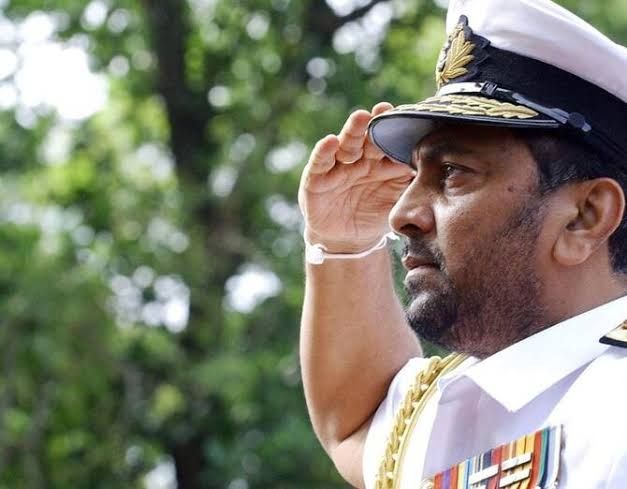
Sri Lanka's anti-corruption authorities have escalated their legal offensive against the Rajapaksa political dynasty by arresting a prominent military figure implicated in a scheme to circumvent standard recruitment procedures. The Bribery Commission took Admiral of the Fleet Wasantha Karannagoda, 73, into custody following allegations that he abused his position to secure unqualified enlistment in the navy for Yoshitha Rajapaksa, son of the former president who governed the island nation from 2005 to 2015. The arrest, occurring in early July, represents a significant development in the administration's broader campaign to hold powerful figures accountable for past misconduct.
The specific charges centre on the improper recruitment of Yoshitha Rajapaksa in 2006, which occurred when Karannagoda held the post of navy commander. According to the Bribery Commission's formal statement, the admiral facilitated this enlistment despite the younger Rajapaksa lacking the necessary qualifications for such a position. The case reflects how institutional safeguards may have been deliberately compromised to benefit the ruling family during a period when their political influence remained at its zenith. Such nepotistic practices have long been viewed as symptomatic of the governance failures that preceded the current administration's mandate for institutional reform.
Karannagoda's military career spanned a critical chapter in Sri Lanka's modern history. He served as navy commander during the conclusion of the decades-long conflict with Tamil separatists, which ended in 2009 with a military victory that, while ending years of bloodshed, also attracted considerable international scrutiny regarding the conduct of military operations. Following his retirement from active command, he received elevation to the ceremonial rank of admiral of the fleet in 2019, a position that carries prestige but no operational responsibilities. Currently holding no active military role, his arrest nonetheless underscores how past institutional hierarchies are now subject to renewed legal scrutiny.
The corruption allegations against Karannagoda form only one component of a more expansive case against the Rajapaksa family. His co-accused, Yoshitha Rajapaksa, currently remains free on bail pending trial after his arrest in June on allegations that he misappropriated public resources to fund naval training at Britannia Royal Naval College in Dartmouth, England. The younger Rajapaksa's trajectory from unqualified recruit to international naval student exemplifies the manner in which family connections apparently enabled access to prestigious military institutions and overseas training opportunities otherwise unavailable to candidates without such connections.
The legal complications surrounding Yoshitha Rajapaksa extend considerably beyond these recruitment and training irregularities. Investigators have examined the provenance of funds he deployed to purchase residential property during his father's presidency, raising questions about undisclosed wealth accumulation. When questioned by authorities, he attributed the purchase funds to the sale of gemstones gifted to him by his grandaunt, an explanation that itself unravelled when the elderly relative could not adequately account for how she had originally obtained these precious stones. This implausible explanation highlights both the sophistication and fragility of wealth-concealment strategies that may have protected ill-gotten gains within the family network.
The Rajapaksa family's legal vulnerabilities extend well beyond corruption charges into far more serious territory. Karannagoda himself faces accusations of war crimes and human rights violations stemming from his military tenure, allegations severe enough to warrant sanctions imposed by Britain in March 2025. Additionally, he confronts conspiracy to murder charges related to the deaths of eleven young men killed between 2008 and 2009, a period coinciding with the final phases of the civil conflict. These charges, which had been abandoned in October 2021 during the presidency of Gotabaya Rajapaksa—Mahinda's brother and former defence secretary—were subsequently revived following the September 2024 election of President Anura Kumara Dissanayake.
Dissanayake's electoral victory represented a decisive rejection of the Rajapaksa legacy, with the new president explicitly pledging to investigate and prosecute longstanding corruption allegations and to resolve prominent unsolved crimes. His administration has translated this political mandate into concrete legal action, systematically advancing cases against Rajapaksa family members and their network of associates. The relative inertia that characterised previous administrations when addressing these allegations has given way to vigorous prosecution, fundamentally altering the calculus of impunity that previously insulated the family from serious consequences.
Gotabaya Rajapaksa himself has become ensnared in this widening legal apparatus. In late June, authorities imposed a foreign travel restriction on the former defence secretary and presidential candidate, preventing him from leaving Sri Lanka pending investigation into alleged links to the April 2019 Easter Sunday bombings. Those coordinated attacks on churches and hotels claimed 279 lives and remain among the most traumatic incidents in recent Sri Lankan history. The travel ban signals that investigators are pursuing serious criminal liability rather than accepting previous official narratives about the circumstances surrounding this catastrophic security failure.
For Malaysian observers and policymakers in the broader Southeast Asian region, the Sri Lankan experience offers instructive lessons regarding the persistence of institutional capture and the potential for its reversal through electoral change. The case demonstrates how senior military and civilian officials can facilitate preferential access to state institutions for members of the political elite, a phenomenon hardly unique to Sri Lanka. It also illustrates how such arrangements, once entrenched, prove extraordinarily difficult to unwind, requiring sustained political commitment and institutional independence from newly empowered authorities willing to challenge vested interests.
The cascading legal consequences now confronting the Rajapaksa network reflect broader questions about accountability that resonate across the region. Malaysia's own experience with investigations into alleged grand corruption during the previous administration provides relevant comparative context, particularly regarding the challenges of pursuing cases involving powerful former officials, the reliance on institutional independence, and the vulnerability of investigations to political reversal. The Sri Lankan precedent suggests both the possibility of renewed accountability and the fragility of such efforts should electoral fortunes shift again.
The immediate impact of these arrests and investigations remains uncertain. Multiple cases against Rajapaksa-connected figures remain pending before the courts, with outcomes still years away given typical judicial timelines. However, the symbolic significance of high-profile arrests and travel restrictions communicates to both the political establishment and the broader electorate that the traditional protections afforded to former power holders no longer function automatically. Whether this new accountability persists or diminishes will depend substantially on whether the current government maintains its institutional independence and resists inevitable pressures to compromise investigations for political advantage.

