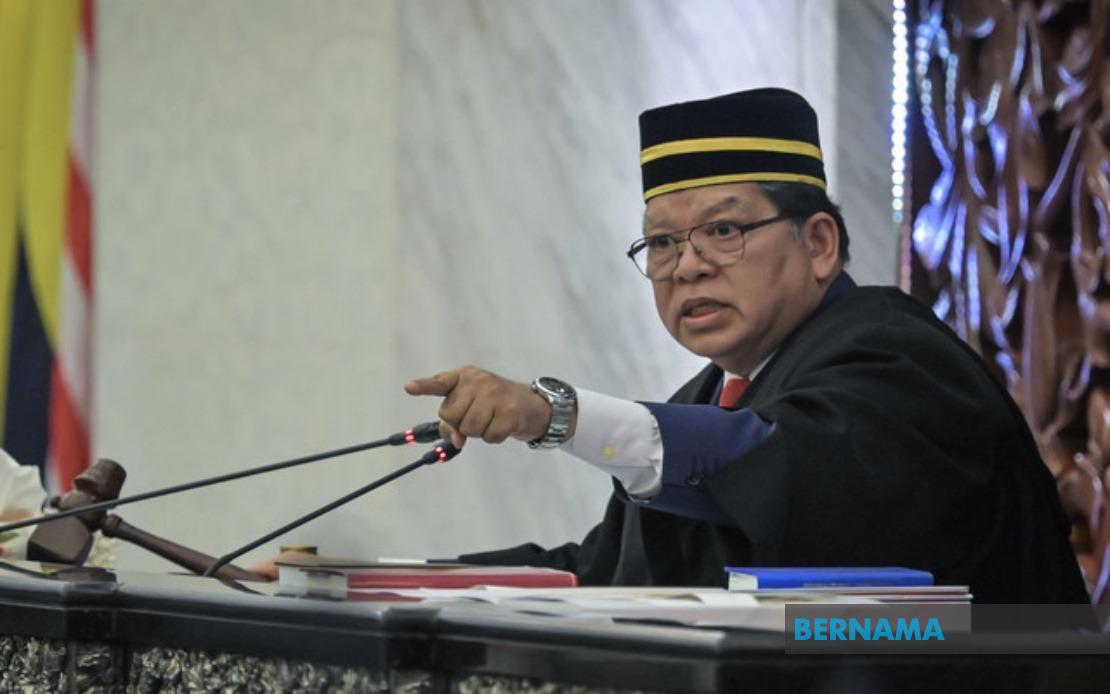
The Speaker of Dewan Rakyat has renewed emphasis on preventive healthcare for Malaysia's elected representatives, following a medical emergency that struck during parliamentary proceedings this week. Tan Sri Dr Johari Abdul made the appeal before the question-and-answer session commenced, citing the urgent need for lawmakers to remain attentive to their physical wellbeing as they discharge their legislative duties. The reminder came after Kuala Terengganu MP Datuk Ahmad Amzad Hashim required emergency medical attention while attending proceedings at Parliament, subsequently being admitted to the National Heart Institute for treatment of a serious cardiovascular health issue.
The incident, which occurred during Minister's Question Time, underscores the intense demands placed on parliamentarians who often maintain demanding schedules balancing constituency work, legislative responsibilities, and committee obligations. Datuk Ahmad Amzad Hashim had been scheduled to participate in a substantive debate on the 2024 Annual Report of the Human Rights Commission of Malaysia immediately following question time, highlighting the compressed nature of parliamentary business that leaves little respite for elected representatives. That the health emergency materialised during one of Parliament's most visible proceedings has evidently prompted the Speaker's intervention, recognising that high-profile incidents can serve as catalysts for broader institutional action on occupational health matters.
Tan Sri Dr Johari emphasised the particular value of early detection in preventing serious medical complications, stressing that routine screenings represent far more than administrative formality. Through systematic health assessments, medical practitioners can identify emerging conditions long before they manifest as acute incidents, permitting lifestyle modifications, pharmaceutical interventions, or targeted clinical management to commence before crises occur. The Speaker's framing positioned health screening not as an intrusive regulatory requirement but as a proactive investment in parliamentary continuity and, more fundamentally, in the personal wellbeing of those serving the nation's legislative institution.
The annual health screening programme for MPs has operated since 2023 through collaborative arrangements between Parliament and the Ministry of Health, representing institutional recognition that lawmakers' fitness for duty carries implications extending beyond individual health outcomes. The continuation of this initiative during the current parliamentary term demonstrates sustained commitment to normalising preventive health practices among the political elite, a demographic that historically has sometimes relegated personal medical attention to secondary priority beneath professional obligations. By anchoring the screening programme within MOH's technical capacity and institutional resources, Parliament has ensured access to standardised, evidence-based assessments rather than relying on ad-hoc individual choices or varying private healthcare options.
The Speaker's public acknowledgment of MPs who have already participated in screening carries subtle but important messaging about social norms within the parliamentary community. Recognition of participation encourages others to view health screening as an expected practice worthy of emulation, particularly among legislators who may regard such interventions as unnecessary given their apparent physical capability. In parliamentary cultures where projection of strength and tireless dedication sometimes becomes part of political identity, normalising preventive healthcare requires deliberate cultural leadership from senior institutional figures such as the Speaker.
For Malaysian readers and observers of governance, this incident illuminates broader questions about parliamentary working conditions and occupational health standards for public officials. Unlike private sector employees who typically benefit from employer-mandated health insurance and occupational wellness programmes, MPs have historically managed their personal health with limited institutional support or oversight. The formalisation of screening programmes represents gradual alignment with contemporary occupational health standards, though Malaysian Parliament's approach remains relatively modest compared to some international legislatures that provide comprehensive wellness facilities and monitoring.
The incident also carries implications for parliamentary operations and contingency planning. If significant numbers of MPs face health emergencies, the capacity to maintain legislative quorum and conduct essential business could be compromised. Regular health screening, by identifying and managing conditions before acute episodes occur, contributes to institutional stability and continuity of parliamentary function. This administrative dimension complements the humanitarian imperative to protect individual legislators' wellbeing, creating alignment between personal and institutional interests that facilitates buy-in for preventive health programmes.
Tan Sri Dr Johari's invocation of MOH's support and commitment signals appreciation for inter-agency cooperation on parliamentary health matters, acknowledging that Parliament's capacity to deliver effective healthcare to its members depends substantially on technical expertise and resources concentrated within the health ministry. This collaborative model reflects Malaysia's broader approach to governance through partnership between parliamentary and executive institutions, though it also raises questions about whether Parliament possesses sufficient autonomy in occupational health matters or whether legislative independence might be better served through dedicated parliamentary health services.
For Southeast Asian parliamentary systems more broadly, Malaysia's experience with formalised health screening for legislators offers a model that other regional democracies might examine. Many regional parliaments have expanded significantly in recent decades without corresponding evolution in supporting infrastructure or welfare provisions for elected representatives. The Malaysian approach, while still modest, suggests that systematic attention to legislator health need not be politically contentious and can be framed as straightforward institutional efficiency and duty of care.
The Speaker's emphasis that health screening constitutes a serious matter worthy of genuine engagement, rather than ceremonial participation, attempts to counter potential dismissiveness from MPs who might regard such programmes as bureaucratic overhead. By grounding the appeal in concrete evidence—namely, the dramatic hospitalisation of a colleague during parliamentary duty—Tan Sri Dr Johari has leveraged the salience of acute health events to motivate preventive behaviour. Whether this incident catalyses sustained participation in screening programmes or represents a temporary spike in health consciousness among parliamentarians remains to be observed through subsequent programme participation data.

