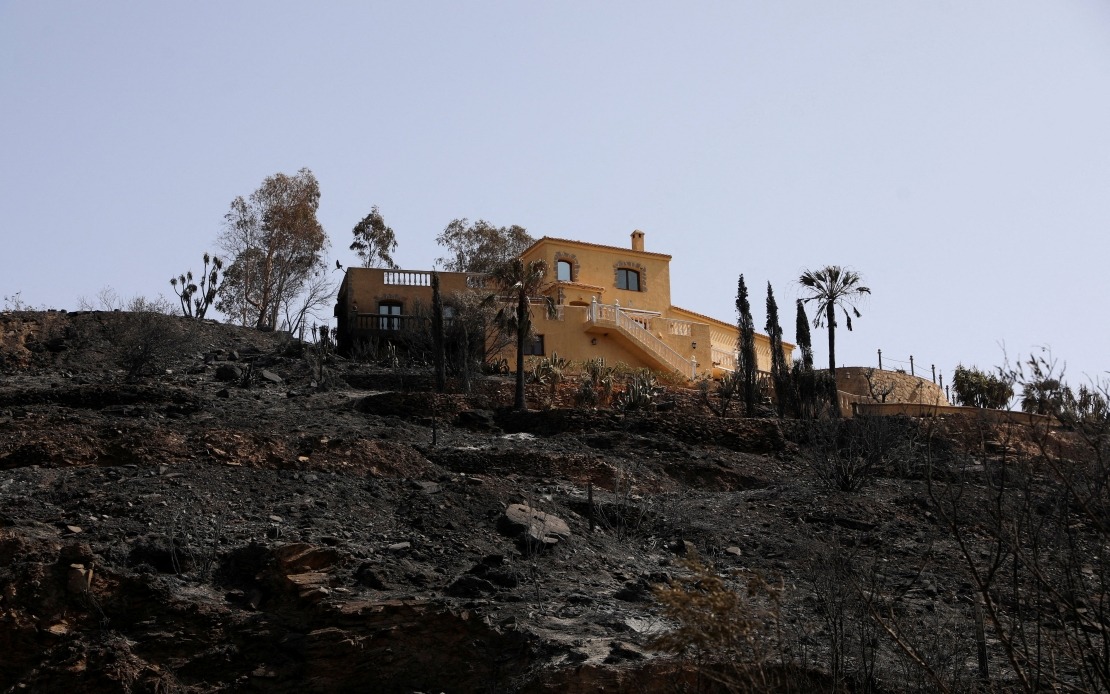
A catastrophic wildfire that erupted in Spain's southeastern province of Almeria has claimed 13 lives, with authorities announcing Sunday that the uncontrolled blaze has been stabilised after consuming vast tracts of landscape since Thursday. The disaster, which ignited near the Los Gallardos municipality in the Andalusian region, represents one of the most severe natural emergencies the area has faced in recent times, testing emergency response systems and drawing attention to the mounting threat of large-scale wildfires in southern Europe.
The human toll continues to mount as seven injured individuals remain hospitalised, with three in critical condition requiring intensive medical care. According to Spain's public broadcasting service RTVE, a significant portion of those caught in the fire's path are foreign nationals, adding an international dimension to the humanitarian response and recovery efforts. Additionally, ten people remain officially registered as missing, leaving families in anguish as search operations continue across the ravaged terrain where visibility and access remain severely compromised.
The fire's destructive footprint extends across approximately 7,000 hectares of land, an area equivalent to roughly 9,700 football fields, demonstrating the extraordinary scale of the conflagration. The initial outbreak on Thursday near Los Gallardos quickly spiralled beyond initial containment efforts, forcing the evacuation of roughly 1,600 residents from surrounding communities. The evacuation operations were carried out in stages, with approximately 600 residents permitted to return to their homes on Saturday as conditions gradually improved.
As the fire's advance halted on Sunday, regional authorities moved swiftly to lower the emergency alert status and authorise the remaining approximately 1,000 evacuees to return to their properties. This measured reduction in emergency protocols reflects growing confidence that the wildfire has been sufficiently contained to permit the resumption of normal life in affected areas, though the psychological and material impact on displaced residents will persist for months. The ability to allow residents home represents a critical milestone in crisis management, signalling the transition from acute emergency response to recovery and rebuilding phases.
The precise origin of the wildfire remains under active investigation by authorities determined to establish the triggering mechanism. The predominant working hypothesis centres on the structural failure of an electricity pole or associated cable infrastructure, suggesting that an electrical fault may have ignited the vegetation that subsequently spread uncontrollably across the landscape. This theory underscores the intersection between ageing infrastructure and environmental vulnerability, a concern increasingly relevant as climate shifts intensify fire seasons across Mediterranean regions.
Juanma Moreno, the head of Andalusia's regional government, issued a carefully calibrated statement Sunday confirming that the wildfire has ceased its forward progression and remains contained within established perimeter lines. Nevertheless, Moreno cautioned that despite the stabilisation, substantial effort remains necessary before the blaze can be formally declared fully extinguished and controlled. His measured language reflected both relief at progress and awareness that complacency could permit the fire to reignite, a persistent risk when dealing with large terrain fires still smouldering beneath the surface.
Moreno utilised the crisis as an opportunity to elevate climate change from abstract policy discussion to immediate, visceral concern, emphasising that the catastrophe demands society treat environmental transformation with the utmost seriousness. He articulated an observation increasingly evident across Europe: that climate change is fundamentally altering the parameters within which wildfires operate, generating circumstances of unprecedented complexity that strain conventional firefighting methodologies and resource allocation.
The Andalusian leader's characterisation of this disaster as the most severe in the region's recent historical memory carries significant weight, reflecting the magnitude of the event within local and regional consciousness. Such statements from senior officials serve to validate public anxiety about environmental threats while potentially mobilising political will for enhanced prevention and response mechanisms. For Malaysian readers monitoring global climate impacts, the Almeria incident illustrates how developed nations with substantial resources remain vulnerable to cascading environmental crises.
The widening geographical and temporal reach of large-scale wildfires across southern Europe—with increasing frequency and intensity—signals a systemic shift in climatic patterns rather than isolated anomalies. Authorities throughout the Mediterranean basin are grappling with the reality that fire seasons extend earlier into spring and later into autumn, with summer intensity reaching unprecedented levels. This pattern disruption complicates long-term planning for emergency services and raises questions about sustainable land management practices.
For regional observers in Southeast Asia, the Almeria wildfire carries instructive lessons regarding climate vulnerability. Although Malaysia's tropical climate presents different wildfire dynamics than Mediterranean Spain, transnational environmental pressures and the demonstrated capacity of natural disasters to overwhelm even well-resourced nations should inform preparedness discussions. The incident underscores how climate change transcends geographical boundaries, affecting wealthy European regions and developing economies with comparable severity.
The international composition of those affected by the Almeria fire—with foreign nationals among the casualties and displaced—reflects the interconnected nature of modern society, where tourism, migration, and seasonal employment bring diverse populations into shared risk zones. This dimension adds complexity to recovery efforts, requiring coordination across consular services and international assistance frameworks.
As investigation into the precise cause continues, the larger narrative emerging from Almeria centres on the profound challenge posed by climate-driven environmental transformation. The region's ability to mobilise emergency response, contain the disaster, and begin recovery provides grounds for measured confidence in institutional capacity. Simultaneously, Moreno's remarks about the unprecedented nature of contemporary wildfires signal recognition that adaptation strategies must evolve as rapidly as the climate system itself, a lesson with profound implications for vulnerable regions worldwide including those across Southeast Asia.

