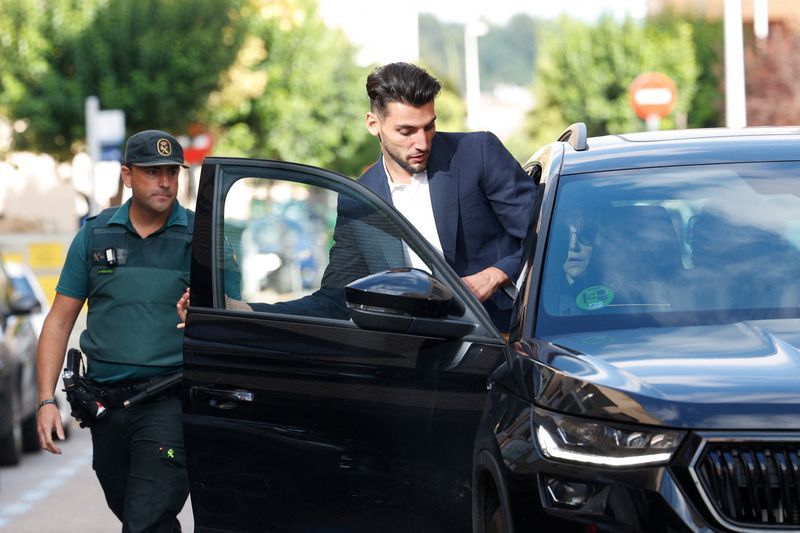
Spanish footballer Rafa Mir faces a substantial prison sentence after a Valencia court found him guilty of sexual assault and assault causing bodily harm on Monday. The 28-year-old striker has been sentenced to eight-and-a-half years behind bars, concluding a case that emerged from complaints filed in September 2024. The court's decision underscores growing judicial scrutiny of sexual misconduct allegations across Spain's sporting landscape, a nation increasingly focused on protecting victims and holding prominent figures accountable.
The conviction centres on an incident in which Mir and a fellow footballer encountered two women at a nightclub in Valencia before inviting them back to Mir's residence. Once at the house, the court determined that Mir sexually assaulted one of the women in multiple locations, including the pool area and a bathroom. The ruling emphasises the victim's testimony as particularly compelling and consistent, with judicial authorities noting that witness statements and forensic evidence supported her account. This layering of corroborating evidence distinguished the case, as courts require substantial proof beyond individual accounts when rendering such serious verdicts.
The victim has been awarded €64,000 in compensation, a sum reflecting both material losses and non-pecuniary damages recognised by Spanish law in sexual assault cases. However, the judgment remains subject to appeal, meaning both the conviction and sentence could potentially be reviewed by higher courts. Defence counsel had previously contended that any encounter was mutually consensual and maintained Mir's categorical denial of the allegations, a common legal position in such disputes. The appellate process now allows both the prosecution and defence opportunities to present additional arguments before a higher judicial panel.
The case arrives amid an intensifying period of reckoning within Spanish sports regarding gender-based violence and institutional power dynamics. The nation's football world has been buffeted by several high-profile scandals in recent years. Former Football Federation chief Luis Rubiales faced significant backlash for kissing a national team player without consent during a World Cup celebration ceremony, an incident that crystallised broader conversations about consent and workplace culture within football administration. Similarly, Brazilian-born defender Dani Alves, formerly of Barcelona and a global football icon, was convicted of rape before that conviction was subsequently overturned on procedural grounds—a sequence that left many in Spain grappling with questions about the judicial system's handling of such cases.
These incidents have positioned women's rights and athlete conduct as exceptionally sensitive subjects within Spanish sports discourse. Unlike some nations where such controversies generate temporary media attention before fading, Spain has witnessed sustained political and social engagement with these themes. Football's prominence in Spanish culture means that misconduct cases gain extraordinary prominence and catalyse broader societal conversations about power, accountability, and institutional reform. The Mir case thus represents not merely a criminal proceeding but a cultural moment reflecting Spain's evolving expectations regarding behaviour among elite athletes and public figures.
Mir's career has spanned multiple prominent European clubs before his current engagement with LaLiga's Elche. The striker previously represented Wolverhampton Wanderers in the English Premier League and Sevilla within Spain's top flight. He also earned selection to Spain's Olympic men's football squad for the Tokyo Games, indicating his status as a respected and accomplished professional within European football. At the time of the alleged incident in 2024, he held a contract with Valencia, the six-time La Liga champions, one of Spain's most prestigious institutions. His transfer to Elche represented a move to a smaller club, though details regarding any connection between the allegations and his club changes remain unclear.
Elche has offered no public statement regarding the court's decision or Mir's future status within the organisation. Spanish football clubs operate under distinct regulatory frameworks regarding player conduct and criminal convictions, and whether Elche might seek to terminate his contract, place him on suspension, or permit continued participation remains undetermined. Professional football in Spain has increasingly faced pressure from advocacy groups and political quarters to demonstrate strong institutional responses to serious criminal allegations involving players, particularly when such matters involve sexual violence.
The distinction between criminal conviction and sporting sanction has become increasingly important in contemporary football discourse. While criminal courts determine guilt according to legal standards applicable to all citizens, football authorities maintain separate disciplinary procedures addressing conduct that breaches specific codes of ethics and regulations. Both processes may proceed independently or in sequence, creating situations where individuals face compounded consequences from judicial and institutional systems simultaneously.
For Malaysian and Southeast Asian followers of European football, the Mir case exemplifies how leading European leagues increasingly grapple with questions of safeguarding, institutional accountability, and the relationship between professional sports and broader social values. The decision to prosecute, convict, and sentence a prominent player reflects judicial confidence in the available evidence and a determination to treat sexual assault with appropriate seriousness regardless of the accused's sporting prominence. This contrasts with historical patterns in some jurisdictions where celebrity status provided insulation from serious criminal prosecution, suggesting structural changes in how major footballing nations address gender-based violence.

%22%2F%3E%3C%2Fpattern%3E%3C%2Fdefs%3E%3Crect%20width%3D%22100%25%22%20height%3D%22100%25%22%20fill%3D%22url(%23ph1354vg)%22%2F%3E%3Crect%20width%3D%22100%25%22%20height%3D%22100%25%22%20fill%3D%22url(%23ph1354vp)%22%2F%3E%3Ctext%20x%3D%2250%25%22%20y%3D%2250%25%22%20text-anchor%3D%22middle%22%20dominant-baseline%3D%22central%22%20fill%3D%22rgba(255%2C255%2C255%2C0.95)%22%20font-family%3D%22Georgia%2C%20'Times%20New%20Roman'%2C%20serif%22%20font-weight%3D%22700%22%20font-size%3D%22320%22%20letter-spacing%3D%22-0.02em%22%3EGRS%3C%2Ftext%3E%3C%2Fsvg%3E)