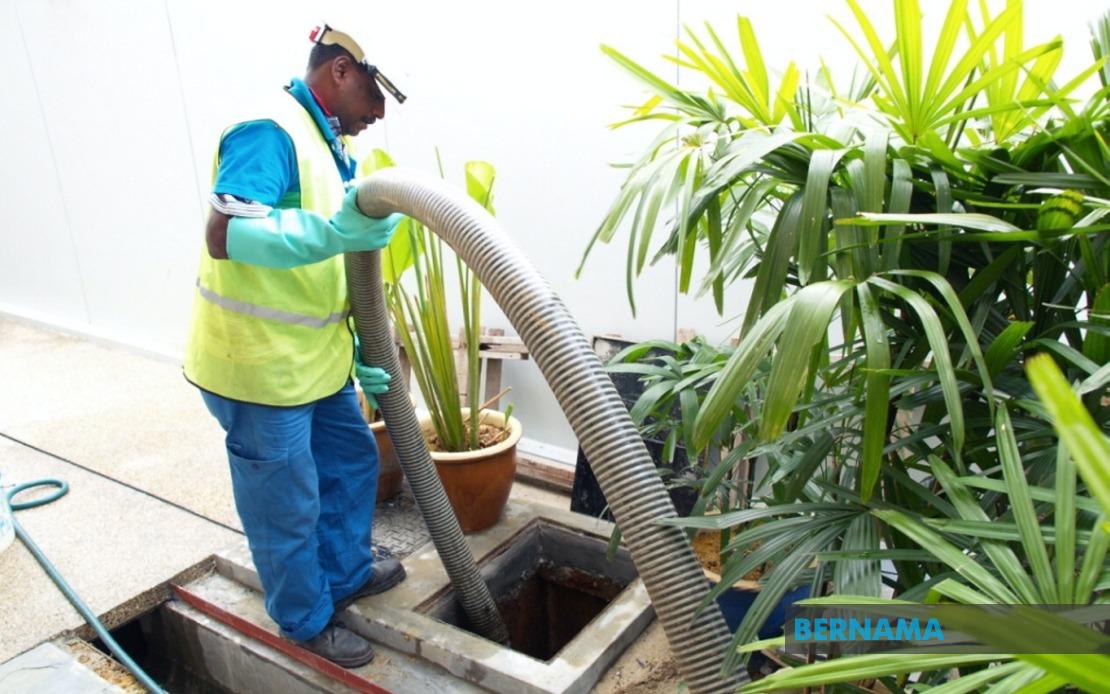
The National Water Services Commission (SPAN) has intensified its enforcement campaign against poor sanitation practices in Sungai Petani, issuing 270 compliance notices to property owners who neglected their septic tank maintenance obligations. The operation, conducted during Ops Padi 2 from August 4 to 6, revealed alarming gaps in wastewater management across the commercial and residential districts of the northern Perak town, highlighting the broader challenge Malaysian municipal authorities face in ensuring consistent adherence to water service standards.
The enforcement sweep examined 341 premises across Sungai Petani's business area, comprising 242 commercial establishments and 99 residential units. According to Ainal Yusman Mohamad Yusop, director of SPAN's Operations Division Enforcement Section, every single property inspected had breached earlier directives issued by contracted service provider Indah Water Konsortium Sdn Bhd (IWK) to conduct scheduled desludging operations. This comprehensive non-compliance underscores systemic failures in property owner awareness and accountability, particularly within the commercial sector where businesses may prioritize cost-cutting over environmental and public health obligations.
The discovered state of infrastructure disrepair proved especially troubling. Most premises subjected to inspection dated back to the 1970s and 1980s, and the majority of their septic systems had suffered decades of neglect. Ainal Yusman revealed cases where tanks remained untouched for periods stretching between 10 and 15 years, with some maintenance records dating as far back as the late 1990s—suggesting that entire generations of business operators may have never arranged proper upkeep since acquiring their premises. This extended abandonment poses significant public health and environmental risks, as degraded septic systems can contaminate groundwater, pollute surrounding soil, and become vectors for disease transmission.
Under the Water Services Industry Act 2006 (Act 655), property owners face clear legal obligations. Section 65(1)(c) mandates that all premises maintain their septic tank systems through authorized service providers or licensed permit holders qualified to perform desludging work. The regulatory framework exists to prevent the type of infrastructure deterioration observed during the Sungai Petani operation, yet compliance remains evidently weak across the board. This disconnect between statutory requirements and actual practice reflects a persistent weakness in enforcement and property owner education throughout Malaysia's water services sector.
The compliance notices issued during the operation grant property owners a 14-day window to respond and initiate corrective action. Failure to comply within this timeframe will trigger escalated enforcement measures, including formal offence notices and formal investigations into violations. The regulatory structure provides SPAN with substantial deterrent capacity—property owners convicted of breaching Section 65(1)(c) face potential fines reaching RM50,000, a penalty steep enough to command serious attention from most commercial operators.
The Sungai Petani crackdown reflects SPAN's broader strategy to strengthen compliance across Malaysia's fragmented water services landscape. Urban and commercial centers present particularly acute challenges, as business operators often view environmental compliance as an overhead cost rather than an essential responsibility. The concentration of non-compliance across an entire town suggests that localized enforcement operations targeting specific areas may prove more effective than generalized compliance campaigns, as they create visible consequences and peer awareness within business communities.
For property owners in Sungai Petani and similar towns across Malaysia, this operation carries immediate practical implications. Those receiving compliance notices must now budget for septic tank emptying services, potentially at rush rates given the narrow 14-day timeline. Small business owners and longtime residential occupants operating on tight margins may face unexpected expense shocks, though they bear primary responsibility for their own negligence. The operation also signals that SPAN intends to enforce Act 655 actively rather than permissively, warning other Malaysian towns that similar sweeps could occur anywhere.
The fundamental lesson emerging from Ops Padi 2 extends beyond Sungai Petani's borders. Malaysia's dispersed water services network—managed through various federal and state authorities, privatized contractors, and municipal bodies—struggles with consistent implementation of maintenance standards. When property owners can neglect septic systems for 15 years without serious consequences, the entire regulatory framework loses credibility. This case demonstrates that enforcement campaigns must be regular, visible, and well-publicized to reshape behavior patterns entrenched over decades.
Enhanced public education represents an equally critical complement to enforcement. Many property owners, particularly those managing older premises acquired through inheritance or long-term occupation, may genuinely lack awareness that legal maintenance obligations apply to their septic systems. SPAN and IWK could strengthen compliance by conducting preliminary educational outreach before launching enforcement operations, creating clearer pathways for property owners to understand and meet their obligations. This approach balances regulatory severity with fairness while reducing the likelihood of defiant non-compliance rooted in simple ignorance.
The environmental and public health dimension of this issue warrants greater prominence in Malaysian policy discussions. Septic tank failures contribute to groundwater contamination, particularly in areas with shallow water tables—a concern relevant across much of Peninsular Malaysia. Untreated wastewater seeping from degraded systems can introduce pathogens and chemical contaminants into drinking water sources, posing direct health risks to communities. The discovery of 15-year-old maintenance records in commercial premises suggests that these risks have been accumulating silently throughout Sungai Petani for years.
Moving forward, SPAN and state water authorities should consider whether the current compliance notice framework adequately addresses systemic failures of this magnitude. In instances where properties have been non-compliant for over a decade, regulatory escalation to mandatory system upgrades or professional remediation—funded through structured payment plans for financially struggling owners—might prove more effective than repeated notice cycles. Establishing routine inspection schedules rather than reactive enforcement sweeps would also create more consistent accountability and prevent multi-year lapses in maintenance oversight.

